

Sustainable development and the green transition are central goals of modern societies, requiring integrated, innovative approaches to tackle environmental, economic, and social challenges. Experts in Science, Technology, Engineering, and Mathematics (STEM) play a pivotal role in co-creating breakthrough solutions. However, beyond technical expertise, competencies related to sustainable thinking, entrepreneurship, and interdisciplinary collaboration are increasingly vital. Consequently, STEM education programmes must be reoriented to support the development of these broader competencies. Recent bibliometric analysis [1] shows a growing body of research on STEM education’s role in achieving the Sustainable Development Goals (SDGs), highlighting key thematic clusters such as sustainable development, engineering education, quality education, science and technology, with a notable increase in related publications over the past decade (2013–2023).
This growing academic focus aligns with evolving European policy frameworks. The European Green Deal (2019) highlights the need for systemic approaches and “green competencies” to drive green transformation. The European Agenda for Skills (2020) and the Skills Pact promote stronger connections between education and employment, as well as the development of digital, sustainable, and entrepreneurial skills. The European Union (EU) Council Recommendation on Key Competences for lifelong learning (2018) identifies entrepreneurial, digital, and civic competencies as essential, implicitly emphasizing sustainability and interdisciplinarity. Additionally, the Bologna Process and European Higher Education Area advocate for curriculum modernisation by integrating sustainability, aligned with the EU Sustainable Development Strategy and the SDGs.
Aligning STEM education ‒ especially in science and engineering—with sustainable development requires more than just content updates; it also involves raising awareness, fostering commitment, and promoting active engagement and agency among students [2]. Recent analyses highlight that within engineering education, sustainable development is often treated as an ‘aspect’ rather than a systemic meta-context, creating dilemmas for curriculum design; adopting a whole-of-system approach ensures that sustainability becomes a guiding principle for strategic capacity building and graduate competencies [3]. Engineering is crucial for addressing all 17 SDGs, from clean water and energy to resilient infrastructure and reducing inequality [4]. Emerging technologies such as big data and artificial intelligence (AI) are key to addressing global challenges and preparing students for the Fourth Industrial Revolution. Interdisciplinary STEM education fosters innovation, creativity, and critical thinking skills, which directly contribute to solving environmental, social, and economic problems. Similarly, the development of energy concept maps across multiple European universities enabled students and lecturers to integrate interdisciplinary perspectives on energy, environment, and spatial planning, fostering critical thinking, problem-solving, and collaborative competencies that strengthen sustainability-focused learning [5]. Studies confirm that STEM-based pedagogy effectively supports progress towards SDGs, particularly inclusivity, quality education, and lifelong learning. In rural areas, interdisciplinary STEM and STEAM education has been shown to connect students with their local environment, fostering sustainable behaviours, community engagement, and critical thinking skills that support long-term societal transformation [6], while STEM-based pedagogy more broadly promotes innovation, creativity, and analytical skills that can be applied to address social, economic, and environmental challenges and advance key sustainable development goals, such as inclusive and equitable quality education [7]. At the higher education level, these approaches offer students unique opportunities to become agents of change through experiential and interdisciplinary education for sustainable development programs, which combine practical activities, community engagement, and critical thinking to cultivate sustainability competencies [8]. Systematic reviews of SDG integration further emphasise that locally contextualised and practically applied educational initiatives are essential, showing that well-designed STEM programs not only enhance student learning but also reinforce the university’s role in driving sustainable development within society [9].
Recent studies highlight that education is a major facilitator for achieving the SDGs, and that higher education teaching methods must be critically reflected and aligned with a summarised subset of seven key SDGs. However, ensuring teaching quality while balancing increased demands on educators' time and well-being remains a challenge. Furthermore, personalised learning, the use of digital technologies and AI, ethics in technology-enhanced learning, and the promotion of self-regulated and interdisciplinary learning are promising directions for aligning higher education with the SDGs [10]. Massive Open Online Courses (MOOCs) have been shown to extend the reach of Education for Sustainable Development, using challenge-based and peer-learning strategies to develop skills that can be applied in real-world contexts, while highlighting both the opportunities and challenges of digital pedagogy [11]. Project-based and participatory STEM learning approaches, which actively involve students, teachers, and local communities in addressing real-world problems, have been shown to enhance engagement, equitable learning, and meaningful skill development, supporting both local and global dimensions of sustainability education [12]. For example, an interdisciplinary Energy Economy course at Başkent University demonstrated how participatory projects, such as designing net-zero energy campus solutions, can engage students in real-world problem solving while developing teamwork, leadership, and energy systems competencies [13]. Despite growing interest in engineering education for sustainable development (EESD), there is still no clear consensus on which competencies should be prioritised. Focus groups with employers, academics, and students emphasise normative, strategic, and systems-thinking competencies, but highlight insufficient focus on anticipatory competence ‒ vital for addressing future uncertainties. Interpersonal skills and cross-disciplinary collaboration are also critical for achieving the SDGs [14].
Developing competencies for sustainable transformation requires a holistic, learner-centred approach that balances cognitive, socio-emotional, and behavioural domains, as highlighted by recent research showing that integrating both systemic and personal dimensions of learning is essential for fostering transformative skills in higher education [15]. Building on this holistic foundation, a participatory approach further engages students by allowing them to co-create learning experiences and participate in practical projects, which enhances their ownership, motivation, and the real-world relevance of sustainability competencies [16]. At the same time, higher education must respond to employer demands for graduates who possess not only technical knowledge but also soft skills, adaptability, and problem-solving abilities, emphasizing the need to cultivate personal and professional competencies for a rapidly changing job market [17]. By combining learner-centred, experiential methods with these professional requirements, educators can foster critical inquiry, collaboration, and the integration of academic knowledge with personal growth, thereby enabling students to become capable agents of change in societal and environmental transformation [18]. Such approaches, often conceptualised as learning “for the student, of the student, and by the student,” have been shown to foster deeper engagement, critical inquiry, and collaborative problem-solving, with measurable benefits for both academic performance and real-world scientific outputs [19]. Consequently, higher education must integrate not only systemic (cognitive) competencies focused on knowledge and skills but also the personal dimension that embraces values, attitudes, and lived experiences [20]. This balanced approach fosters transformative competencies, enabling students to envision and enact change, rather than solely acquiring instrumental knowledge. Recent research further demonstrates that recognising and cultivating character strengths—such as creativity, curiosity, teamwork, hope, and self-regulation ‒ plays a critical role in enhancing learning quality, academic engagement, and personal development, highlighting the need for a balanced integration of academic knowledge and personal growth within higher education [21]. Pedagogies that support the emotional and motivational aspects of learning ‒ alongside cognitive development ‒ are crucial for building capacities for sustainable innovation and societal transformation. By embedding participatory methods, such as collaborative projects, student-led workshops, and co-design of learning materials, educators can ensure that learners are active agents in their own development, reinforcing both practical skills and commitment to sustainability [18].
Evidence from inclusive STEM education initiatives, such as the case study at the Faculty of Chemistry, Universidad de la República, Montevideo, Uruguay, demonstrates that actively involving students, including those with disabilities, in the design and adaptation of curriculum and laboratory activities not only addresses individual learning needs but also fosters broader institutional and cultural transformation [22]. In laboratory contexts, participatory approaches can also include integrating technologies such as social robots, which actively engage students in safe, supervised, and interactive experimentation while reinforcing learning and safety practices [23]. This participatory involvement allows students to contribute to the creation of assistive tools, test practical solutions, and inform pedagogical practices, reinforcing their role as co-creators of the learning environment. Similarly, digital participatory approaches, such as connected learning, can enhance engagement, relevance, and digital literacy in STEM education, particularly for diverse student populations [24].
Educational strategies that integrate local relevance, sustainability, and interdisciplinarity ‒ as promoted by European and international frameworks ‒ are essential for preparing STEM graduates to meet 21st-century challenges. These strategies call for competence-driven, inclusive, and sustainability-oriented reforms combining strategy, pedagogy, learning outcomes, and active, student-centred methods. Achieving this also requires ensuring equal opportunities and promoting gender balance in engineering, which is essential for the inclusive and impactful implementation of the SDGs worldwide.
In response to these challenges, the Proact-STEM project, financed by the Republic of Slovenia and the European Union through the European Social Fund Plus through the Call on Problem-based learning for students in the working environment: business, non-business, and non-profit sectors in the local/regional environment 2024-2027 (PUŠ Call), focuses on identifying key competencies for sustainable innovation from students’ perspectives through a participatory approach. This exploratory study investigated which competencies students consider most important for their careers and sustainable entrepreneurship, how they assess their current competencies, and which educational methods best support their development. The study is guided by the hypothesis that participatory, learner-centred approaches ‒ particularly those involving students in co-design and practical, problem-based activities ‒ enhance the acquisition and development of sustainability-oriented innovation competencies compared to traditional instructional approaches. This paper aims to:
identify key competences for sustainable entrepreneurship,
assess the gap between perceived importance and self-assessed proficiency, and
determine effective and motivating participatory learning methods.
This section outlines the research methodology used to design and implement a participatory, learner-centred workshop focused on sustainable innovation competencies. The study was designed as an exploratory investigation conducted within a defined and relatively small cohort of participants, aiming to identify perceived competence gaps and examine the potential of participatory educational interventions in this context. It describes the process of developing the questionnaire, engaging students in co-design, creating nanolearning units, and conducting the hybrid workshop, as well as the tools and evaluation methods employed to monitor learning outcomes. The methodology is structured into three interconnected phases:
participatory design of questionnaires and selection of key competencies,
co-creation of the workshop and e-learning content, and
workshop implementation and monitoring of competency development.
In the first phase of the research, a participatory and learner-centred approach was applied, the main purpose of which was to co-design the questionnaire with students and supervisors. A focused group discussion (“brainstorming”) was conducted in the form of an interactive workshop and online forum. It involved students from different STEM fields and higher education professors or mentors with experience in innovation and sustainable development. The aim of the workshop was to gather as many ideas and suggestions as possible on the competencies that participants consider crucial for sustainable innovation entrepreneurship in the future and relevant for students' career development.
Based on participants' suggestions, a structured questionnaire was developed for the wider population of science and engineering students. The questionnaire was divided into several thematic sections addressing the following objectives:
selection of key competencies from the set proposed in the group discussion,
identification of the top 5 competencies that students identify as the most important for their personal and professional development and for future sustainable entrepreneurship,
self-assessment of the level of mastery of each competence through a Likert scale,
identification of the competencies that students wish to develop during their studies or in the context of additional training,
identification of the learning methods that are most relevant to students, and
identification of a set of entrepreneurial skills that students perceive as lacking in their current study programmes.
The collected data were used to prepare the analysis and selection of competencies to be included in the subsequent project activities:
the organisation of a practical workshop for the development of sustainable innovation competencies,
the preparation of three short video learning units (for each of the three most outstanding competencies) to be published on Instagram, YouTube and Facebook, and
the inclusion of the competencies in a personalised digital application to support the development of sustainable entrepreneurship competencies.
In addition to contributing to the design of the questionnaire to gather information on students’ prior knowledge and learning preferences, students were actively involved in co-designing the workshop program itself. They participated in implementing the workshop and preparing the educational nanomodules, which consisted of short video clips (up to 5 minutes each) covering the three selected competencies. Students conducted interviews with lecturers and external stakeholders to enrich the content of the modules and collaborated closely with lecturers during the preparation of the video modules, who presented more in-depth expert content for each competency during the workshop. Furthermore, students were involved in developing pre- and post-test questions, analysing questionnaire data on participant satisfaction, preparing reports, and disseminating materials, including creating social media posts, web content, and infographics. They also actively contributed to the preparation of a conference paper for the SDEWES conference in Dubrovnik in October 2025, which serves as the foundation for the content of this article.
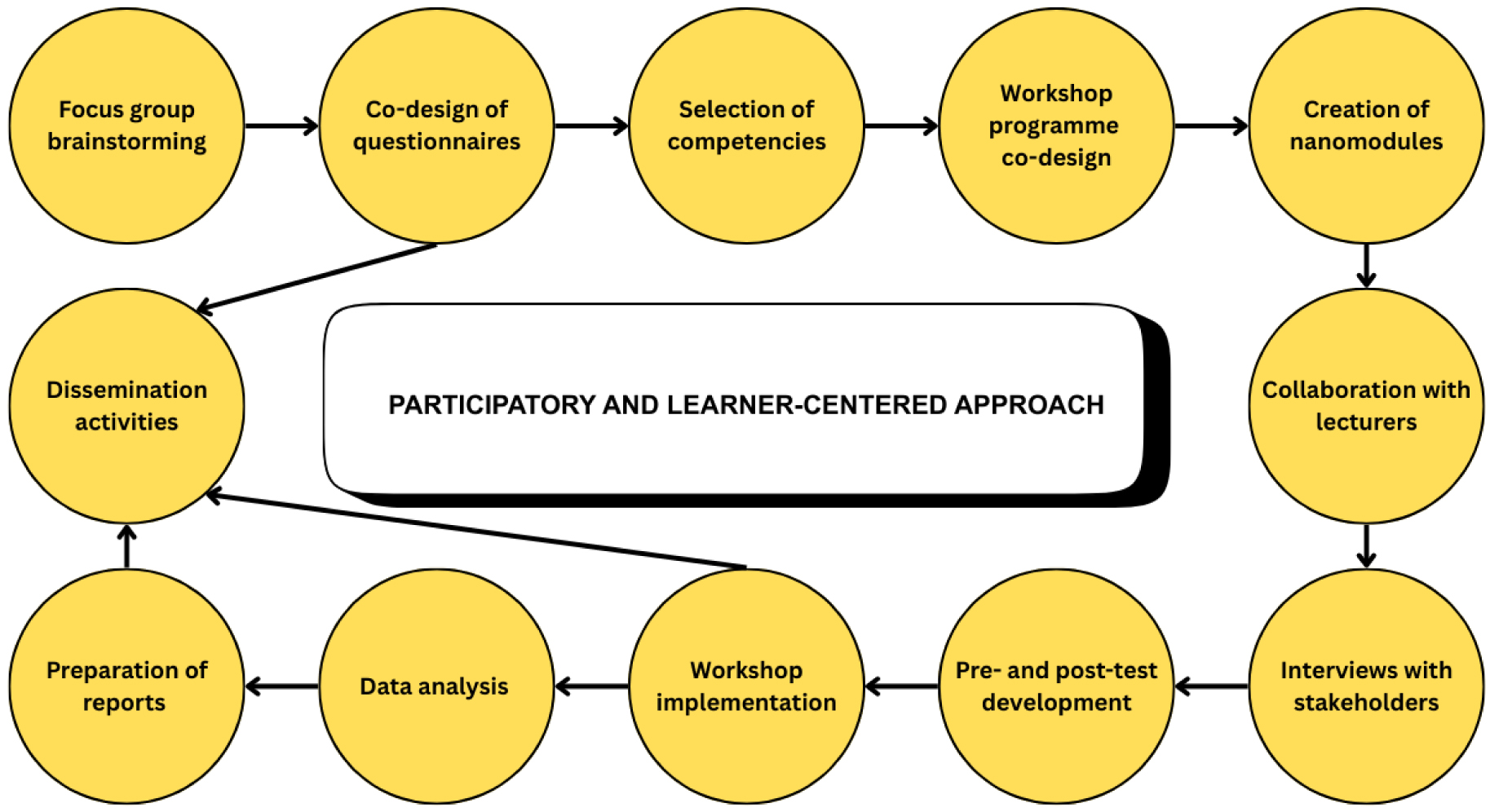
The overall study procedure followed a sequential and iterative framework (Figure 1), which included: (1) focus group brainstorming, (2) co-design of questionnaires, (3) selection of competencies, (4) co-design of the workshop program, (5) creation of nanomodules, (6) collaboration with lecturers, (7) interviews with stakeholders, (8) pre- and post-test development, (9) workshop implementation, (10) data analysis, (11) preparation of reports, and (12) dissemination activities. This comprehensive process ensured that students were actively engaged as co-creators throughout the research and learning process.
This participatory and learner-centred approach enabled a close link between students' perceived needs and the design of innovative learning content, enhancing the relevance and effectiveness of educational interventions while fostering active engagement, interdisciplinary collaboration, and real-world problem-solving skills. By integrating students in every phase ‒ from co-design to implementation and dissemination ‒ the study exemplifies a learner-based, participatory methodology that strengthens sustainable innovation competencies in STEM education.
The workshop was conducted during the 2024/2025 academic year at the Jožef Stefan International Postgraduate School (IPS). Based on a prior needs analysis, key competencies were identified in collaboration with academic and industry mentors. The workshop was designed to deepen students’ understanding of these competencies through hands-on activities, collaborative problem-solving, and project-based learning. Emphasis was placed on the creation of nanolearning units in video format, adapted for digital platforms such as Facebook, YouTube, and LinkedIn. These modules covered three thematic areas:
financial literacy in the digital era,
cybersecurity in the age of large language models (LLMs), and
food waste and circular economy.
The workshop was held in a hybrid format, allowing participants to join either in-person at IPS or remotely via Zoom, accommodating diverse learning needs and increasing accessibility. A total of 26 participants attended, of which 8 were present on-site and 18 participated remotely. This hybrid approach enabled active engagement, flexibility, and inclusion of participants from varied backgrounds, contributing to richer discussions and knowledge exchange. The program was developed collaboratively and structured modularly, with each module including a short student-produced video followed by a mentor-led expert lecture. This design facilitated the integration of practical workplace experience with academic knowledge and encouraged interdisciplinary and participatory learning. Students actively contributed to the preparation of content, videos, and interactive questions, which strengthened engagement and reinforced the practical application of knowledge.
A dedicated competence tracking application was used to monitor student progress during the workshop [25]. Pre-tests and post-tests were administered for each key competency, allowing mentors to quantitatively assess learning outcomes and identify areas requiring additional support. Participant feedback was collected through an online questionnaire assessing content relevance, user experience with the application, and overall workshop organisation.
This section presents the results of an exploratory empirical study conducted to assess STEM students’ perceptions of sustainability-related competencies, their self-evaluated proficiency levels, preferred learning formats, and the effectiveness of targeted educational interventions. Given the relatively small sample size, the findings provide indicative insights rather than statistically generalisable conclusions. The analysis combines questionnaire data, pre-/post-assessment results, and a structured evaluation of the workshop implementation to provide a comprehensive overview of how students understand the importance of sustainable competencies, identify gaps within current study programmes, and respond to participatory, learner-centred workshop. By integrating perception-based data with measured learning outcomes and participant feedback on the learning experience, the section offers both qualitative and quantitative insights into competence development within higher education.
The analysis focused on students from STEM fields, with a particular emphasis on postgraduate students from the Jožef Stefan International Postgraduate School (IPS), including both domestic and international participants. The questionnaire was distributed via the IPS Student Council mailing list and the school's official social media channels (Facebook, LinkedIn). Additionally, the Slovenian non-governmental organisation (NGO) MIITR from Maribor supported the outreach by sharing the invitation through their own network, thus involving students from other educational institutions. A key role in promoting the questionnaire was played by STEM students participating in the PUŠ project, who invited their peers to take part. In total, 30 responses were collected, of which 6 respondents were actively involved in the project and participated in the organisation and implementation of the project’s workshop. Given the relatively small sample size, the research is positioned as an exploratory study, aiming to provide preliminary insights rather than statistically generalisable conclusions.
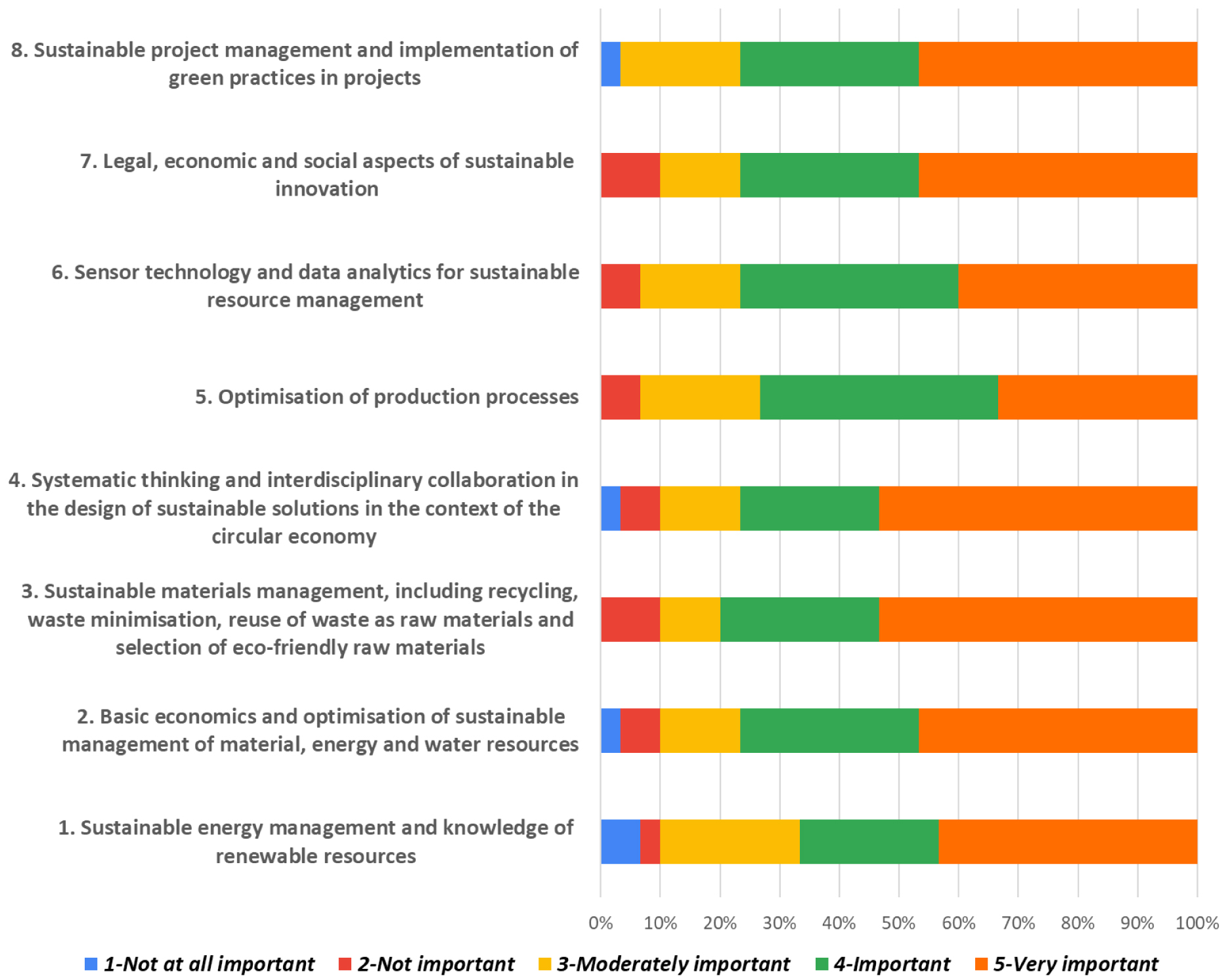
In this section of the questionnaire, students were asked to evaluate the importance of various competencies for their career and personal development. For each listed competence in Figure 2, they selected one of five response options reflecting the perceived level of importance:
1 – Not at all important: the student believes the competence has no or minimal value for their development.
2 – Not important: the competence is not essential but may have limited impact.
3 – Moderately important: the competence has a moderate influence on development, though it is not considered critical.
4 – Important: the competence is considered valuable for career and personal growth.
5 – Very important: the competence is seen as crucial and plays a key role in the student’s development.
As presented in Figure 2, most STEM students identified key competencies related to sustainable development as highly important for their career and personal development. Approximately 70–80% of respondents rated various areas of sustainable management ‒ such as economic efficiency, material management, production optimisation, and systems thinking ‒ as critically important for the future. Students also highlighted the relevance of advanced technologies like sensor technology and data analytics, which are essential for effective and sustainable resource use. Nevertheless, a smaller portion of students did not perceive certain competencies as highly necessary, particularly those more focused on narrow technical fields, who may not recognise the importance of interdisciplinary collaboration or economic efficiency in sustainable development. Still, the results indicate that most students understand the broader context of sustainable solutions, acknowledging the importance of integrating not only technical and economic aspects but also legal, social, and ecological factors ‒ demonstrating an encouraging awareness of the holistic nature required for a sustainable industry and society.
Sustainable entrepreneurship is becoming increasingly crucial in a rapidly changing business environment, where entrepreneurs seek ways to use resources efficiently, act with environmental responsibility, and develop innovative business models. Success in this field requires specific competencies including adapting to sustainability trends, implementing new practices, and responsibly managing enterprises. The following ten questions in Figure 3 assess the perceived importance of these competencies among STEM students for the future of sustainable entrepreneurship.
Analysis of responses from 30 surveyed students in Figure 3 shows that the majority recognise sustainable competencies as key for the future of entrepreneurship. Most questions received a high level of agreement regarding their importance, indicating strong awareness of sustainability challenges and opportunities. The highest support was given to questions related to financial literacy in sustainable investments, where no respondents chose lower ratings, and to energy efficiency and the use of renewable resources, rated as very important by more than 80% of participants. This reflects a clear understanding of both environmental and economic benefits of sustainable practices.
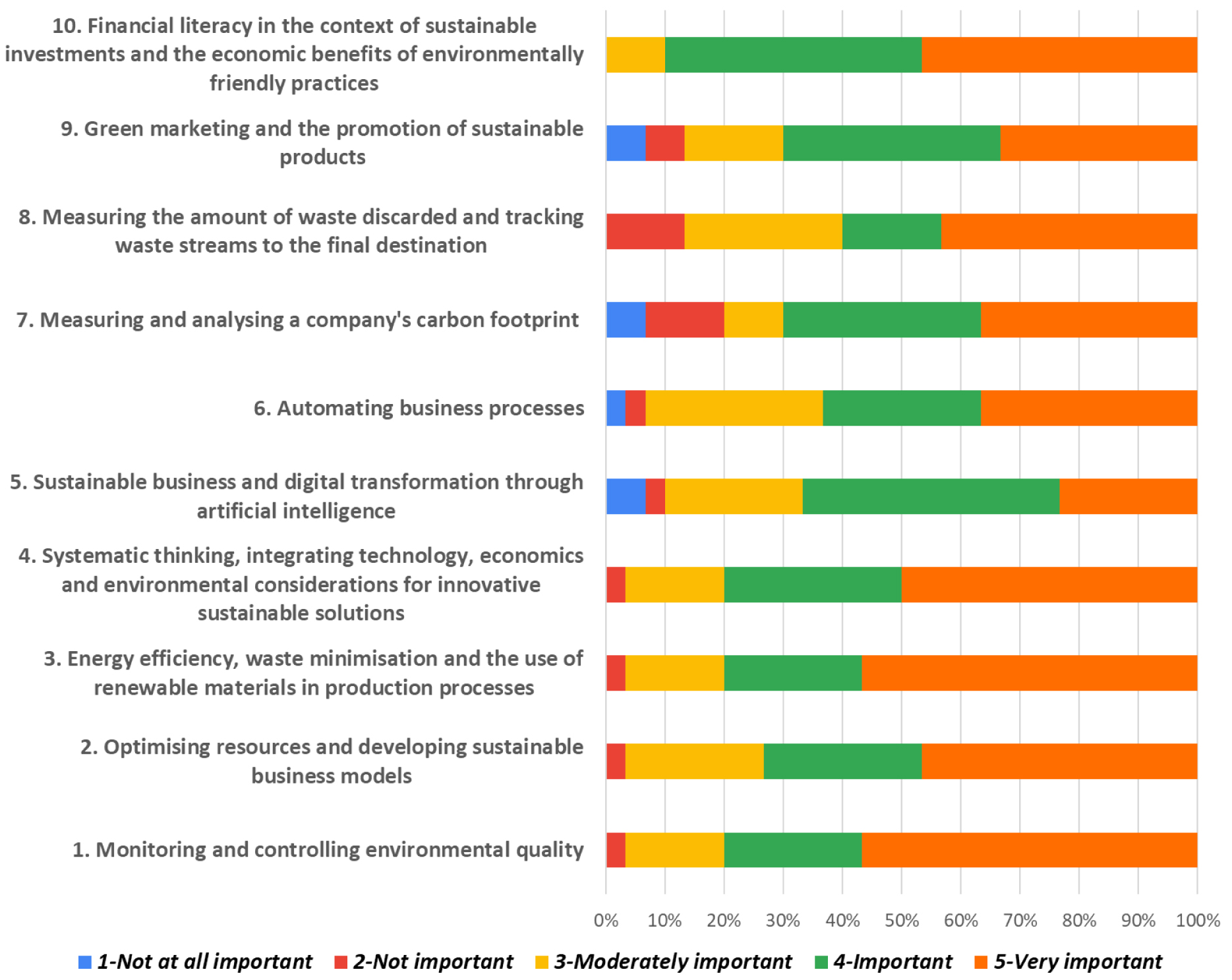
Similarly, systematic thinking ‒ which integrates technology, economics, and environmental factors for innovative solutions ‒ received strong endorsement, demonstrating recognition that a holistic approach is essential for the successful implementation of sustainability strategies. Somewhat less consensus was observed around green marketing and promotion of sustainable products, where more sceptical responses appeared. Opinions were also more varied regarding sustainable business operations and digital transformation through artificial intelligence (AI), possibly reflecting lower confidence in the direct connection between these areas. Competencies related to measuring and analysing a company’s carbon footprint and tracking waste streams were rated somewhat lower compared to other competencies, which may indicate less awareness of the importance of these practices or perceived challenges in their practical application within real business settings.
The survey investigated how well students perceive their mastery of competencies crucial for sustainable entrepreneurship. Respondents were asked to self-assess their skills in systematic thinking, communication, understanding environmental impacts of industry, problem-solving, digital tool proficiency, teamwork, critical thinking, ethics and social responsibility, sustainable thinking, and financial literacy. Results in Figure 4 show that students generally feel confident in key areas such as communication skills, critical thinking, and systematic thinking, with over 60% rating themselves highly in these competencies. These areas are fundamental for addressing complex sustainability challenges and promoting responsible business practices.
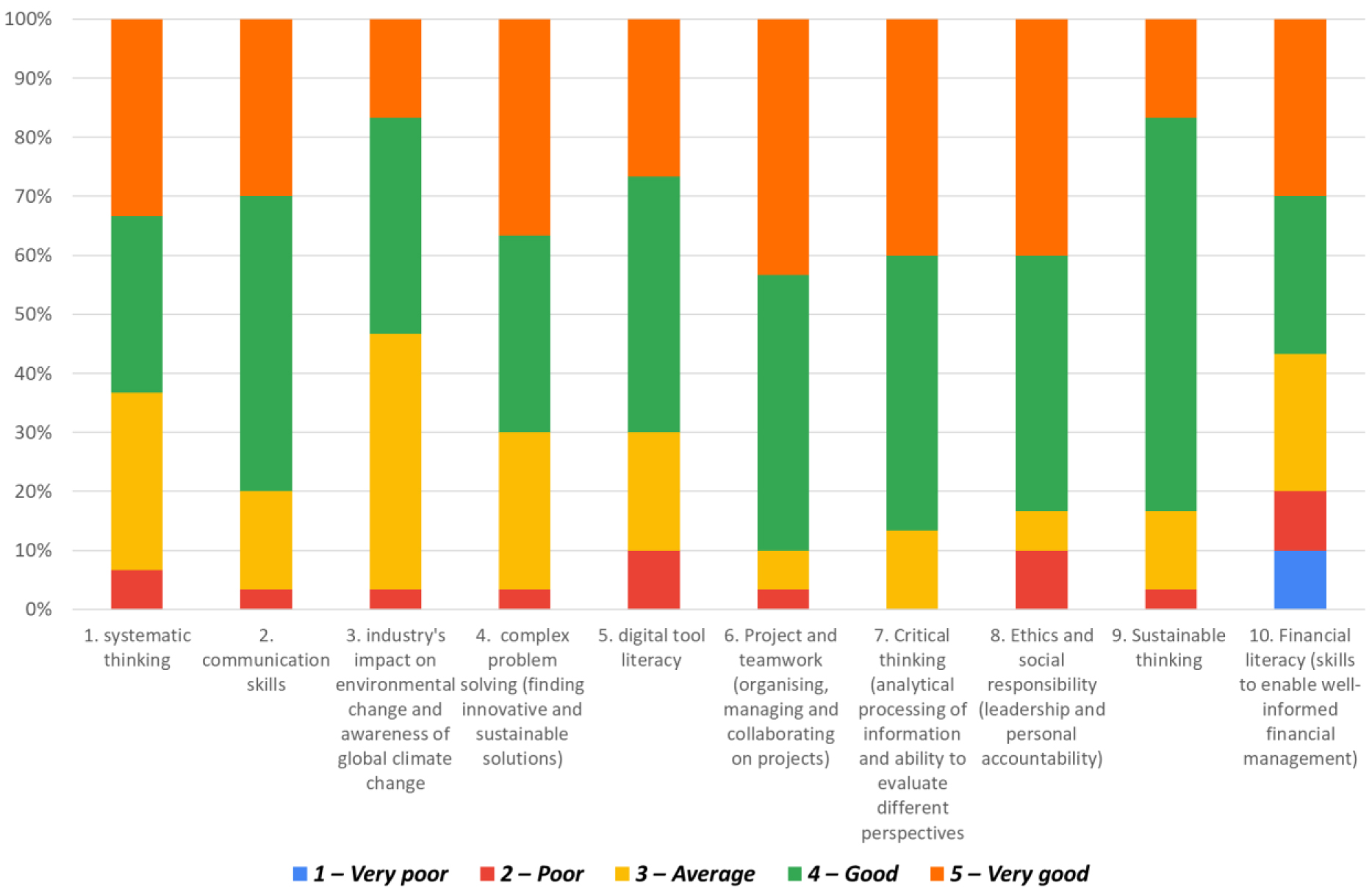
However, Figure 4 shows that not all competencies received equally high ratings. For example, while students demonstrated strong self-confidence in solving complex problems (70% rated themselves with a 4 or 5), there is still a considerable proportion (around 27%) who feel their skills are only moderate. In the domain of environmental awareness and the industry’s role in climate change, most respondents (80%) reported at least a basic understanding, though only 17% rated their knowledge at the highest level. Similarly, while 70% of students feel proficient in digital tools, 10% indicated they need further training in this area.
In terms of ethical and sustainable thinking, most students (over 80%) believe they have well-developed competencies, with only a small minority indicating room for improvement. The high self-assessment in critical thinking (87% rating themselves highly) is particularly promising, as it underpins informed decision-making in sustainable innovation. Nevertheless, the survey reveals opportunities for targeted educational interventions—especially in enhancing students’ environmental literacy, strengthening their confidence in financial literacy and digital tools, and ensuring that all students feel well-prepared to lead responsibly and innovatively in a sustainability-driven future.
As part of the participatory questionnaire, students were asked: “Which types of training do you find most suitable for your personal and professional development?” They rated nine different types of training (Figure 5) on a scale from 1 (not suitable at all) to 5 (very suitable). The aim was to explore which learning formats students perceive as most effective and aligned with their preferred ways of acquiring knowledge and skills.
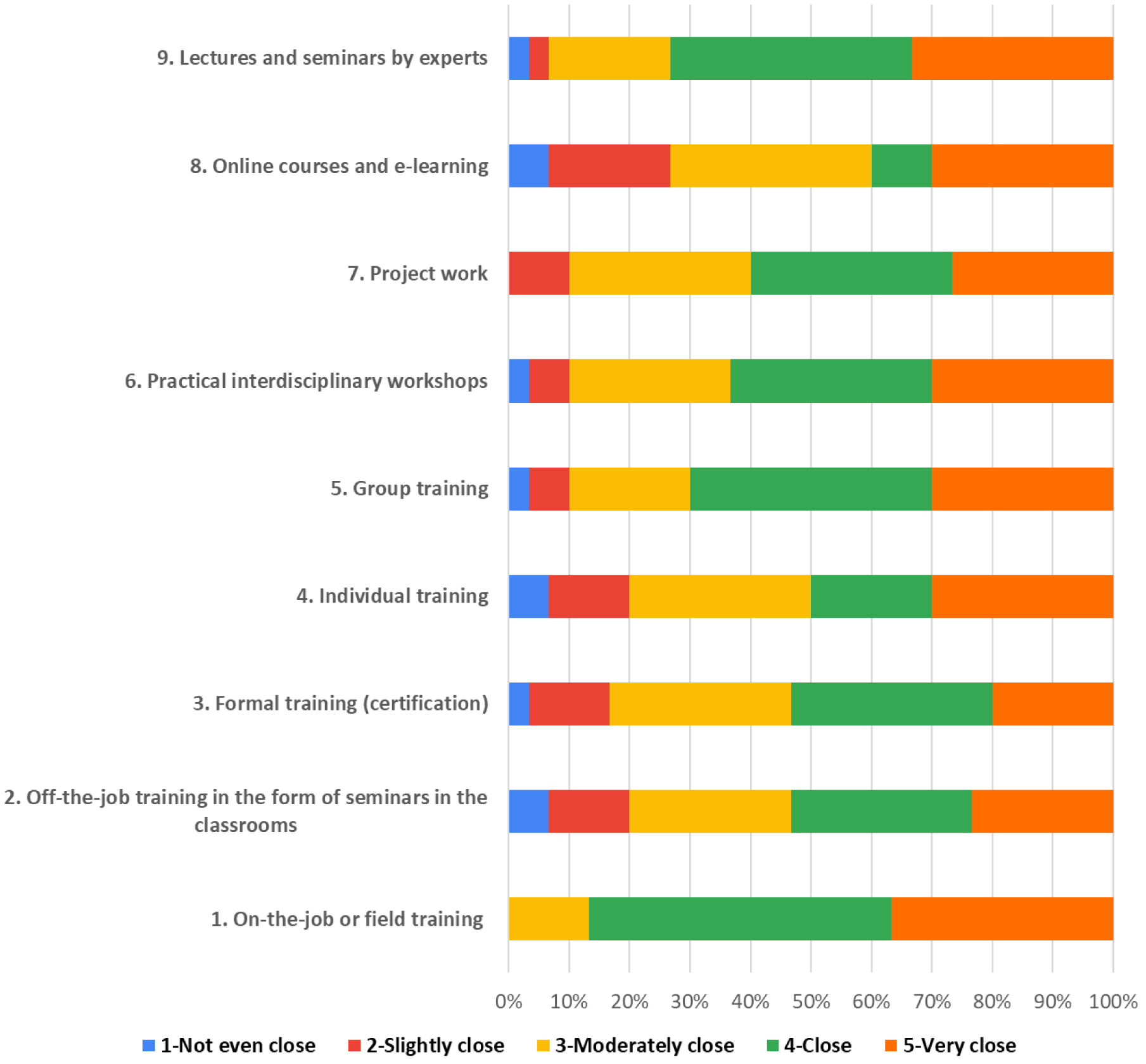
The results in Figure 5 clearly show that students strongly favour practical and experience-based learning. On-the-job or field training received the highest approval, with 87% of students rating it as important or very important. Group training was also highly valued (70%), followed by interdisciplinary workshops (63%) and project-based learning (60%). These findings emphasise the importance of learning by doing and peer collaboration in developing competencies relevant to real-world challenges.
In contrast, more formal or structured training formats, such as certified courses and off-the-job seminars, received moderate support (53%), while online courses and e-learning were rated as important by only 40% of students. This suggests that although digital and formal learning have their place, students perceive them more as complementary tools rather than primary learning methods. Overall, the results highlight the need to design training programs that prioritise hands-on, team-oriented, and context-based approaches, while integrating digital elements to support flexibility and accessibility.
When asked which three entrepreneurial skills they felt were most lacking in their study program, students most frequently identified entrepreneurial and financial competencies, particularly financial literacy, project management, and basic economic knowledge. These responses suggest a clear need to strengthen students’ understanding of business fundamentals, including financial decision-making and managing entrepreneurial projects. Students emphasised that without these core competencies, it is difficult to translate ideas into sustainable business practices or understand the operational aspects of entrepreneurship.
In addition to financial and managerial gaps, students highlighted the lack of communication and leadership skills, such as teamwork, networking, and project leadership. Many also expressed the need for more support in developing entrepreneurial thinking and innovation skills, particularly in terms of turning ideas into viable business models and navigating the process of knowledge commercialisation. The need for technical and digital skills ‒ including programming and digital tool proficiency ‒ was also repeatedly mentioned, along with calls for more hands-on training and workshops. These findings point to a broader demand for more practice-oriented and interdisciplinary approaches that would prepare students more effectively for entrepreneurial careers.
Students identified several areas where study programs could be enhanced to better support sustainable entrepreneurship. Most notably, they emphasised the importance of practical training and collaboration with experienced entrepreneurs. Responses highlighted a strong desire for more workshops, fieldwork, and hands-on activities, as well as opportunities to learn directly from practicing entrepreneurs. Involving entrepreneurs in the teaching-learning process was seen as a keyway to provide real-world insight and guidance, helping students better understand business operations and sustainability challenges in practice.
Another significant suggestion was the need for interdisciplinary collaboration and project-based learning. Students expressed interest in working on joint projects that combine knowledge from diverse fields such as engineering, economics, chemistry, and social sciences. They also called for a stronger integration of sustainability topics within the curriculum, including dedicated courses on sustainable entrepreneurship and innovation. Finally, many students stressed the importance of nurturing entrepreneurial mindsets and creativity by showcasing good practices and encouraging the transformation of ideas into impactful, sustainable solutions. These findings underline a strong preference for more applied, collaborative, and sustainability-focused approaches in higher education.
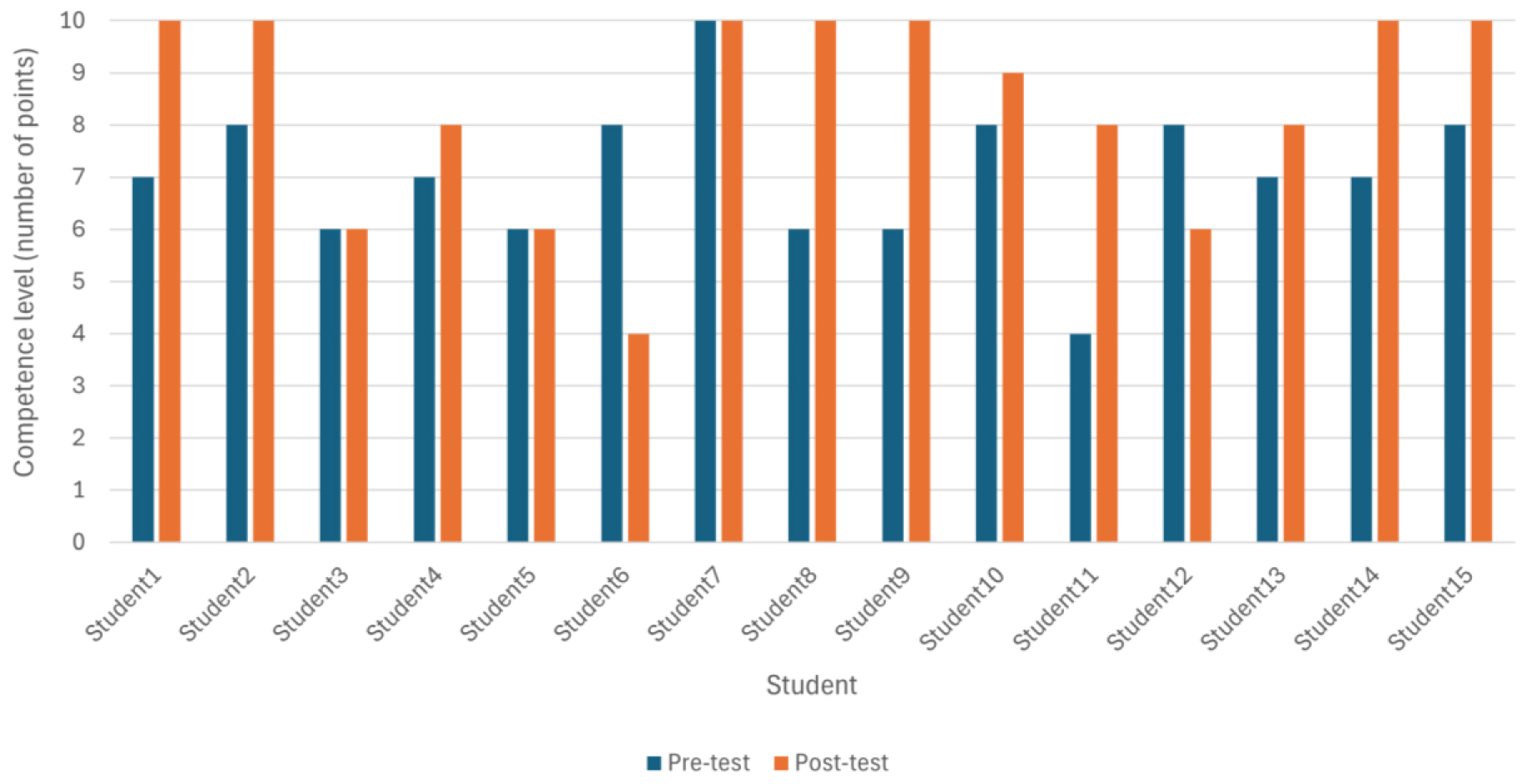
The evaluation of competence development during the workshop was supported by pre- and post-test assessments. For the competency “Digital financial management” (Figure 6), results from 15 students indicate that 10 participants achieved higher post-test scores, demonstrating successful knowledge transfer. Three students showed no change, likely due to prior knowledge, while two students exhibited minor declines, potentially attributable to misinterpretation or decreased attention. Notably, Students 8, 9, and 11 displayed a four-point improvement, reflecting effective learning outcomes. These findings suggest that the structured approach ‒ combining video-based content, expert lectures, and facilitated discussions ‒ effectively supported competence development and provided quantitative insights into learning progress.
For the competency “Security challenges of artificial intelligence and LLMs” (Figure 7), data from 15 students show that while most participants maintained stable scores, some demonstrated notable improvements, particularly Students 1 and 9, who improved by four or more points. Students 3, 7, 8, and 12 also exhibited increases, whereas Student 2 showed a slight decline. These results indicate heterogeneous outcomes, suggesting that the topic may be more challenging or less familiar to participants. Nevertheless, measurable improvements in several students confirm the effectiveness of the module. Future implementations could benefit from incorporating additional practical examples, interactive exercises such as threat simulations, and targeted support for participants with lower initial proficiency.
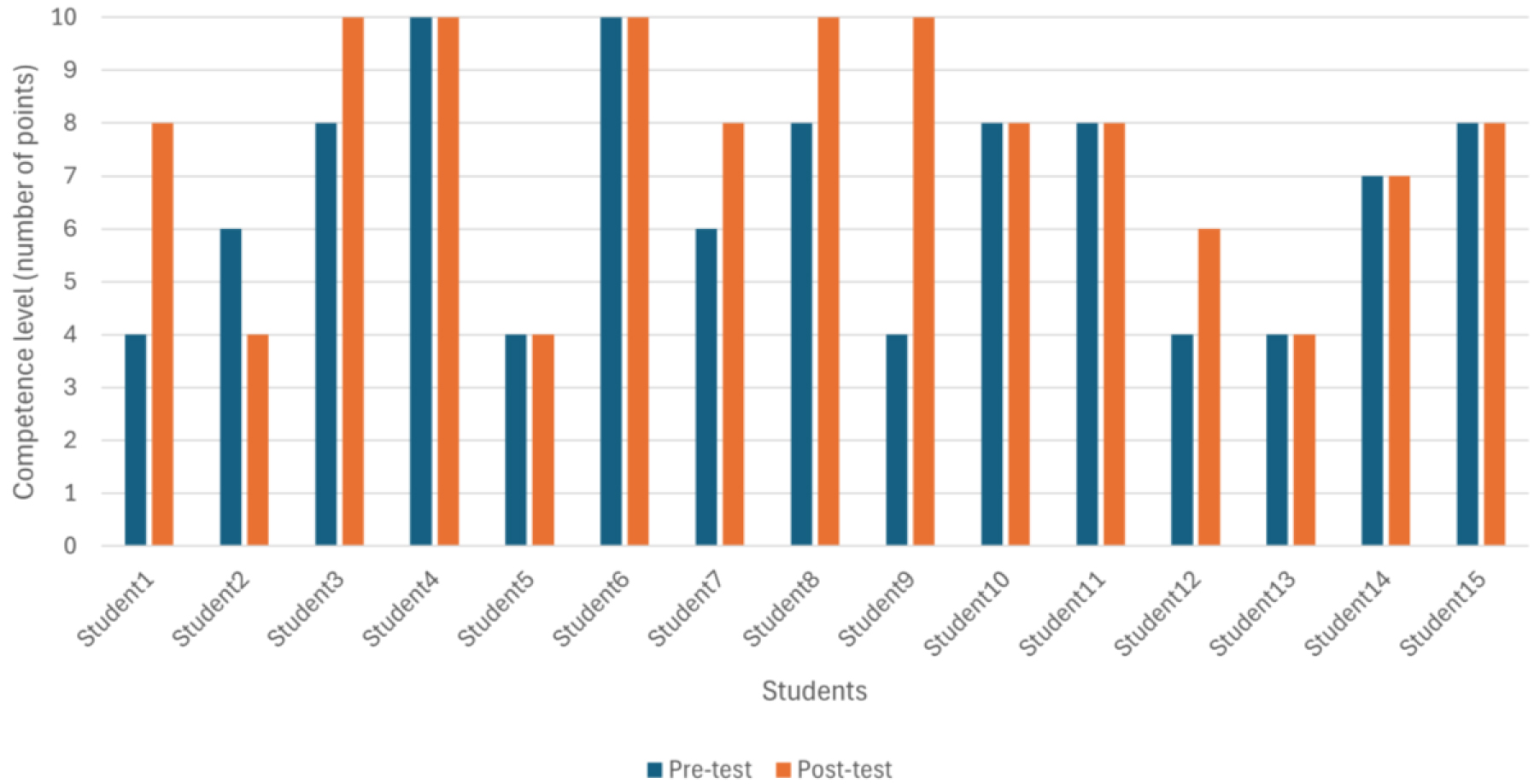
Regarding the competency “Food waste prevention in the circular economy” (Figure 8), analysis of 14 students revealed that nine participants improved their post-test results, indicating the module’s effectiveness in promoting understanding of circular economy principles. Three students displayed no change, suggesting pre-existing knowledge or limited impact, while two students showed minor declines, possibly due to comprehension challenges or external factors during testing. The most pronounced improvements were observed in Students 2 and 5, who exhibited the largest gains, highlighting significant learning outcomes. Overall, the analysis demonstrates that the learning objectives were largely achieved while emphasizing the value of individualised monitoring to identify students requiring additional support.
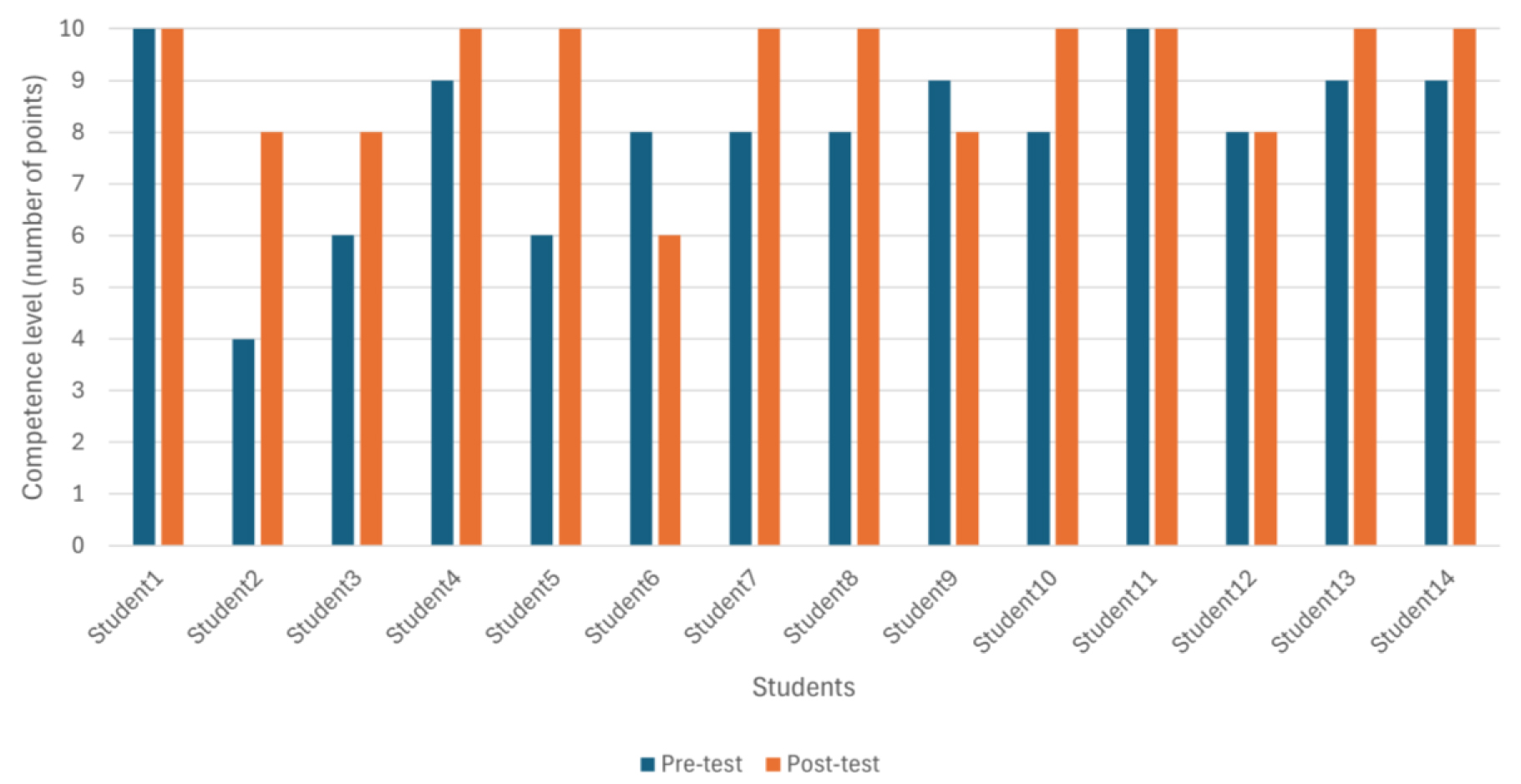
In summary, the combined findings from participant feedback and pre/post-assessment data indicate that the workshop effectively supported competence development across multiple domains. The use of structured educational modules, complemented by interactive elements and applied assessments, facilitated measurable learning gains while providing actionable insights for further refinement of content, delivery, and digital support tools.
At the conclusion of the workshop, participants were invited to complete an online questionnaire designed to evaluate the workshop implementation, the content of the presented nanomodules, and the user experience with the developed application for monitoring competence development. The collected feedback provides a valuable source of information for improving both the application and the design of effective, user-centred educational strategies. The questionnaire was completed by 14 participants, representing a substantial proportion of all attendees, thereby enabling a robust analysis of satisfaction and user experience.
The demographic and educational profile of respondents was diverse, providing a multidimensional perspective on the usability and accessibility of the application as well as the relevance of the workshop content. Male respondents accounted for 43%, while females represented 57%. Age distribution was as follows: 36% were 18–25 years old, 21% were 26–35 years old, another 21% were over 56 years old, 14% were 36–45 years old, and 7% were 46–55 years old. In terms of educational attainment, 29% held a doctoral degree, 29% a master’s degree, 21% a bachelor’s degree, and 21% had completed secondary education or grammar school. Employment status was also heterogeneous, with 64% employed and 36% being students employed through student work contracts. Regarding place of residence, 50% of respondents lived in urban areas, 36% in rural areas, and 14% in suburban areas. This heterogeneity allows for a more comprehensive understanding of both the application’s usability and the workshop’s relevance across different participant profiles.
Analysis of the questionnaire indicates a generally positive evaluation of the workshop. A large majority of respondents (79%, 11 out of 14) strongly agreed that the workshop content was engaging, suggesting substantial interest in the topics presented. Similarly, 71% of participants assessed both the workshop and the facilitators as being at a higher-education level, confirming the perceived quality and professionalism of delivery, although a minority reported differing expectations regarding academic depth. Concerning organisation, 79% agreed or strongly agreed that the workshop was well-structured and effectively implemented, while a small proportion identified potential areas for improvement in content sequencing or time management. Furthermore, 71% of respondents indicated that they would recommend the workshop to others, reflecting a high level of overall satisfaction. More than half of the participants (57%) strongly agreed that they had enhanced their competencies through the workshop, underscoring its relevance for personal and professional development. Nonetheless, the presence of a small subset of participants expressing dissatisfaction highlights the need for future iterations to better align learning objectives with participants’ prior knowledge and expectations.
The analysis of student responses reveals a significant gap between the perceived importance of key sustainability-related competencies and students’ self-assessed proficiency in them. While STEM students consistently acknowledge the critical role of skills such as financial literacy, systems thinking, and environmental monitoring, they often feel inadequately prepared in these areas. This discrepancy points to a shortcoming in current higher education programs and highlights the need for targeted educational reforms.
For instance, although more than 90% of students rated financial literacy in the context of sustainable investment as essential, nearly half assessed their knowledge as poor or average. This suggests that financial education related to sustainability remains underdeveloped, limiting students’ ability to evaluate the economic implications of environmentally responsible decisions. These findings support the notion that sustainability competencies must integrate both cognitive and normative dimensions, where personal values and attitudes are vital for the application of sustainability knowledge [14]. This aligns with findings from a recent scoping study [10], which emphasises the need to embed sustainability-related goals ‒ such as financial and innovation literacy—into higher education. Additionally, these results underscore the importance of participatory approaches, where students are actively involved in co-creating curricula and practical learning activities, fostering both ownership of learning and intrinsic motivation.
Moreover, systems thinking ‒ a foundational skill for navigating complex sustainability problems ‒ was recognised by students as important but similarly underdeveloped. The same applies to competencies in circular economy and resource efficiency, both increasingly critical in low-waste, low-carbon economic models. Yet, students' practical understanding of these concepts remains limited. These gaps suggest an urgent need to redesign entrepreneurship and STEM education through more applied, interdisciplinary, and sustainability-focused content. Integrating problem-based learning that focusses on real-world sustainability challenges can enhance critical thinking, collaborative problem-solving, and students’ ability to transfer knowledge to practical contexts. Strategies such as real-world case studies, collaboration with industry, and experiential learning could effectively address these gaps. Participatory problem-based projects also allow students to encounter authentic sustainability dilemmas, reflecting both environmental and societal dimensions, which can deepen ethical reasoning and systemic understanding.
Incorporating socio-emotional and behavioural learning through reflective pedagogies has been shown to significantly enhance students’ capacity for sustainable innovation and transformation. These approaches are further validated by the aforementioned study [14], which highlights the value of interdisciplinary and project-based learning in promoting key SDG-aligned competencies such as “fostering innovation” and “embracing environmental sustainability.” Importantly, this pedagogical reorientation also reflects the broader strategic objectives of the European Union in higher education.
Initiatives such as the European Skills Agenda and the European Education Area call for equipping graduates with transversal skills ‒ entrepreneurial, digital, and sustainability-related—to support both lifelong learning and innovation. These EU strategies position higher education institutions as central to building a resilient, adaptable, and future-oriented workforce. However, as the comparative study [10] also warns, aligning teaching practices with the SDGs introduces tensions. In particular, the increased workload and emotional pressure placed on educators could compromise their well-being and teaching effectiveness. This raises a central dilemma: how to balance expanding educational responsibilities with the need to maintain the mental health and work-life balance of teaching staff.
Addressing the competence gaps identified in this study is therefore not merely an institutional concern but a broader policy imperative. European frameworks emphasise that without actively engaging students through participatory, problem-based, and experiential learning, competence development risks remaining superficial. For example, enhancing financial literacy among youth is essential not only for informed personal finance decisions, but also for promoting sustainable investment strategies in future careers. Embedding this literacy into a broader sustainability framework ensures that economic decisions contribute meaningfully to systemic and normative sustainability goals.
Furthermore, emerging research [10], [26] underscores the potential of personalised learning, effective communication strategies, and ethical digital education as avenues for strengthening inclusivity, resilience, and long-term relevance of higher education. These innovations can directly support SDG-aligned goals such as “reducing inequalities,” “establishing quality education,” and “fostering innovation.” Overall, the findings support a dual focus on content and pedagogy: teaching sustainability knowledge while simultaneously implementing participatory, problem-based, and interdisciplinary methods that prepare students to apply these competencies in real-world sustainability contexts.
STEM students clearly recognise the importance of a broad range of sustainability competencies for their personal and career development, with particular emphasis on practical application and strategic aspects of sustainable development. They especially value competencies related to sustainable material management, including recycling, waste reduction, and the selection of eco-friendly raw materials, as well as systematic thinking, which enables interdisciplinary collaboration in addressing sustainability challenges within the circular economy. At the same time, students highlighted key competencies for sustainable entrepreneurship, including financial literacy in the context of sustainable investments, environmental quality monitoring, energy efficiency, and the use of renewable materials. These findings indicate an understanding that strategic planning, environmental oversight, and holistic thinking are essential for success in sustainable entrepreneurship.
Furthermore, students demonstrate a strong preference for practical, collaborative, and interdisciplinary learning methods such as project work, workshops, and field training, underscoring the need to better connect theoretical knowledge with real-world applications. The lower interest in formal training formats suggests a need to adapt pedagogical strategies to better support the development of essential sustainability competencies among future STEM professionals. Additionally, students recognise the importance of digital tools and cybersecurity awareness when working with emerging technologies, highlighting the need for comprehensive educational coverage of these areas.
Building directly on these research findings, a participatory and problem-based learning approach was implemented, engaging students as active co-creators throughout the workshop. The workshop was designed to target three essential competencies, based on the expressed learning needs of participants: (1) financial literacy in the era of digitalisation, (2) cybersecurity awareness in the context of LLMs and AI, and (3) circular economy practices in the food sector. Students were not only participants but also contributors to the development of the learning environment: they co-designed learning materials, created knowledge assessment tools, and participated in evaluating their own competency development. This participatory design was systematically measured through pre- and post-tests, which demonstrated tangible improvements in most students’ competencies, confirming the effectiveness of this learner-centred approach. By involving students in collaborative content creation, including presentations and short video clips suitable for social media, the learning impact was extended beyond the classroom and fostered engagement with sustainability challenges in broader societal contexts. The workshop facilitated experiential learning that bridges theory and practice, encourages interdisciplinary collaboration, and actively empowers students to shape educational strategies for sustainability.
Overall, the results underscore that participatory, problem-based, and learner-centred approaches are highly effective for developing competencies in sustainable transformation. These findings support the initial hypothesis that actively involving students in co-design and experiential learning processes enhances the acquisition of sustainability-oriented innovation competencies. By positioning students as co-creators and emphasizing teamwork, real-world problem solving, and reflective assessment, higher education programs can more effectively equip STEM graduates to address the complex and interconnected challenges of sustainability.
- ,
Global trend of STEM Education for the SDGs of the last decade: A bibliometric analysis ,E3S Web of Conferences , Vol. 568 , 2024, https://doi.org/10.1051/e3sconf/202456804020 - ,
Aligning Engineering Education for Sustainable Development through Governance: The Case of the International Center for Engineering Education in China ,Sustainability , Vol. 14 (21), 2022, https://doi.org/10.3390/su142114643 - ,
Sustainable Development as a Meta-Context for Engineering Education ,Journal of Sustainable Development of Energy, Water and Environment Systems , Vol. 1 (4), :304-3102013, https://doi.org/10.13044/j.sdewes.2013.01.0023 - , Engineering for sustainable development: delivering on the Sustainable Development Goals
- ,
Developing Energy Concept Maps - An Innovative Educational Tool for Energy Planning ,Journal of Sustainable Development of Energy, Water and Environment Systems , Vol. 6 (4), :742-7542018, https://doi.org/10.13044/j.sdewes.d6.0219 - ,
Sustainability through STEM and STEAM Education Creating Links with the Land for the Improvement of the Rural World ,Land , Vol. 11 (10), 2022, https://doi.org/10.3390/land11101869 - ,
Towards a Sustainable Future: Evaluating the Ability of STEM-Based Teaching in Achieving Sustainable Development Goals in Learning ,Sustainability , Vol. 15 (16), 2023, https://doi.org/10.3390/su151612542 - ,
Education for Sustainable Development in Higher Education-Introduction to a Special Issue ,Sustainability , Vol. 14 (17), 2022, https://doi.org/10.3390/su141710530 - ,
The implementation of the SDGs in universities: a systematic review ,Environmental Education Research , Vol. 28 (11), :1585-16152022, https://doi.org/10.1080/13504622.2022.2063798 - ,
Recommendations to align higher education teaching with the UN sustainability goals - A scoping survey ,International Journal of Educational Research Open , Vol. 5 , 2023, https://doi.org/10.1016/j.ijedro.2023.100280 - ,
Massive Open Online Courses as a Digital Learning Strategy of Education for Sustainable Development ,Journal of Sustainable Development of Energy, Water and Environment Systems , Vol. 8 (3), :577-5892020, https://doi.org/10.13044/j.sdewes.d7.0311 - ,
Design Principles for Considering the Participatory Relationship of Students, Teachers, Curriculum, and Place in Project-Based STEM Units ,Education Sciences , Vol. 12 (11), 2022, https://doi.org/10.3390/educsci12110760 - ,
Educating Future Energy Engineers for Sustainability: Case Study in Energy Economy ,Journal of Sustainable Development of Energy, Water and Environment Systems , Vol. 3 (1), :26-482015, https://doi.org/10.13044/j.sdewes.2015.03.0003 - ,
Preparing engineering students for the challenges of the SDGs: what competences are required? ,European Journal of Engineering Education , Vol. 48 (1), :1-232023, https://doi.org/10.1080/03043797.2022.2033955 - ,
Competences to Address SDGs in Higher Education - A Reflection on the Equilibrium between Systemic and Personal Approaches to Achieve Transformative Action ,Sustainability , Vol. 11 (13), 2019, https://doi.org/10.3390/su11133664 - ,
Decision Support Concept for Improvement of Sustainability-Related Competences ,Sustainability , Vol. 14 (14), 2022, https://doi.org/10.3390/su14148539 - ,
Challenging 21st-Century Competencies for STEM Students: Companies’ Vision in Slovenia and Norway in the Light of Global Initiatives for Competencies Development ,Sustainability , Vol. 16 (3), 2024, https://doi.org/10.3390/su16031295 - ,
Comprehensive Review of School-Based Interventions to Improve Food Quality, Nutrition, and Sustainability in Educational Settings ,Journal of Sustainable Development Indicators , Vol. 1 (3), :1-182025, https://doi.org/10.13044/j.sdi.d2.0618 - ,
Redefining learning: student-centered strategies for academic and personal growth ,Frontiers in Education , Vol. 10 , 2025, https://doi.org/10.3389/feduc.2025.1518602 - ,
Integrating Personal Growth in ADE Curriculum for Sustainable Impact ,Education Sciences , Vol. 15 (6), 2025, https://doi.org/10.3390/educsci15060723 - ,
University Students’ Character Strengths and Their Impact on Quality Education in Higher Education ,Education Sciences , Vol. 15 (10), 2025, https://doi.org/10.3390/educsci15101407 - ,
Inclusive design for chemistry laboratories: A participatory approach to supporting students with disabilities in STEM education ,Education for Chemical Engineers , Vol. 54 , 2026, https://doi.org/10.1016/j.ece.2025.10.003 - ,
A Participatory Design Approach to Designing Educational Interventions for Science Students Using Socially Assistive Robots ,Electronics , Vol. 14 (13), 2025, https://doi.org/10.3390/electronics14132513 - , A Connected Learning Approach to General STEM Education: Design and Reality, Communicating Chemistry through Social MediaACS Symposium Series, 2018
- ,
Transformation of the RESPO Decision Support System to Higher Education for Monitoring Sustainability-Related Competencies ,Sustainability , Vol. 15 (4), 2023, https://doi.org/10.3390/su15043477 - ,
Enhancing personalized learning: AI-driven identification of learning styles and content modification strategies ,International Journal of Cognitive Computing in Engineering , Vol. 5 , :269-2782024, https://doi.org/10.1016/j.ijcce.2024.06.002