



Access to a reliable water supply remains a major challenge in rural and remote areas, particularly in regions facing water stress and limited infrastructure development. Musie and Gonfa [1] highlighted the persistent difficulties in ensuring water availability in vulnerable regions. Lu et al. [2] demonstrated that water resources are unevenly distributed and require localised assessment. Zhou et al. [3] emphasised that water security is highly sensitive to environmental and socio-economic changes. Sintayehu et al. [4] showed that drought conditions further exacerbate water scarcity in rural areas.
Although groundwater extraction technologies such as motorised and photovoltaic pumping systems have expanded water access [5], their implementation often requires significant capital investment [6], technical maintenance capacity, and energy reliability [7]. These constraints are especially relevant in geographically complex and high-altitude environments [8], where climatic variability and limited technical support may compromise system sustainability [9]. In such contexts, low-complexity mechanical pumping systems represent a potentially more resilient and locally manageable alternative [10].
Groundwater is a strategic resource for strengthening rural water security [11], particularly in contexts where surface water availability is seasonal or unreliable and energy-dependent pumping systems face operational and economic constraints [12]. In many low-income regions, hand-operated pumping technologies have been widely implemented due to their relative affordability, ease of installation, and independence from external energy sources [13]. These systems have therefore become central components of decentralised rural water supply schemes [14].
Despite their widespread adoption, long-term functionality and service reliability remain significant concerns [15]. It has been reported that a substantial proportion of installed hand pumps may be non-operational at any given time due to inadequate maintenance structures, limited availability of spare parts, insufficient technical capacity, and inappropriate technology selection relative to local environmental and socio-technical conditions [16]. Sustainable operation and maintenance (O&M) frameworks emphasise that technological choices must align with the financial, managerial, and technical capabilities of user communities to ensure long-term viability [17]. Furthermore, not all standardised hand pump models perform equally under varying hydrogeological and environmental conditions. User preference for simpler mechanical systems has been observed when technological complexity exceeds local maintenance capacity [18]. These considerations highlight that technical performance cannot be evaluated solely by nominal pumping capacity; it must also account for environmental constraints that may directly affect hydraulic feasibility and operational sustainability.
In this context, rope pumps and manual volumetric pumps are viable alternatives to traditional pumping methods and are easily adaptable in rural communities [19]. Both pumping systems can be built from recyclable materials and offer favourable ergonomics for operation and maintenance, making them technically sustainable for adaptation in any area. Consequently, if properly adapted and integrated into the rural water framework, these technologies can become solutions that meet the growing water demands of households. Rope pump and piston systems harness the basic principle of kinetic energy, converting it into mechanical energy through rope and piston motion inside the cylinder. These simple devices ensure a constant water supply, promoting community participation and local autonomy without relying on external energy sources [20].
With respect to the rope pump, studies such as those by Bazaanah and Dakurah [19] considered four factors: robustness, flow rate, availability of spare parts, and access to expertise, to determine the sustainability and efficiency of the system compared to standardised internal combustion motor pumps in Ghana. They concluded that rope pumps are a feasible and sustainable technology capable of meeting communities' water needs. This system can supply water at different depths, as confirmed by Kadlowec et al. [21], who evaluated water extraction up to 35 m, while Bazaanah and Dakurah [19] reported that the pumping height ranges from 26 m for natural wells and up to 45 m for artificial wells. Meanwhile, Mohammed [22] demonstrated that rope pumps require less energy (for production, installation, and operation) and less materials for operation, relying solely on human energy, compared to other technologies such as solar and motorised pumps.
On the other hand, the manual volumetric pump is a mechanical device that extracts water through the piston's upward and downward movement inside a cylinder. This system operates through a piston mechanism that moves within the cylinder, generating volumetric changes that facilitate fluid intake and discharge. It uses check valves that open and close the flow, allowing water to be drawn from a well through a pipe and then pumped to the surface. It is ideal for shallow to medium-depth wells and stands out for its simplicity, low cost, and ease of maintenance. The manual volumetric pump, operated manually, suctions and pumps a constant volume of liquid in each cycle (suction and pumping). The operation of manual pumps is based on two principles: acceleration and displacement. Since it is a piston-and-cylinder-type pump, it relies on the incompressibility of water in the cylinder to lift it to the required heights. In a review of manual pumps across Africa, Foster et al. [15] found 600,000 manual pumps in operation but recommended strengthening the sector's capacity to ensure greater sustainability in water supply. For example, in parts of Africa where manual pumps such as Fridev, India Mark II, Nira AF-85, and Vergnet have been standardised for water supply, rural coverage has stagnated in recent years due to factors such as climate variability, poor service provision [23], pollution, and lack of infrastructure maintenance [24].
The maximum theoretical suction head of manually operated pumps is fundamentally constrained by atmospheric pressure. Under standard sea-level conditions, the practical suction limit approaches 10.3 m of water column; however, this value decreases as atmospheric pressure declines with increasing altitude. For example, reductions of approximately 1.5 m in theoretical suction height at 1500 m above sea level and about 3 m at 3000 m have been reported [25]. These reductions directly affect the pressure differential available to lift water, potentially limiting pump operability and discharge capacity. Although manually operated pumps have been widely evaluated at low and mid elevations, quantitative experimental evidence on their suction performance and delivered flow under reduced atmospheric pressure in high-altitude settings remains limited.
We hypothesise that reduced atmospheric pressure at high altitude constrains suction generation, leading to measurable changes in delivered flow rate and operational thresholds compared with performance reported at lower elevations. Accordingly, this study experimentally evaluates the hydraulic performance of a rope pump and a manual volumetric pump under high-altitude conditions, using a high-Andean test site as a case study to inform technology selection and adaptation for rural water supply.
This section presents the methodological framework employed to experimentally evaluate the hydraulic performance of the rope pump and the manual volumetric pump. The experimental design was structured to control operational variables, ensure measurement repeatability, and allow statistical validation of the results. Detailed descriptions of system configuration, testing conditions, and analytical procedures are provided to support methodological transparency and reproducibility.
An artesian well with a storage volume of 5 m3 and reinforced-concrete walls served as the water source. The well has an open base in contact with the aquifer, allowing direct recharge, with a static water level of 1 m. A controlled experimental design was implemented to evaluate the hydraulic performance of two manually operated pumping systems under varying suction and discharge conditions. The independent variable for both systems was suction depth (1–5 m). For the manual volumetric pump, discharge height (0–10 m) was included as an additional independent variable. The dependent variable was the delivered flow rate (L/min), calculated from measured discharge volumes over controlled time intervals. Operational speed was maintained constant (40 ± 1 rpm for the rope pump and 30 ± 1 cycles per minute for the manual volumetric pump) to reduce variability. Each experimental condition was replicated ten times and operated by a single technician to minimise operator-induced variation.
The rope pump, constructed according to MacCarthy et al. [26], consisted of an upper driving wheel (bicycle rim with gear), a chain transmission system coupled to a stationary bicycle, a ¼-inch braided nylon rope, neoprene pistons spaced at 30 cm intervals, a 1-inch PVC discharge pipe, and a lower guide box incorporating a ceramic bearing for stability. The rotating pulley guided the rope–piston assembly inside the 1-inch pipe to convey water to the discharge point (Figure 1).
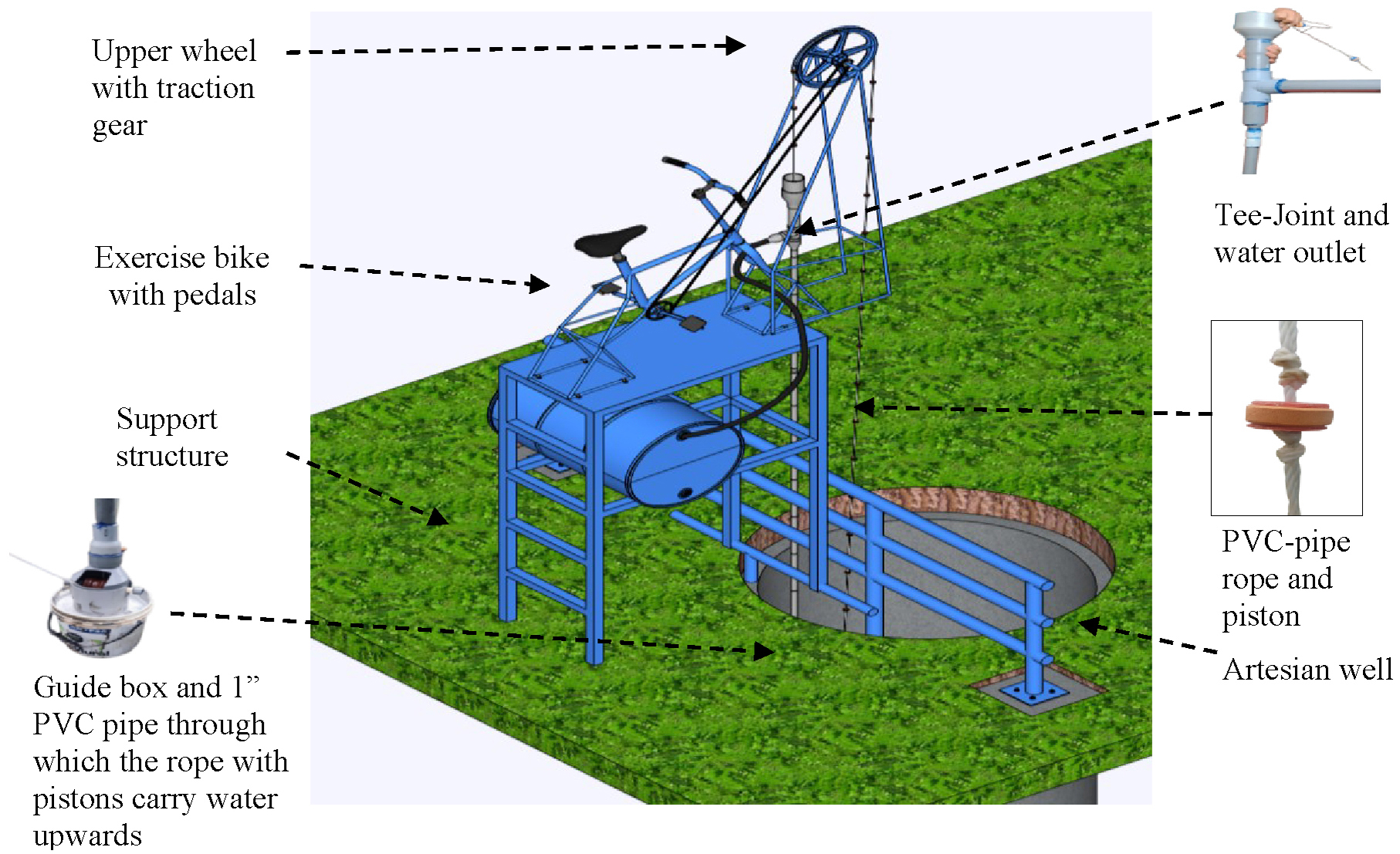
The rope was fabricated from 3.2 mm (1/8") white nylon strands twisted to achieve an overall diameter of approximately 6.35 mm (1/4"). Neoprene pistons with a diameter of 24 mm were attached at regular intervals. A radial clearance of approximately 1 mm between the piston and the internal pipe wall was maintained to reduce friction while minimising leakage losses [27]. Polyethylene terephthalate (PET) inserts derived from bottle caps were incorporated at the piston ends to enhance mechanical resistance and durability.
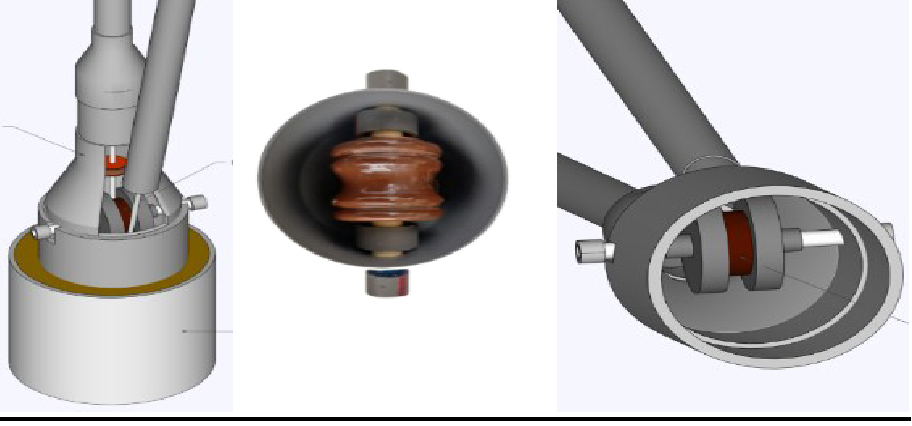
A 2-inch electrical spool insulator was used as an axial guide at the base of the well (Figure 2). This component directed the rope and pistons into a 4-to-1-inch reducer connected to the vertical discharge pipe. The assembly was fixed to a concrete block to maintain rope alignment and operational tension.
The manual volumetric pump (Figure 3) was constructed according to the configuration described by Lu [28]. The system consisted of a metal tripod (0.6 × 1.6 m) supporting a 3-inch-diameter, 40-cm-long PVC cylinder. A neoprene piston (Ø 3", 5 cm height) was connected to a ½" × 40 cm iron rod and operated by a 1.5 m galvanised steel lever.
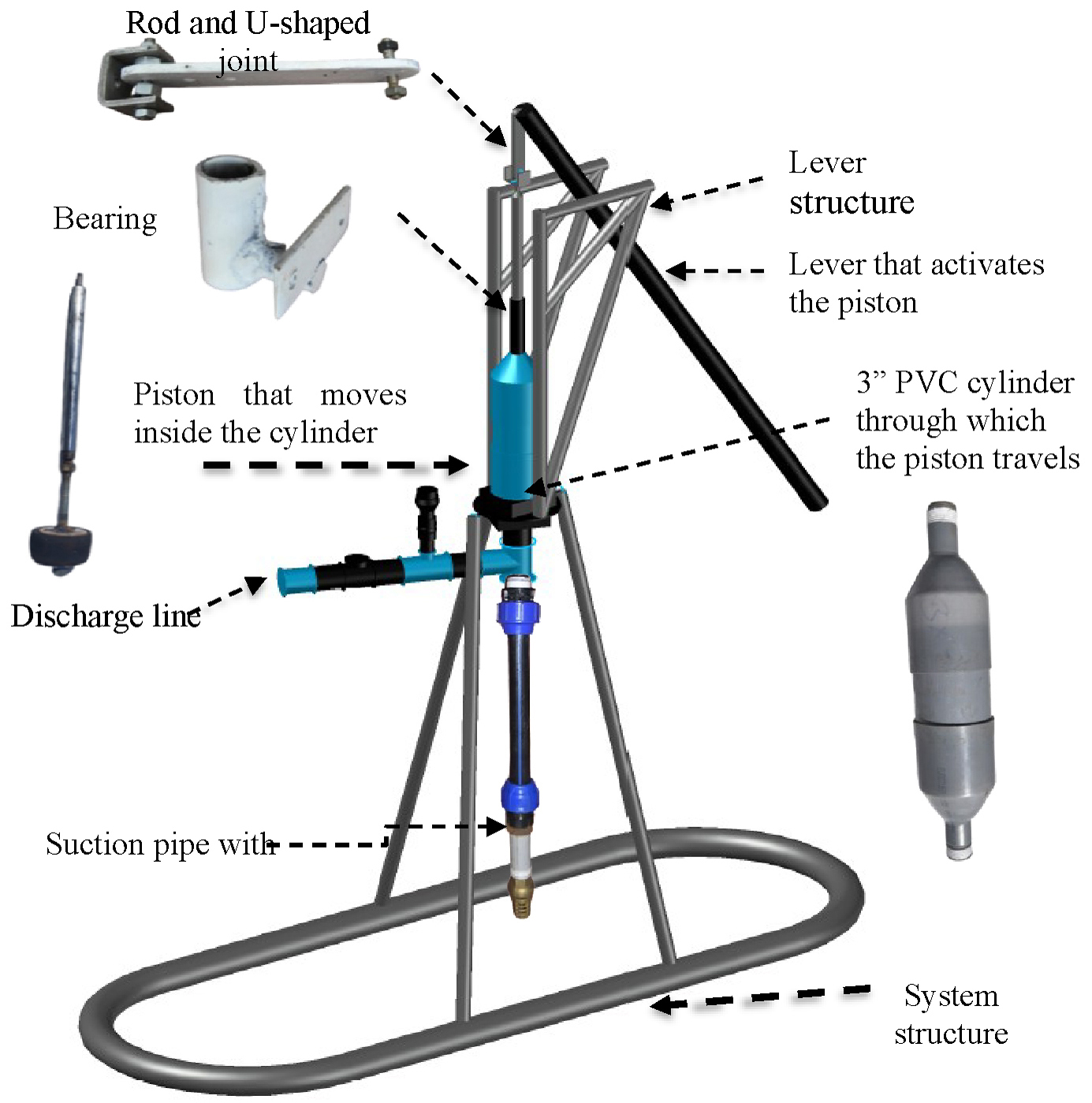
Two check valves were installed: one at the bottom of the cylinder (suction valve) and another in the discharge line. A PVC reducer, sized 3" to 1", connected the cylinder to a 1-inch galvanised iron T-fitting, where the vertical branch was connected to the suction line and the horizontal branch to the discharge pipe. An analogue pressure gauge 0–80 psi (0–5.5 bar) was installed in the discharge line to monitor pumping pressure during operation.
The experimental procedure was conducted separately for each pumping system under controlled operational conditions, as described below.
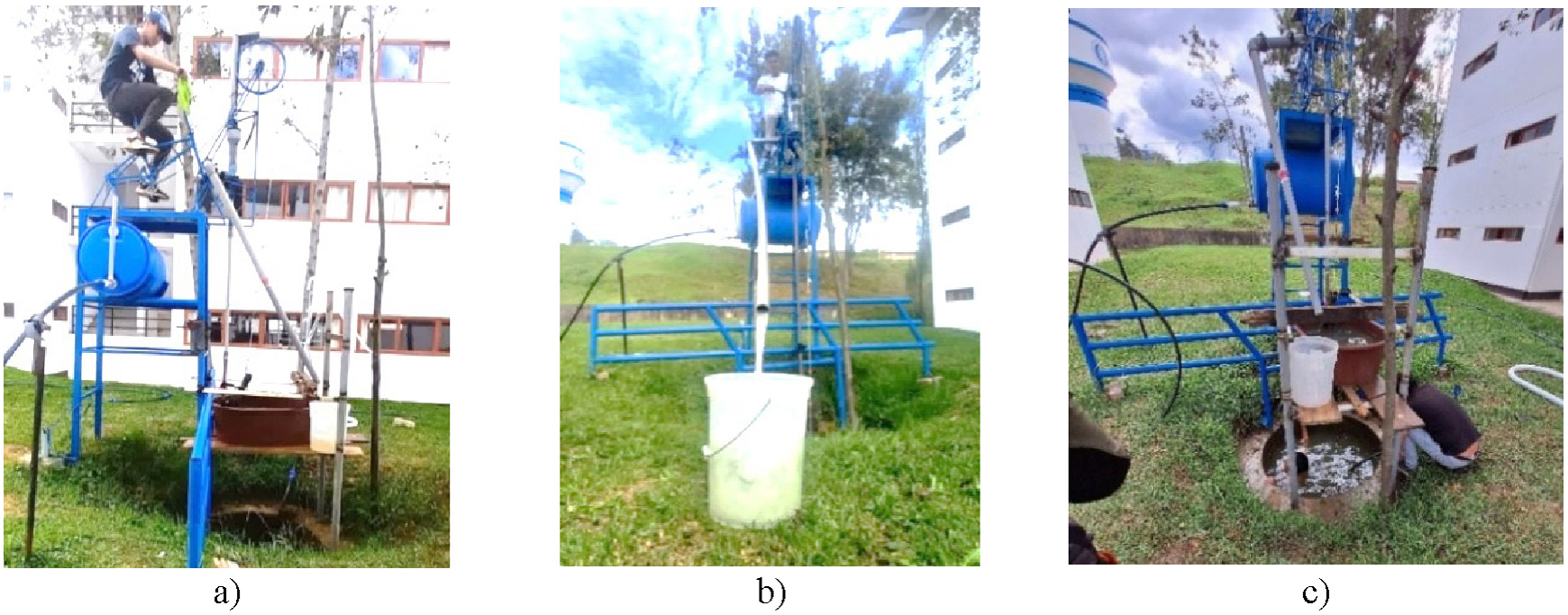
The flow rate of the rope pump was evaluated at suction depths of 1 to 5 m [27]. For each suction depth, the discharged volume during one minute of operation was measured using a graduated container, as shown in Figure 4. Ten repetitions were performed for each measurement. The constant pedalling speed was approximately 40 ± 1 rpm, as measured with a digital tachometer (accuracy 0.01 rpm).
Flow rate Q was calculated according to eq. (1):
where V is the measured volume [L] and t is time [min]. The same expression was applied to both pumping systems.
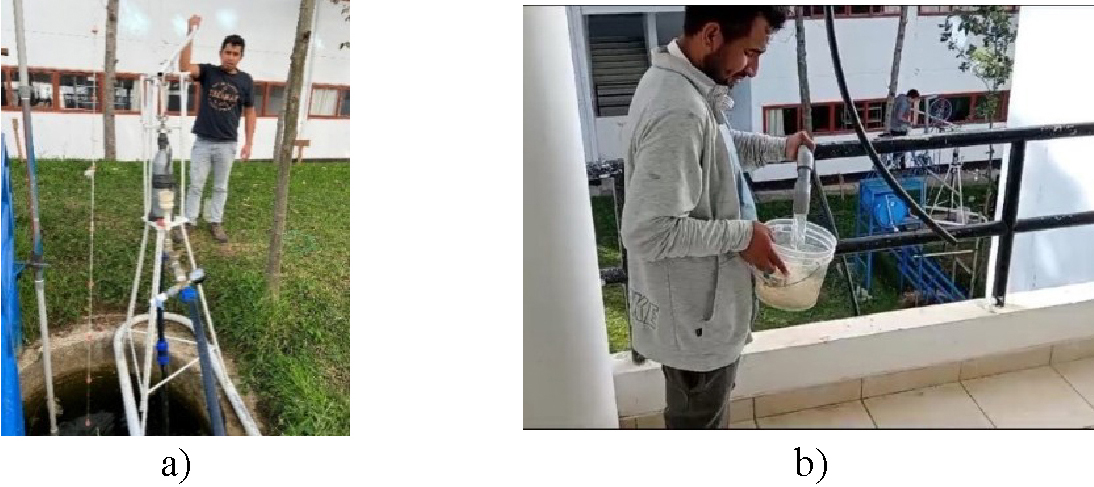
The manual volumetric pump was evaluated under varying suction depths (1–5 m) and discharge heights (0–10 m), as shown in Figure 5. Discharge height increments of 2 m were tested for each suction condition [29]. Flow rate was determined by measuring the time required to fill a 4 L container. Pumping frequency was maintained at 30 ± 1 cycles per minute using a digital metronome, as shown in Figure 5a. Ten repetitions were performed for each combination of suction depth and discharge height, as illustrated in Figure 5b. The evaluated parameters were consistent with those reported by Shah et al. [25].
The analysis was performed at a significance level of α = 0.05. For the rope pump data, the Anderson-Darling test was applied to assess normality. This test was selected for its high sensitivity to the tails of the distribution, which is crucial for detecting deviations in data with significant variability. Once normality was confirmed, Tukey's test was used to perform multiple comparisons of the extracted flow rates in Minitab 17 software. This test was chosen because it controls for Type I error in multiple comparisons, allowing evaluation of the system's technical performance.
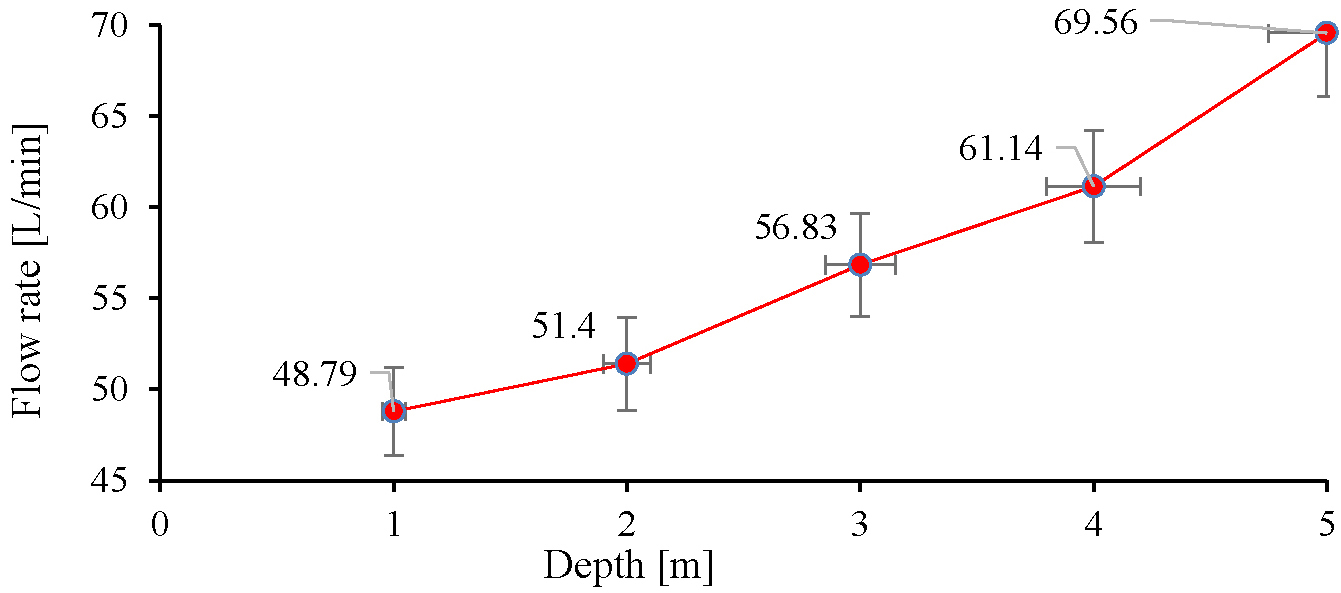
For the data obtained from the manual volumetric pump, normality was assessed using the Shapiro-Wilk test due to the larger sample size. Since normality was not met, the Kruskal-Wallis test was used to compare the data groups, followed by Dunn's test to identify which groups differed. All analyses were performed using R software version 4.3.0. In addition, a box plot analysis was performed to visualise the flow distributions. The analysis of results and the statistical tests performed were based on the stated assumptions, ensuring the reliability of the results. Error bars in Figure 7 and Figure 9 represent ±1 standard deviation, providing a visual reference of experimental variability. The curves shown in the figures were included only for graphical support and were not used for statistical inference.
The study was conducted at the National University Toribio Rodríguez de Mendoza de Amazonas, located in Chachapoyas, Peru (6°14'3.20"S; 77°51'18.16"W), at an altitude of 2330 m above sea level (Figure 6).
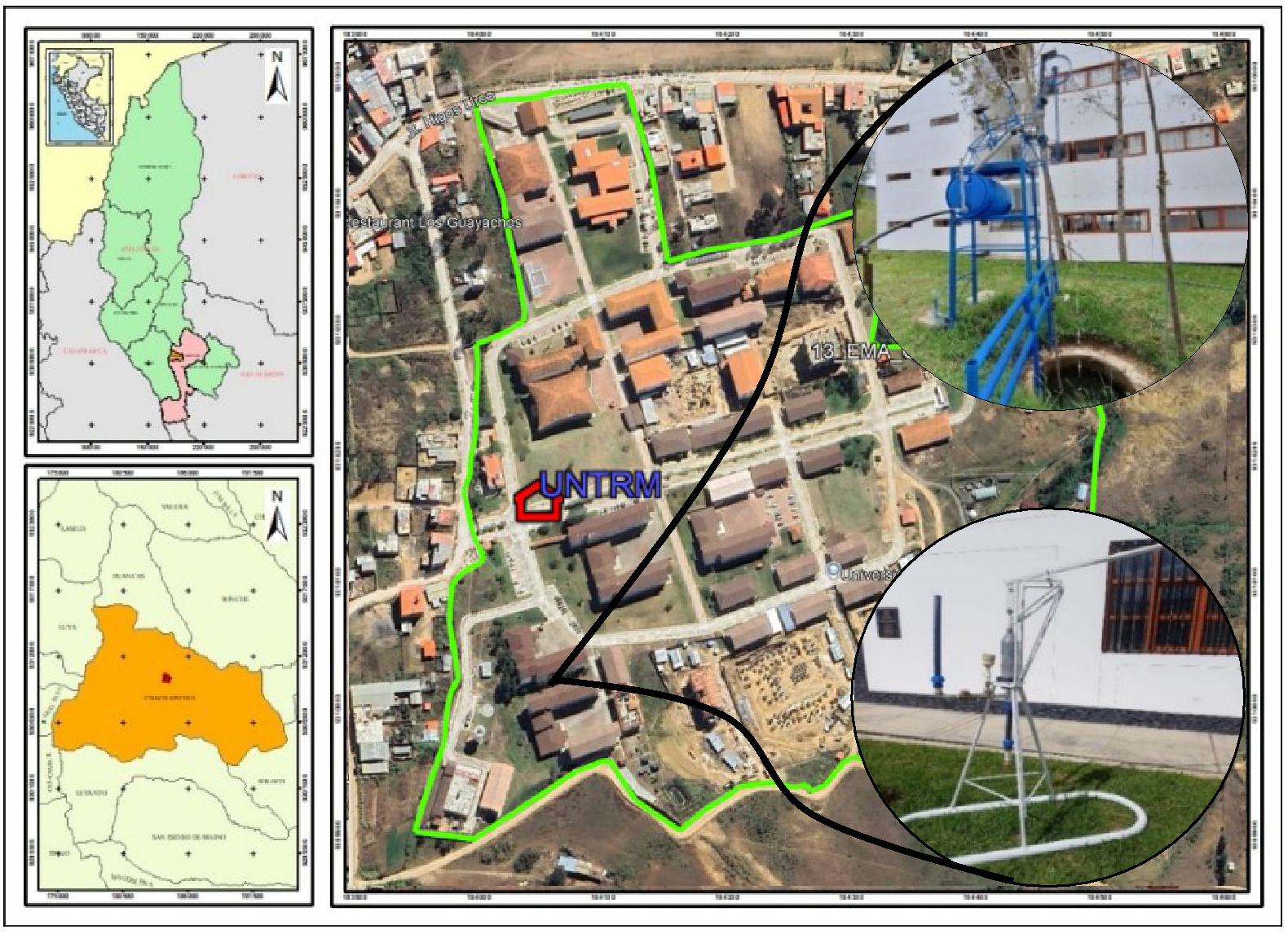
Chachapoyas is situated in a transition zone between the Andean highlands and the Amazon basin. The region presents average temperatures ranging from 9°C to 25°C and an annual rainfall of approximately 800 mm [30]. Soils are generally shallow and well-drained, with loamy-clay to clay textures [31]. The site is representative of high-Andean environments where shallow groundwater is an important water source, particularly amid increasing climatic variability [32] and human impacts [33].
The experimental results are presented below to evaluate the hydraulic performance of the rope pump and the manual volumetric pump under high-altitude Andean conditions. The analysis focuses on the relationship between flow rate and the governing operational parameters, namely suction depth for the rope pump and discharge height for the manual volumetric pump.
The performance was evaluated by analysing the volume of water extracted per unit time as a function of suction depth. A constant increase in flow rate was observed with increasing depth, from 48.79 L/min at 1 metre to 69.56 L/min at 5 metres. Although there is slight variability in the measurements, as indicated by the error bars, this variability is not significant enough to alter the general trend. Additionally, a strong positive correlation between suction depth and output flow rate was observed, as shown in Figure 7.
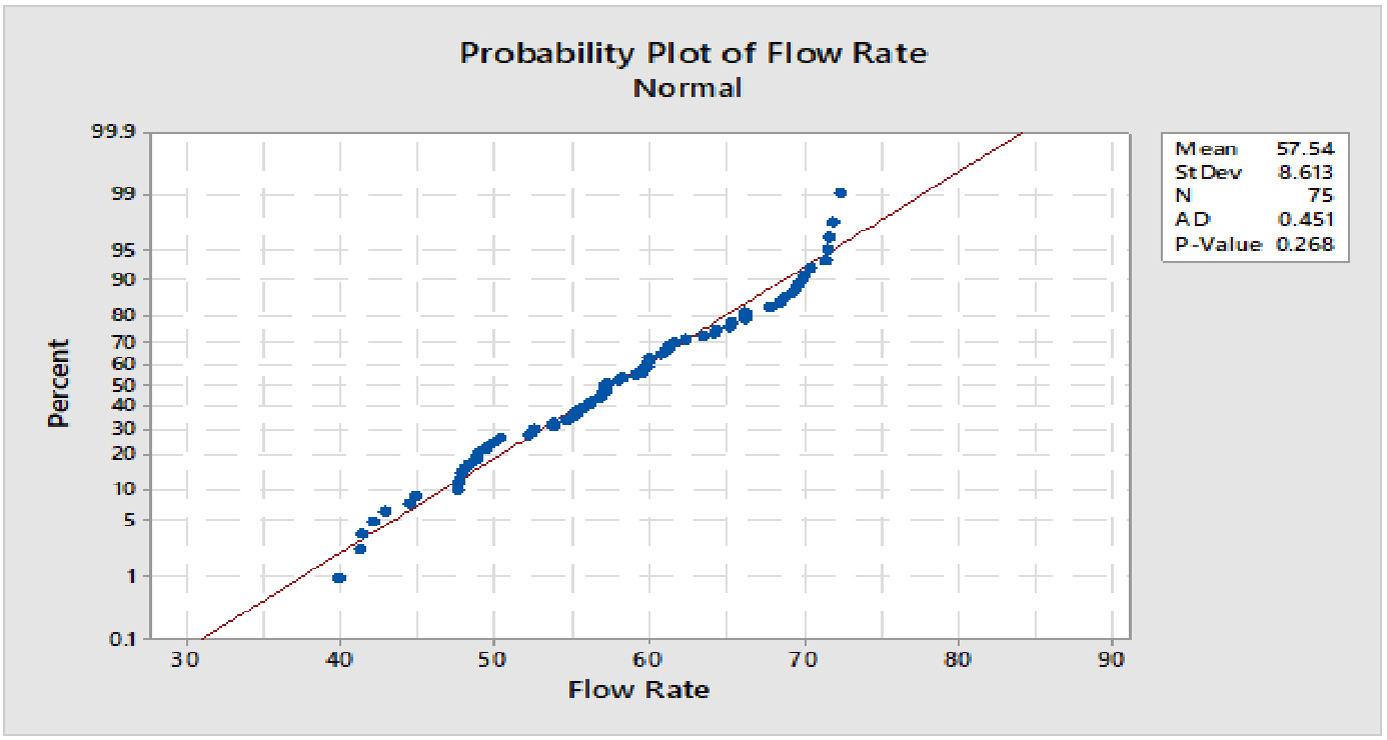
To determine whether flow rate values differed across raised heights, the Anderson-Darling normality test was performed at a significance level of 0.05 (Figure 8). The result yielded a p-value of 0.268. Given the behaviour of the data, the Tukey test was applied to examine the distribution and grouping of flow rate data by raised heights (Table 1). The Tukey multiple comparisons test identified significant differences in mean flow rates across different suction depths. Group 5 exhibited the highest mean (69.56 L/min) and was significantly different from all other groups (letter A). Groups 4 (61.14 L/min) and 3 (56.83 L/min) did not differ significantly from each other (letter B) but were distinct from shallower groups. Groups 2 (51.40 L/min) and 1 (48.79 L/min) exhibited the lowest means and were not significantly different from each other (letter C). In conclusion, the extracted flow rate increases with suction depth, with depth 5 achieving the highest significant flow rate.
| Suction depth group | Na | Mean flow rate [L/min] | Grouping |
|---|---|---|---|
| 5 | 15 | 69.56 | A |
| 4 | 15 | 61.14 | B |
| 3 | 15 | 56.83 | B |
| 2 | 15 | 51.40 | C |
| 1 | 15 | 48.79 | C |
aN represents the number of experimental replicates per suction depth
The extracted flow rate for the manually operated volumetric pump was determined, as shown in Figure 9, which illustrates the relationship between flow rate and discharge height.
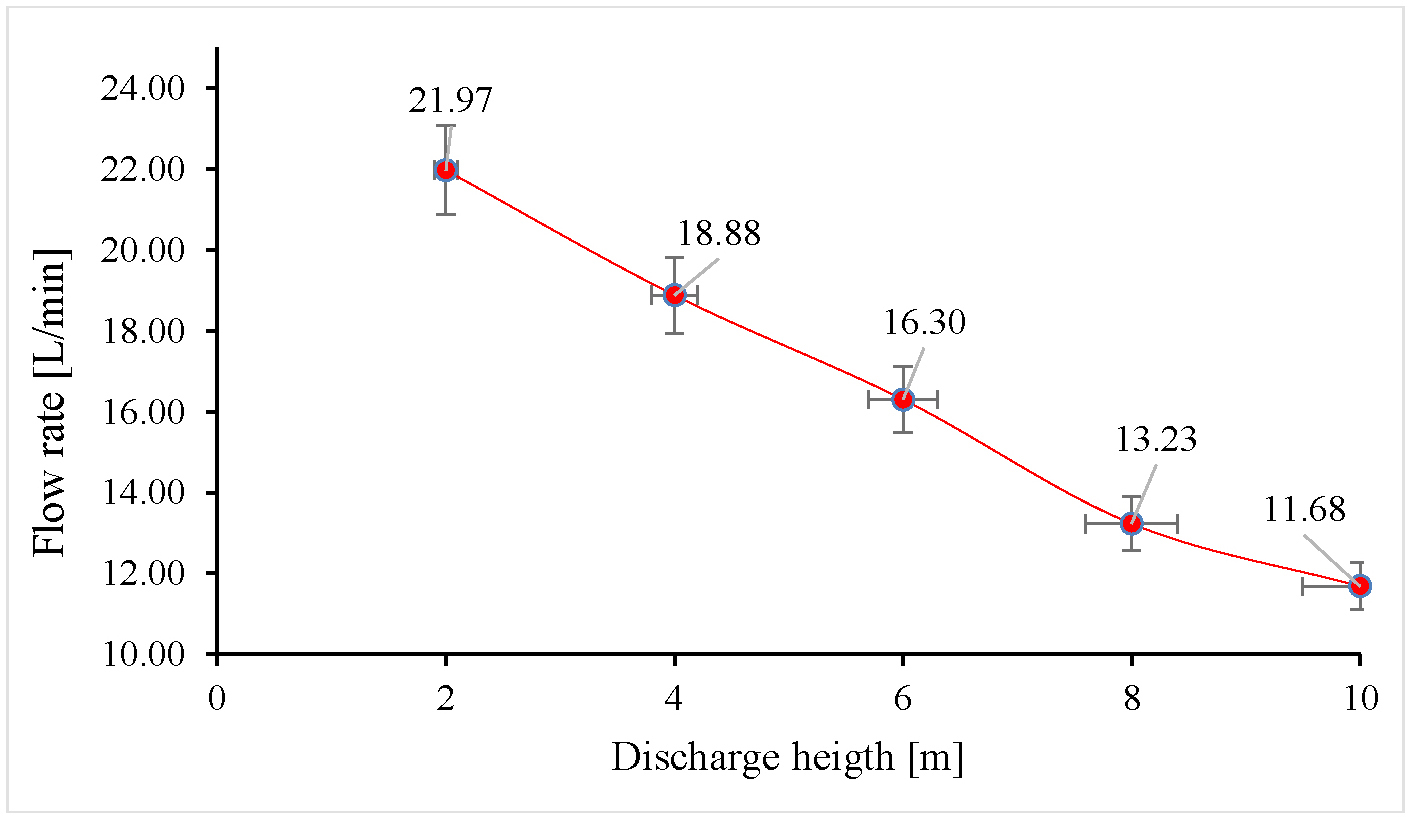
A descending trend was observed: as discharge height increases, the flow rate consistently decreases. The initial flow rate, recorded at a discharge height of 2 m, was 21.97 L/min, while the lowest value, at 10 m, was 11.68 L/min. A decreasing trend characteristic of hydraulic systems was observed, where increased height results in greater gravitational resistance and energy losses, reducing the effective water flow at the outlet.
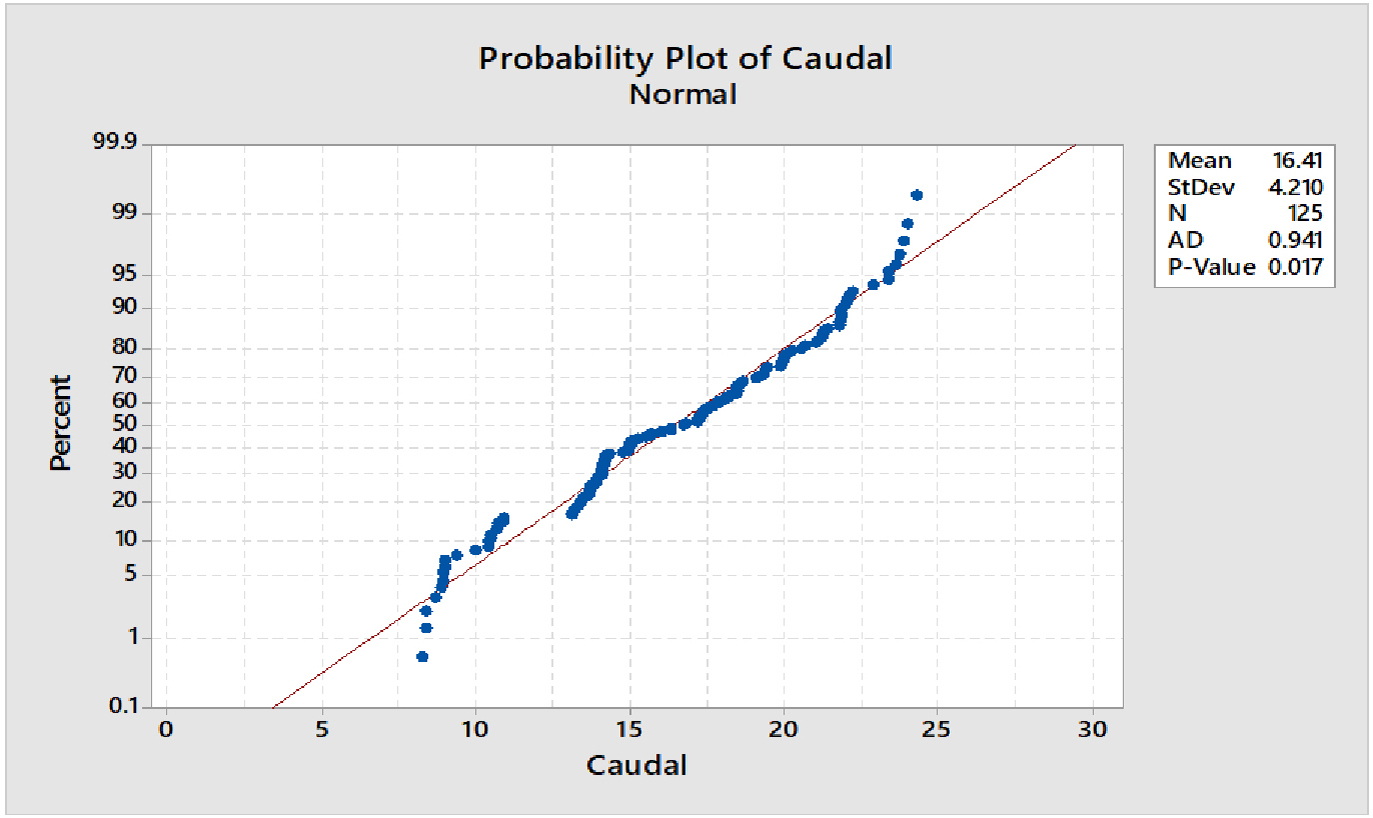
To determine if significant differences existed among the evaluated values, a normality test was conducted (Figure 10), yielding a p-value of 0.017, indicating significant differences in the collected values. This result was further confirmed using the Kruskal-Wallis test, which found a p-value of 0.002. Once normality was assessed, and the distribution was found to be non-normal, the Kruskal-Wallis test was applied to the flow rate-suction depth variables, as presented in Table 2.
| Suction depth | N | Median flow rate [L/min] | Ave rank | Z |
|---|---|---|---|---|
| 1 | 25 | 17.24 | 77.9 | 2.29 |
| 2 | 25 | 18.15 | 75.1 | 1.87 |
| 3 | 25 | 17.49 | 67 | 0.62 |
| 4 | 25 | 14.09 | 47 | 2.47 |
| 5 | 25 | 14.09 | 48 | 2.31 |
| Overall | 125 | 63 |
H = 16.44 DF = 4 p = 0.002 (adjusted for ties)
The distribution of flow-rate values for the manually operated volumetric pump is presented in the Appendix, Figure A1a–e. The box plots illustrate the relationship between flow rate and discharge height for suction depths of 1–5 m. The results indicate that flow rate decreases as discharge height increases. Conversely, lower discharge heights are associated with higher extracted flow rates.
This section discusses the performance of the evaluated pumping systems under the specific operational conditions of the study area, focusing on hydraulic behaviour, efficiency, and applicability in rural Andean environments.
In Figure 7, the pump's performance was analysed based on the extracted flow rate as a function of suction depth. Results ranged from 48.79 L/min at a depth of 1 m to 69.56 L/min at 5 m, demonstrating a consistent increase with depth. The rotational speed ranged from 25 to 55 rpm, as measured with a tachometer. This response can be attributed to the system's design and capacity to maintain uniform pressure at greater depths, ensuring consistent performance. Davidson et al. [27] determined the performance of the rope pump, achieving flow rates between 20 L/min and 55.77 L/min. Their analysis extended to depths of 10 m, with rotational speed values ranging from 27 to 59 rpm. They simulated a well using a 255-L container and lifted water to the third floor of a building.
At 2330 m above sea level, atmospheric pressure is significantly lower than at sea level, reducing the theoretical suction limit of hand-operated pumps. According to Shah et al. [25], suction height decreases by approximately 1.5 m at 1500 m and up to 3 m at 3000 m altitude. Therefore, evaluating pump behaviour under Andean conditions is not only a matter of geographical context but also a hydraulic necessity. Reduced atmospheric pressure affects negative pressure generation, cavitation potential, and volumetric efficiency, which directly influence the pump's applicability in these regions.
When comparing the rope pump with previous studies, slight differences in flow rates have been reported, influenced by factors such as piston diameter and spacing, rope type, operational conditions (manual or pedal-driven), discharge pipe diameter, and wheel rotational speed. For instance, research by Kadlowec et al. [21] used polypropylene rope and PVC plumbing pipes and fittings (1.27 cm and 2.54 cm in diameter), with piston spacing variations of 1 to 2 pistons per metre. The pump was installed 15 m above the fourth floor of a building, while the simulated well was a 55-gallon (208 L) barrel located on the ground floor. Rotational speed varied from 40 to 80 rpm, achieving flow rates of 6 L/min with half-inch piping and 1 piston per metre and 16 L/min with 1-inch piping and 2 pistons per metre. They concluded that piston spacing affects the output flow rate, with higher rates achieved at 2 pistons per metre of rope.
Furthermore, larger pipe diameters increased the volume of water extracted but required more pumping power due to greater water displacement. These findings align with the present study, in which a 1-inch discharge pipe and 3 pistons per metre were used. Regarding the velocity at which the rope enters the pipe, flow rates decreased, consistent with the findings of [21]. This phenomenon occurs when water spills from the discharge pipe onto the pump head, reducing efficiency.
Kadlowec et al. [21] reported a flow rate ranging from 30 to 55 L/min, depending on piston spacing and pipe diameter. Their study demonstrated that system configuration, pumping depth and operational speed significantly influence pump performance. Although the absolute values reported in those contexts differ from the 69.56 L/min observed at 5 m in this study, this variability can be attributed to differences in piston spacing, pipe diameter, immersion depth, and operator-induced rotational speed [34]. Importantly, most of these studies were performed at lower elevations, where atmospheric pressure does not impose the same suction constraints observed in Andean environments. Therefore, the present results extend the available performance data by demonstrating that rope pump efficiency can remain stable, and even improve within shallow operating ranges under mid-altitude atmospheric conditions, when adequate submergence minimises air entrainment and stabilises the water column.
When comparing the results with previous studies, the increase in flow rate with increasing suction depth, although counterintuitive, has been documented. For instance, an experimental study by Kadlowec et al. [21] reported that a rope pump operating at depths up to 10 m achieved a maximum flow rate of 55.77 L/min, a value close to that observed in this study. However, the flow continues to increase, reaching 69.56 L/min at 5 m, suggesting an improved efficiency with increased depth. This phenomenon has also been observed in research by MacDonald et al. [14], which indicated that rope pump efficiency increases with greater suction-line submergence. According to these studies, increasing the suction depth can reduce air entrainment in the suction pipe, thereby enhancing water column stability and reducing turbulence. This trend, in turn, increases the system's hydraulic efficiency.
Although a higher static head generally requires more energy to lift water, our tests showed that the rope pump showed a moderate increase in flow rate as suction depth increased. This observation, while seemingly contradicting the conventional theory of piston-suction pumps, in which flow rate typically decreases with suction height [25], is consistent with the behaviour characteristic of positive-displacement pumping systems. Unlike traditional suction pumps, which rely on atmospheric pressure and are therefore limited by cavitation at higher suction heights, the rope pump functions as a mechanical conveyor in which pistons physically push the water column upwards. This conveying mechanism implies that performance depends more on the water-column stability than on suction limitations [26]. The increased flow rate between depths of 1 m and 5 m is likely due to greater continuity of the water column and reduced air intake with greater immersion, as shorter water columns have been shown to reduce pump functionality in manual systems [29]. Greater immersion minimises vortex formation and air entrainment [35], thereby increasing volumetric efficiency, a phenomenon also observed in studies of rope pumps [36].
In the absence of specific studies on manually operated volumetric pumps, analyses were conducted using other manual pump systems such as the Modified India Mark II, Afridev, and Vergnet pumps, which share similar operating principles.
Research highlights that the efficiency of manual pumps depends on internal geometry, lever length, piston angle, and operational and maintenance conditions [37]. Recent analyses demonstrated that modifications to piston configurations can reduce leakage and improve flow stability, underscoring the importance of system design and adjustment to maximise performance [21]. Figure 9 shows that the flow rate of a manually operated volumetric pump decreases with increasing discharge height. This finding aligns with the inverse relationship between pressure and flow rate in hydraulic systems. At a height of 2 m, the initial flow rate was 21.97 L/min, decreasing progressively to 11.68 L/min at 10 m. This pattern is consistent with the limitations imposed by the pressure required to overcome the water column. As discharge height increases, the energy required to move the fluid increases, resulting in a reduced effective flow. This relationship is characteristic of positive displacement pumps. Previous studies indicate that the hydraulic efficiency of such pumps can be affected by system resistance and fluid viscosity, especially at greater heights, where friction and cavitation losses become more pronounced [38].
Further observed reductions in flow rate may also be due to operational factors, such as internal component wear and system adjustment precision. Optimising piston design, reducing friction, and employing high-durability materials can mitigate these losses and enhance overall performance. Preventive maintenance also plays a crucial role in ensuring the pump operates at maximum capacity under demanding conditions. Although these pumps offer high performance and reliability across various industries, their performance is closely tied to system design and operating conditions. Future studies could focus on improving efficiency and minimising losses related to mechanical wear, friction, and flow variations.
For manually operated volumetric pumps, reported flow rates in African rural systems typically range from 12 to 28 L/min at discharge heads around 10 m [17]. The lower flow values observed in this study at higher discharge heights are consistent with the expected hydraulic behaviour of positive-displacement systems, where greater static head directly increases resistance and reduces effective output. These findings suggest that altitude-related suction limitations do not override the fundamental hydraulic constraints of piston-type systems but may interact with them depending on well geometry and operational conditions [39].
Comparing the India Mark II and III manual pumps with the manual volumetric pump, with respect to manufacturing, the first two have disadvantages because being made of iron material they tend to rust shortly after use, and changing it to stainless steel material increases its initial cost, which is why they have to be subject to financing from international organizations such as UNICEF as is the case in many regions of India that although the technology is well accepted [40], the problem still exists. On the other hand, the manual volumetric pump does not present these problems because most of its components are made of PVC pipes. Although Oki et al. [41] note that the India Mark II, III, and Afridev manual pumps are widely used in Africa, approximately 30% of these pumps deteriorate rapidly due to wear in moving parts or bearings. In some cases, the percentage is even higher (36%) [15].
The consistent operation of handpumps for water extraction is influenced by key factors, especially in rural regions of Africa where many people rely on these systems. While an estimated 60,000 new pumps are installed each year, supplying water to 670 million people [42], the performance and sustainability of these systems depend on several determinants [43]. Technical factors, such as construction quality and ongoing maintenance, play a significant role in the longevity of the pumps. Additionally, hydrogeological conditions, including fluctuations in the water table and the risk of well collapse, are critical in determining pump efficiency. Financial considerations, such as the availability of funds for repairs and maintenance, further impact the operational lifespan of these systems. Social factors, including the community's capacity for effective management, are equally vital for ensuring that the wells remain functional over time [44].
A study in Emina-Boadi-Kumasi (Ghana) by Mantey et al. [45] found that wells with manual pumps were the preferred water source for domestic consumption (53%) compared to public sources (18%), piped water (6%), and dug wells (5%). Additionally, individuals consumed an average of 20 L/day of water to meet their needs, with higher amounts for children and women. In comparison, the manually operated volumetric pump extracted 21.97 L in 1 minute at a 2-metre discharge height, demonstrating the capacity to supply sufficient water for human consumption. When projected to an hour, the pump could extract approximately 1,300 L, sufficient not only for human consumption but also for small-scale agricultural and livestock activities.
This study aimed to evaluate the applicability of low-cost pumping technologies for groundwater extraction in an Andean environment. The measured flow rates of the rope pump and the manual volumetric pump define the practical operating ranges of each technology under the hydroclimatic conditions of Chachapoyas. These results indicate that both systems can effectively meet typical water demands for domestic use and small-scale irrigation needs when water levels are maintained within the evaluated ranges, which is common in high-altitude Andean springs and shallow wells [33]. The results address this by demonstrating that, in high Andean communities, rope pumps are particularly suitable for shallow artesian wells, where they can deliver high flow rates with simple mechanical components. In contrast, manual volumetric pumps offer a robust alternative for situations where it is necessary to raise the discharge point and the manometric head requirements are greater.
The results presented here are specific to the rope and piston pump prototypes tested, which were constructed with particular dimensions and locally available materials. Flow rates in manually operated pumps are strongly influenced by pump geometry (e.g., piston diameter, valve design, rope tension) and by user-induced variability (e.g., strokes per minute, revolutions per minute, applied force). These factors make direct comparison with other studies difficult, as differences in design and operator effort may lead to significant variations in performance. For this reason, the findings should be interpreted as representative of the tested designs under the reported conditions, rather than universally generalisable. Reporting of configuration metadata, as recommended by RWSN field evaluations, is crucial for enabling future cross-study comparability and to guide standards for appropriate technology in rural water supply. It should be noted that these findings underline the importance of adapting pumping technologies to local conditions and establishing evaluative guidelines for their successful implementation in rural contexts elsewhere.
This study experimentally demonstrated that both the rope pump and the positive-displacement piston hand pump are technically viable and low-cost alternatives for groundwater extraction under high-Andean wconditions (2330 m a.s.l.), providing novel quantitative evidence for similar environments. The rope pump showed a statistically significant increase in flow rate with greater suction depth (up to 69.56 L/min at 5 m), attributed to improved water column stability and reduced air entrainment, confirming its suitability for shallow artesian wells requiring high discharge with minimal mechanical complexity. In contrast, the positive-displacement piston hand pump showed a significant decrease in flow rate as discharge height increased (from 21.97 L/min at 2 m to 11.68 L/min at 10 m), consistent with the hydraulic limitations of positive-displacement systems at higher static head. In general, both technologies can meet domestic and small-scale agricultural water demands in high-altitude rural communities. However, their performance depends on the geometric configuration, operating conditions, and maintenance, highlighting the importance of context-specific design and implementation for sustainable rural water supply.
Centro de Investigación en Climatología, Energías Renovables, Tecnología Ambiental y Construcción Sostenible (CINCERCOS), Instituto de Investigación para el Desarrollo Sustentable de Ceja de Selva (INDES-CES), Universidad Nacional Toribio Rodríguez de Mendoza de Amazonas (UNTRM), Chachapoyas 01001. In addition, special thanks to Diana Vargas Vera and Omar Infante Ortiz for their collaboration in developing the study.
- ,
Fresh water resource, scarcity, water salinity challenges and possible remedies: A review ,Heliyon , Vol. 9 (8), 2023, https://doi.org/10.1016/j.heliyon.2023.e18685 - ,
A novel approach for quantifying water resource spatial equilibrium based on the regional evaluation, spatiotemporal heterogeneity and geodetector analysis integrated model ,J. Clean. Prod , Vol. 424 , 2023, https://doi.org/10.1016/j.jclepro.2023.138791 - ,
Water resource security assessment and prediction in a changing natural and social environment: Case study of the Yanhe Watershed, China ,Ecol. Indic , Vol. 154 , 2023, https://doi.org/10.1016/j.ecolind.2023.110594 - ,
Drought Characterization and Potential of Nature-Based Solutions for Drought Risk Mitigation in Eastern Ethiopia ,Sustainability , Vol. 15 (15), 2023, https://doi.org/10.3390/su151511613 - ,
DESIGN METHODOLOGY FOR HYDRAULIC RAM PUMP (HYDRAM) ,Journal of Mechanical Engineering and Robotics Research , Vol. 2 (4), :170-1752013https://www.ijmerr.com - ,
Cities and water quality ,Reg. Sci. Urban Econ , Vol. 107 , 2024, https://doi.org/10.1016/j.regsciurbeco.2024.103998 - The state of the worlds land and water resources for food and agriculture (SOLAW): Systems at breaking point, 2021
- ,
Effect of Water Hammering Action on Performance of Hydraulic Ram Pump ,International Journal of Scientific and Research Publications , Vol. 8 (12), :396-3992018, https://doi.org/10.29322/IJSRP.8.12.2018.p8453 - ,
Unit vector template controlled grid integrated and solar fed BLDC drive-based water pumping system ,e-Prime - Advances in Electrical Engineering, Electronics and Energy , Vol. 7 , 2024, https://doi.org/10.1016/j.prime.2024.100489 - ,
Experimental study of real ice accumulation on channel hydraulics upstream of inverted siphons ,Cold Reg. Sci. Technol , Vol. 176 , 2020, https://doi.org/10.1016/j.coldregions.2020.103087 - ,
The changing nature of groundwater in the global water cycle ,Science (1979) , Vol. 383 (6686), 2024, https://doi.org/10.1126/science.adf0630 - ,
Groundwater Governance: The Role of Legal Frameworks at the Local and National LevelEstablished Practice and Emerging Trends ,Water (Basel) , Vol. 8 (8), 2016, https://doi.org/10.3390/w8080347 - ,
Managed groundwater development for water-supply security in Sub-Saharan Africa: Investment priorities ,Water SA , Vol. 38 (3), :359-3662012, https://doi.org/10.4314/wsa.v38i3.1 - ,
Quantitative maps of groundwater resources in Africa ,Environmental Research Letters , Vol. 7 (2), 2012, https://doi.org/10.1088/1748-9326/7/2/024009 - ,
Functionality of handpump water supplies: a review of data from sub-Saharan Africa and the Asia-Pacific region ,Int. J. Water Resour. Dev , Vol. 36 (5), :855-8692020, https://doi.org/10.1080/07900627.2018.1543117 - , An Assessment of the EMAS Pump and its Potential for Use in Household Water Systems in Uganda, Graduate Theses and Dissertations, 2014
- ,
The case for the rope-pump in Africa: A comparative performance analysis ,J. Water Health , Vol. 4 (4), :499-5102006, https://doi.org/10.2166/wh.2006.0033 - ,
Nurses acceptance of Smart IV pump technology ,Int. J. Med. Inform , Vol. 79 (6), :401-4112010, https://doi.org/10.1016/j.ijmedinf.2010.02.001 - ,
Comparative analysis of the performance of rope-pumps and standardized handpumps water systems in rural communities of the northern and upper east regions of Ghana ,Groundw. Sustain. Dev , Vol. 13 , 2021, https://doi.org/10.1016/j.gsd.2021.100563 - , Energy Poverty in Developing Regions: Strategies, Indicators, Needs, and Technological Solutions, Energy Poverty Alleviation New Approaches and Contexts, 2022
- ,
Rope Pump Modifications to Reach Greater Depths: A Service Project for Clean Water in The Gambia ,International Journal for Service Learning in Engineering, Humanitarian Engineering and Social Entrepreneurship , Vol. 8 (2), :8-232013, https://doi.org/10.24908/ijsle.v8i2.5038 - ,
Quantification of human and embodied energy of improved water provided by source and household interventions ,J. Clean. Prod , Vol. 60 , :83-922013, https://doi.org/10.1016/j.jclepro.2012.01.018 - ,
The politics of municipal fragmentation in Ghana ,Commonwealth Journal of Local Governance , Vol. 16/17 , :168-1892015, https://doi.org/10.5130/cjlg.v0i0.4493 - ,
Evolution of Water Lifting Devices (Pumps) over the Centuries Worldwide ,Water (Basel) , Vol. 7 , :5031-50602015, https://doi.org/10.3390/w7095031 - ,
Evaluating performance and suction limits of No.6 hand pumps with varying operational parameters ,Water Pract. Technol , Vol. 19 (9), :3526-35372024, https://doi.org/10.2166/wpt.2024.215 - ,
Low-cost water-lifting from groundwater sources: a comparison of the EMAS Pump with the Rope Pump ,Hydrogeology Journal , Vol. 25 (5), :1477-14902017, https://doi.org/10.1007/S10040-017-1580-6 - Sustainable and Efficient Rope Pump, 2012
- , Caracterización de la bomba manual India Mark II y su viabilidad en países en desarrollo (África Subsahariana) (in Spanish, Characterization of the Manual India Mark II Pump and Its Feasibility in Developing Countries (Sub-Saharan Africa)), 2020
- ,
Contribution of physical factors to handpump borehole functionality in Africa ,Sci. Total Environ , Vol. 851 , 2022, https://doi.org/10.1016/j.scitotenv.2022.158343 - ,
Dry and Wet Events in Andean Populations of Northern Peru: A Case Study of Chachapoyas, Peru ,Front. Environ. Sci , Vol. 9 , 2021, https://doi.org/10.3389/fenvs.2021.614438 - Zonificación Ecológica y Económica (ZEE) [Ecological and Economic Zoning], 2016
- ,
Two Decades of Groundwater Variability in Peru Using Satellite Gravimetry Data ,Applied Sciences , Vol. 15 (14), 2025, https://doi.org/10.3390/app15148071 - ,
Hydrology, water resources availability and management in the Andes under climate change and human impacts ,J. Hydrol. Reg. Stud , Vol. 49 , 2023, https://doi.org/10.1016/j.ejrh.2023.101519 - History and current status of the rope pump in Nicaragua, 2022
- ,
Investigation on the air-core vortex in a vertical hydraulic intake system ,Renew. Energy , Vol. 177 , :1333-13452021, https://doi.org/10.1016/j.renene.2021.06.062 - ,
Raising the Speed Limit of Axial Piston Pumps by Optimizing the Suction Duct ,Chinese Journal of Mechanical Engineering 2021 34:1 , Vol. 34 (1), 2021, https://doi.org/10.1186/s10033-021-00624-w - ,
Assessing the functionality of water supply handpumps in a Sub-Saharan Africa rural environment: a practical application in eight councils in the Mvila Division, Southern Cameroon ,Journal of Water, Sanitation and Hygiene for Development , Vol. 13 (5), :322-3322023, https://doi.org/10.2166/washdev.2023.241 - ,
Influence of Fluid Viscosity on Cavitation Characteristics of a Helico-Axial Multiphase Pump (HAMP) ,Energies (Basel) , Vol. 15 (21), 2022, https://doi.org/10.3390/en15218149 - ,
A tool for technical assessment of rural water supply systems in South Africa ,Physics and Chemistry of the Earth, Parts A/B/C , Vol. 34 (12), :43-492009, https://doi.org/10.1016/j.pce.2007.12.001 - Professional Water Well Drilling - Concerns about corrosion and the quality of handpump components in Burkina Faso and beyond, 2019
- ,
Water infrastructure of all, by all, for all ,Nature Water , Vol. 2 , :1048-10502024, https://doi.org/10.1038/s44221-024-00338-y - African Handpump Market Mapping Study - Summary Report for UNICEF WASH Section and Supply Division, 2009
- ,
Understanding handpump sustainability: Determinants of rural water source functionality in the Greater Afram Plains region of Ghana ,Water Resour. Res , Vol. 51 (10), :8431-84492015, https://doi.org/10.1002/2014WR016770 - ,
Predictors of Sustainability for Community-Managed Handpumps in Sub-Saharan Africa: Evidence from Liberia, Sierra Leone, and Uganda ,Environ. Sci. Technol , Vol. 47 (21), :12037-120462013, https://doi.org/10.1021/es402086n - ,
Assessment of Water Service Levels and User Satisfaction for Domestic Water Use in Emina-Boadi-Kumasi to Achieve the Sustainable Development of Urban Water Supply Systems in Ghana ,Water (Basel) , Vol. 16 (22), 2024, https://doi.org/10.3390/w16223193