



Nature-Based Solutions (NBS) offer a dynamic approach to addressing environmental and societal challenges through ecosystem restoration. In line with the European Union's Mission "Restore our Ocean and Waters by 2030," the project "Ecosystem-based governance with Danube lighthouse Living Lab for sustainable Innovation processes" (EcoDaLLi) focuses on implementing innovative NBS strategies within the Danube River Basin. Its primary objective is to create a standardised methodology for evaluating existing initiatives and to guide the design and execution of future interventions. Historically, much of the NBS research has concentrated on urban areas, often overlooking the unique requirements of river basins and watersheds. This paper outlines the essential structure and guiding principles of the methodology, highlighting its adaptability across diverse scales and settings within the Danube Lighthouse. Central to the Danube Lighthouse framework is a systematic process for evaluating and enhancing NBS, aligned with the Mission Ocean and Waters initiative's broader environmental and societal goals. It identifies successful practices from existing projects and supports planning for future efforts to boost ecosystem services and community welfare. A foundational element of the methodology is its alignment with the European Commission's definition of NBS, which prioritises nature-inspired interventions that deliver environmental, social, and economic benefits.
The ecosystem services framework [1] and landmark valuation studies [2] underpin the economic rationale for these interventions. The literature emphasises the importance of protecting diverse ecosystems, fostering ecological connectivity, and building resilience to climate change [3]. Complementary work establishes plant ecology as the foundation on which effective interventions are designed and evaluated [4]. For instance, integrating plant-pollinator interactions can strengthen biodiversity and ecosystem services [5], while enhancing urban ecological frameworks supports both mitigation and adaptation strategies. A quantitative framework has been proposed to assess the benefits of already implemented interventions [6], and a dynamic topic-modelling analysis has mapped the evolution of the research field [7]. A notable feature of the framework is its structured decision-making flowchart that streamlines assessment and deployment. Stakeholder awareness and perceptions have been shown to shape willingness to adopt such measures [8], while earlier work has identified the indicators, knowledge gaps, and barriers that condition their uptake [9]. Embedding adaptive risk assessment ensures that local socio-economic factors are considered, enhancing relevance and effectiveness in vulnerable contexts. Climate-risk assessment has been used to gauge the effectiveness of marine interventions under future scenarios [10], and a broader appraisal has examined their potential to drive transformative change [11]. Studies underline the need for stronger stakeholder engagement to elevate public support and promote proactive climate responses [12]. Collaboration and participatory governance are core tenets of the methodology. Inclusive stakeholder involvement improves both the success and acceptance of initiatives and fosters stronger social cohesion and locally tailored solutions [13]. Governance arrangements have been analysed for their role in steering urban biodiversity outcomes [14]. Bayesian belief networks have been applied in the Lower Danube to integrate scientific and stakeholder knowledge [15]. Five complementary forms of scaling have been identified as pathways to mainstream interventions at the river-basin level [16].
Acknowledging the social dimensions of environmental interventions further increases their capacity to address a broad spectrum of urban and ecological challenges. The methodology also advocates for iterative learning, promoting adaptive management based on experiences from past implementations [17]. Learning from previous barriers and successes accelerates refinement and scalability across diverse ecological and cultural landscapes. Optimisation approaches have been developed to allocate interventions to ensure that climate-mitigation and adaptation goals are met jointly [18], and their integration with the conservation of urban built heritage has been explored [19]. In summary, this paper provides a comprehensive, adaptable framework that prioritises ecological resilience, stakeholder-driven processes, and continuous improvement. By fostering sustainable governance and integrating ecological and social dimensions, this methodology enhances the transformative capacity of NBS to create healthier, more resilient, and equitable environments throughout the Danube River Basin and beyond.
The work presented here, including work on NBS, was carried out as part of the project activities and was reported during the European Mission Ocean and Waters Days in March 2025 and documented in the publication [20]. A specific task within is focused on creating a Methodology for Mission-Relevant NBS Assessment. NBS, a relatively new con-cept in environmental restoration, is central to this effort. The term "Mission" refers specifi-cally to the Mission Ocean and Waters initiative. The goal of this task was to design a proce-dure to evaluate whether a given project qualifies as an NBS intervention. Following an ex-tensive review of a large body of literature, the decision was made to develop a methodology, or more precisely, a set of guidelines tailored primarily to small-scale projects or interventions. The term "guidelines" was chosen over "methodology" to emphasise the practical, operational aspects of restoration projects, which existing publications often address insufficiently. Furthermore, the word "implementers" was preferred over "developers" or "performers" to highlight the importance of the operational phase. The objectives of the guidelines are:
To create simple, easy-to-understand guidelines, accessible even to non-experts.
To design a flexible framework applicable across various types of projects.
To reduce workload and project costs wherever possible during both development and operational phases.
To encourage citizen engagement, especially during project operation.
Since the concepts of EU Missions and NBS are still not widely known among the general public, stakeholders, and citizens, the guidelines provide clear definitions and explanations.
The European Union introduced Missions as "a new way to bring tangible solutions to society's greatest challenges under the Horizon Europe programme," aligning them with key Commission priorities such as the European Green Deal. Five Missions have been launched: Adaptation to Climate Change, Cancer, Oceans and Waters, Climate-Neutral and Smart Cities, and Soil Health. The focus of this work is on the Mission titled Restore our Ocean and Waters by 2030, hereafter referred to as "the Mission." The Mission's planned activities are detailed in the European Commission's internal working document titled "Restore our Ocean and Waters by 2030: Implementation Plan". As part of the Mission's structure, four area-based "lighthouses" have been established, representing the Atlantic-Arctic, Mediterranean Sea, Baltic-North Sea, and Danube-Black Sea basins. These lighthouses serve as platforms for developing and deploying transformative solutions tailored to their respective regions. Central targets of the Mission are closely aligned with key EU policy documents, particularly the goal to "restore at least 25,000 km of free-flowing rivers," which emphasises barrier removal to enhance river connectivity and support biodiversity. This target is critical for protecting migratory fish species and the broader restoration of aquatic ecosystems. The natural flow regime paradigm [21] provides an ecological foundation for achieving this target. Large-scale synthesis of river-restoration efforts has clarified which practices are most widely applied and where evidence remains thin [22], and critical appraisal has questioned whether restoring habitat heterogeneity reliably increases biodiversity [23]. Riparian ecology frameworks [24] further inform the design of riverside interventions. The detailed structure of the Mission, including its targets and associated Key Performance Indicators (KPIs) categorised into Impact, Output, and Outcome groups, is comprehensively described by [25]. The activities described herein were developed under the Danube Lighthouse and are relevant to river basin restoration.
Nature-Based Solutions (NBS) is a relatively new term referring to approaches to restoring landscapes and settlements, including cities, towns, and villages. The concept of NBS was first introduced in 2002, when the World Bank published an early report highlighting the potential of nature-inspired interventions in addressing environmental and societal challenges [26]. Subsequently, the International Union for Conservation of Nature (IUCN) adopted and promoted the concept in 2009 [27], initiating a range of activities aimed at its development. Notably, acceptance of NBS was further strengthened by other institutions, with [28] emphasising its relevance to biodiversity conservation and climate change adaptation efforts. Interest in NBS surged after 2015, spurred by key publications such as [29] and further elaborated by the European Commission [30], highlighting NBS as a strategic pathway to address multiple societal challenges. Reflecting the growing momentum, Elsevier launched a dedicated journal, Nature-Based Solutions (ISSN: 2772-4115), in 2021, signalling the maturation of the field as a recognised scientific domain.
Numerous definitions of Nature-Based Solutions have been proposed, most of which converge on a set of core principles. In this work, the European Commission's definition is adopted, as cited from [31]. Nature-based measures for water management are being explored more widely because they can lower risk while also generating environmental and social benefits. Their broader use remains limited, largely because affected groups are insufficiently involved and their knowledge is not consistently included in planning and execution. To address this, the study presents a framework that combines stakeholder-based system mapping, flood simulation, and probabilistic decision support to improve planning and evaluation. The method was applied in the Lower Danube area to support the Potelu Wetland restoration, where it helped capture local perspectives, estimate flood-reduction effects, and compare restoration scenarios through an accessible decision tool. The authors also note that this workflow can be transferred to other regions and is especially useful for participatory planning. NBS represent integrated, multifunctional approaches for addressing major societal challenges. They are based on natural systems and processes and are designed to be both effective and resource-efficient while generating environmental, social, and economic benefits. In addition to improving resilience, NBS promote the inclusion and restoration of natural features within urban, rural, and marine environments through interventions adapted to local conditions. A core principle of NBS is that they should contribute to biodiversity conservation while supporting the provision of multiple ecosystem services. Foundational ecosystem service frameworks [1] underpin the quantification of NBS benefits, while the IUCN Global Standard for NBS [32] provides a systematic verification framework ensuring that interventions deliver genuine ecological outcomes. Research confirms that nature-based approaches consistently outperform conventional land management in delivering multiple ecosystem services [33]. The most significant and essential characteristics of NBS include their contribution to solving environmental, ecosystem, and biodiversity problems. NBS prioritise the restoration and enhancement of natural systems to address issues such as habitat degradation, water quality, and climate resilience. A widely cited conceptual framing distinguishes "four shades of green", clarifying how interventions range from protecting existing ecosystems to creating entirely new green spaces for urban climate adaptation [34].
Simultaneously contributing to human wellbeing, NBS are designed not only to provide ecological benefits but also to provide social, cultural, and economic co-benefits, enhancing the quality of life for communities. Solutions inspired and supported by nature, NBS leverage the intrinsic capabilities of natural systems, emphasising low-impact, resource-efficient interventions that strengthen the resilience of both nature and society.
The conceptual understanding of NBS, as proposed by the IUCN, is summarised in Figure 1. In this model, people and nature interact dynamically to co-produce a variety of ecosystem services, which in turn sustain biodiversity and human wellbeing over the long term [35]. The diagram illustrates that NBS are not merely nature conservation practices; they are interventions purposefully designed to deliver ecosystem services that address specific societal challenges, such as climate change, disaster risk reduction, water security, and urban resilience.
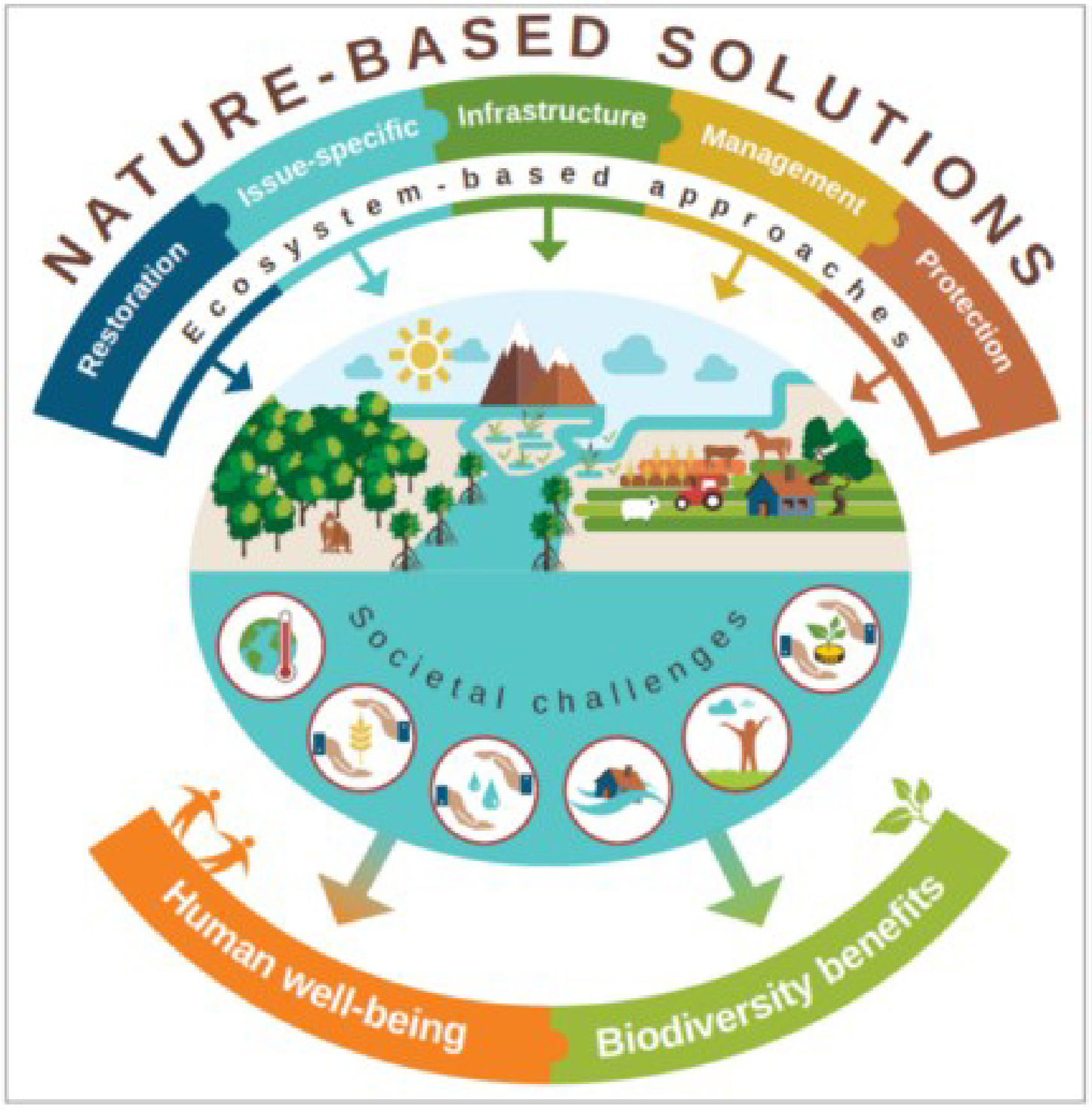
The concept of Nature-Based Solutions (NBS) has evolved from earlier frameworks such as ecosystem-based management and ecosystem-based adaptation (EbA). The discipline of intervention ecology [36] and the science of river restoration [22] provide important conceptual underpinnings for NBS project design. While ecosystem-based approaches primarily focus on the protection and restoration of ecosystems to enhance biodiversity and improve environmental quality, NBS represent a broader, more integrated paradigm.
Nature-Based Solutions are specifically designed to address environmental, social, and economic challenges simultaneously. They contribute not only to biodiversity enhancement but also to societal resilience by delivering multifunctional benefits such as urban cooling, flood mitigation, public health improvements and economic revitalisation. The role of these interventions in urban climate-change adaptation has been articulated as a portfolio of co-beneficial actions [37], and their contribution to building resilient landscapes and cities has been synthesised across scales [38]. In contrast, traditional ecosystem-based approaches, although beneficial, often focus on singular or sector-specific objectives (e.g., habitat conservation, erosion control) without systematically addressing multiple societal challenges. Importantly, this distinction does not imply that ecosystem-based interventions are inferior; rather, such initiatives can constitute valuable components within the broader framework of NBS.
Although NBS have been widely promoted as versatile solutions for landscape and settlement restoration, they are not a universal remedy ("panaceum") for all environmental challenges. Their effectiveness can be context-dependent, and certain extreme events may overwhelm the capacities of NBS interventions. For instance, within the EC-funded Grow Green project implemented in Valencia, Spain, NBS targeting water management and urban resilience were introduced (growgreenproject.eu). Despite these efforts, the city suffered severe damage during the extreme flood event of 2024, highlighting that even well-designed NBS may be insufficient against unprecedented natural catastrophes. Thus, while NBS contribute to risk reduction and resilience-building, they cannot fully replace traditional (grey) protective measures in cases of hazard scenarios. A hybrid approach that integrates NBS with engineered grey infrastructure often provides the most robust protection.
A fundamental requirement for classifying an intervention as a true Nature-Based Solution is the dominant use of green (vegetation-based) and/or blue (water-based) infrastructure. Purely grey infrastructure, such as concrete and steel constructions, is incompatible with the NBS concept. However, a hybrid infrastructure that combines green/blue elements with grey components is accepted under specific conditions. Current guidelines do not explicitly define the maximum allowable proportion of grey infrastructure within a hybrid NBS. This situation presents a practical challenge, particularly in river restoration projects, where eliminating barriers for migratory fish species often still necessitates grey structures, such as fish ladders and bypass channels. Thus, flexibility and site-specific judgment are crucial when applying the NBS framework in complex restoration projects.
The implementation of NBS frequently encounters legal and property-related obstacles. Restoration activities, especially those spanning large geographical areas, require the consent of multiple landowners. Existing national legislations are often not adequately adapted to facilitate multi-owner land interventions, creating barriers to project initiation and execution. Legal constraints may delay or prevent the realisation of NBS, particularly in densely populated or highly fragmented landscapes, such as urban areas or river floodplains. A systematic review of NBS adoption across Europe identified regulatory, governance, and financial barriers as the most critical obstacles [39]. At the same time, experiences from urban greening initiatives highlight promising pathways to overcome them [40]. Complementing these findings, the transitional path towards mainstream adoption of nature-based solutions has been mapped as a staged process requiring aligned governance, financing, and knowledge structures [41]. Therefore, enabling regulatory environments and participatory governance mechanisms are essential for the successful deployment of NBS.
Nature-Based Solutions can be implemented at various geographical levels, regional (local), national, multinational, and transboundary scales. In literature and practice, projects are commonly categorised as either large-scale or small-scale interventions. However, intermediate scales such as medium-scale (e.g., town-wide greening strategies) and micro-scale (e.g., individual green roofs) initiatives also exist and merit distinct recognition, given their growing importance for localised resilience. Recognising the full spectrum of scales can improve the planning, funding, and monitoring of NBS, ensuring interventions are tailored to the specific needs and capacities of the local context.
According to a growing body of literature, NBS remains a dynamic and evolving concept. New experiences, empirical evidence, and innovative practices continually enrich the theoretical and practical framework of NBS. Critics emphasise the need for clearer definitions, simpler methodologies and better integration of local knowledge and participatory processes. Stakeholder knowledge has been highlighted as needing fuller integration into solution design [15], and a critical perspective on the European Commission's impact evaluation publications has called for less complex evaluation methods [42]. Therefore, future research and implementation efforts are expected to further refine the NBS approach, with a clear consensus that, whenever feasible, NBS should be prioritised as first-choice interventions in ecological restoration and societal resilience building.
The infrastructure that underpins Nature-Based Solutions has been examined in an extensive body of work, only a selection of which is summarised here. A useful entry point is the edited volume by Kabisch et al., which links science, policy and practice for climate change adaptation in urban areas [43]. Building on that volume, Depietri and McPhearson set out how grey, green, and blue elements can be integrated into cities to deliver both climate adaptation and disaster risk reduction [44]. Alves et al. quantified the trade-offs among the multiple benefits of green-blue-grey infrastructure for urban flood mitigation [45]. In a companion study, Alves et al. assessed the co-benefits of the same infrastructure combinations for sustainable urban flood-risk management [46].
Ghofrani et al. provided a comprehensive review that clarified the often overlapping terminology for blue-green infrastructure [47]. O'Donnell et al. examined the institutional and perceptual barriers hindering the implementation of blue-green infrastructure through a Newcastle case study [48]. Liu and Jensen compared green-infrastructure practices across five forerunner cities and derived transferable lessons for sustainable urban water management [49]. Hansen and Pauleit proposed a conceptual framework that shifts from multifunctionality to multiple ecosystem services in green-infrastructure planning for urban areas [50].
Oral et al. reviewed nature-based solutions for urban water management in the context of European circular cities [51]. Raymond et al. developed a framework to assess and implement the co-benefits of these interventions in urban areas [52]. Castellar et al. proposed a terminology, classification and scoring scheme that connects urban challenges to the ecosystem services delivered by the underlying infrastructure [53]. Almenar et al. mapped the nexus between nature-based solutions, ecosystem services and urban challenges [54]. At the project scale, Vojinovic et al. compared the effectiveness of small- and large-scale interventions for flood mitigation in Ayutthaya, Thailand [55]. Dorst et al. identified the structural conditions that work against the uptake of urban nature-based infrastructure [56].
A recurring conclusion across these studies is that purely grey infrastructure is incompatible with the concept, that hybrid green-blue-grey configurations are admissible where engineering constraints require them, and that the proportion of grey elements should be minimised and justified on a case-by-case basis.
Intensive efforts to apply and promote Nature-Based Solutions (NBS) have been undertaken within several major European Commission (EC) initiatives, notably the Mission 100 Climate-Neutral and Smart Cities by 2030. Numerous valuable insights into the structure, challenges, and effectiveness of NBS projects have been documented in key publications, including [31]. These works provide not only comprehensive reviews of project outcomes but also frameworks for understanding the interconnections between societal challenges, project indicators, and expected benefits from NBS implementation across urban and peri-urban landscapes. The analyses indicate that although the application of NBS is increasingly widespread, the methodologies, monitoring frameworks, and reporting structures are still maturing and require further harmonisation across different project scales and themes.
Across these EU projects, a total of fourteen societal challenges were identified and systematically addressed. For practitioners and stakeholders unfamiliar with the NBS concept, many of these challenges may seem intuitive, while others highlight more nuanced objectives that require deeper integration into restoration planning.
Focusing on the specific needs and opportunities for the Danube River Basin (DRB), the following challenges have been proposed as particularly pertinent:
Climate Resilience
Water Management
Water Quality
Natural and Climate Hazards
Green Space Management
Biodiversity Enhancement
Participatory Planning and Governance
Health and Wellbeing
New Economic Opportunities and Green Jobs
Among these, Water Management, Biodiversity Enhancement, Participatory Planning and Governance, and New Economic Opportunities and Green Jobs are considered almost obligatory for any robust NBS intervention in the DRB context. It should be emphasised that NBS developers remain free to extend or refine the list of societal challenges according to the specificities of each restoration project.
Following the order proposed above, the challenges are discussed below.
1. Climate resilience is a global imperative and must be considered across virtually all NBS projects. Nature-based interventions make crucial contributions to climate adaptation by enhancing flood regulation, microclimate stabilisation, and ecosystem resilience to extreme weather events. The IPCC Sixth Assessment Report [57] confirms that NBS are among the most cost-effective adaptation options, and recent research emphasises the critical importance of deploying NBS correctly and at scale [58].
2. Water management is a core priority within the Danube River Basin, given the region's historical and contemporary vulnerabilities to both floods and droughts. NBS offer cost-effective means for improving water retention, purification, and distribution [59]. Hybrid green-blue-grey infrastructure approaches have demonstrated effectiveness in flood mitigation. Trade-offs among the multiple benefits of such infrastructure for urban flood mitigation have been explored to guide design choices [45], and a complementary study has quantified their co-benefits for sustainable urban flood management [46]. Floodplain restoration, meanwhile, remains one of the most valuable interventions for river basins [60]. The EU Water Framework Directive [61] provides the overarching regulatory context for integrated water management across European river basins.
3. Maintaining and improving water quality is essential, particularly in freshwater ecosystems of the DRB. Although air quality management is a parallel focus in urban NBS projects, the emphasis in river basins remains firmly on aquatic environments. An integrated valuation of a nature-based solution for water-pollution control has further shown that such measures deliver substantial hidden co-benefits beyond the targeted improvement in water quality [62].
4. Natural and climate hazards, including floods and droughts, are increasingly severe due to climate change. While this category sometimes overlaps with water management, it is emphasised separately to underscore the importance of NBS in disaster risk reduction.
5. Effective management of green spaces is fundamental for preserving riparian vegetation, wetlands, and protected areas. Activities include the elimination of invasive species, conservation of old-growth trees, and the creation of habitats that support biodiversity.
6. Biodiversity enhancement stands at the heart of many NBS interventions, particularly those aligned with the EU Biodiversity Strategy 2030 [63]. In the DRB, special focus is given to restoring longitudinal and lateral connectivity of river systems, thereby supporting endangered migratory fish species. The Danube Basin harbours exceptional freshwater biodiversity [64], yet aquatic species face severe pressures from habitat loss and fragmentation. The global importance, threats and conservation challenges facing freshwater biodiversity have been comprehensively documented [65], and worldwide mapping has shown how water-security and river-biodiversity threats coincide across river systems [66]. Global threats to human water security and river biodiversity [66] underscore the urgency of integrating biodiversity targets into NBS planning. Globally, only a third of large rivers remain free-flowing [67], and extensive wetland loss over recent centuries [68] has compounded these pressures. International biodiversity agreements, including the Aichi Targets [69], explicitly require the protection and restoration of freshwater ecosystems. Nature-based solutions have significant potential to combat the freshwater biodiversity crisis [70], particularly when restoring hydrological connectivity and improving habitat quality [71].
7. Participatory planning and governance are critical success factors in NBS projects. Effective interventions require the active involvement of all stakeholders, including local communities, NGOs, private-sector actors, and governmental authorities, from the earliest planning phases through long-term operation. A substantial body of literature on stakeholder-participation frameworks [72] supports multi-actor involvement. Structured engagement methodologies have been advanced both through co-production approaches for urban interventions [37] and through impact-evaluation guidance prepared for policymakers [73]. Contextual and indigenous knowledge of local communities substantially enriches project design. New governance approaches in the Danube macro-region have been examined from the perspective of stakeholders [74], and the ways in which local knowledge and power shape governance have been analysed in detail for the Danube Delta [75]. This trend aligns with emerging concepts of participatory and deliberative democracy as described by [76].
8. The relevance of NBS for health and wellbeing has been amplified in the post-pandemic period. Restored natural areas provide opportunities for recreation, physical activity, and mental health improvement, contributing directly to the quality of life in urban and rural areas. Evidence from systematic reviews confirms that nature-based environments deliver measurable benefits for mental health, physical activity and wellbeing. Resilient-landscape research links such environments to broad societal gains [38]; a focused review documents their specific health benefits for children and older adults [77]; and a quantitative review of urban ecosystem-service assessments situates these effects within the wider service portfolio [78].
9. Generation of new economic opportunities and green jobs is perhaps the most complex and emerging societal challenge relates to the generation of new economic opportunities and the creation of green jobs. Traditional economic models must adapt to incorporate ecosystem services and nature-positive investments. Foundational research first estimated the substantial economic value of the world's ecosystem services and natural capital [2], and a later reassessment tracked how that global value has changed over time [79]. The ecosystem-services agenda [80] provides a conceptual framework for integrating natural capital into economic decision-making. Recent concepts such as the Nature-Based Economy, Nature-Positive Economy, and Nature-Based Enterprises, discussed in [81], emphasise that NBS must be cost-effective while also generating tangible economic benefits. As emphasised by [82], the realisation of NBS interventions is fundamentally "not business as usual" but represents a transformative approach to sustainable development.
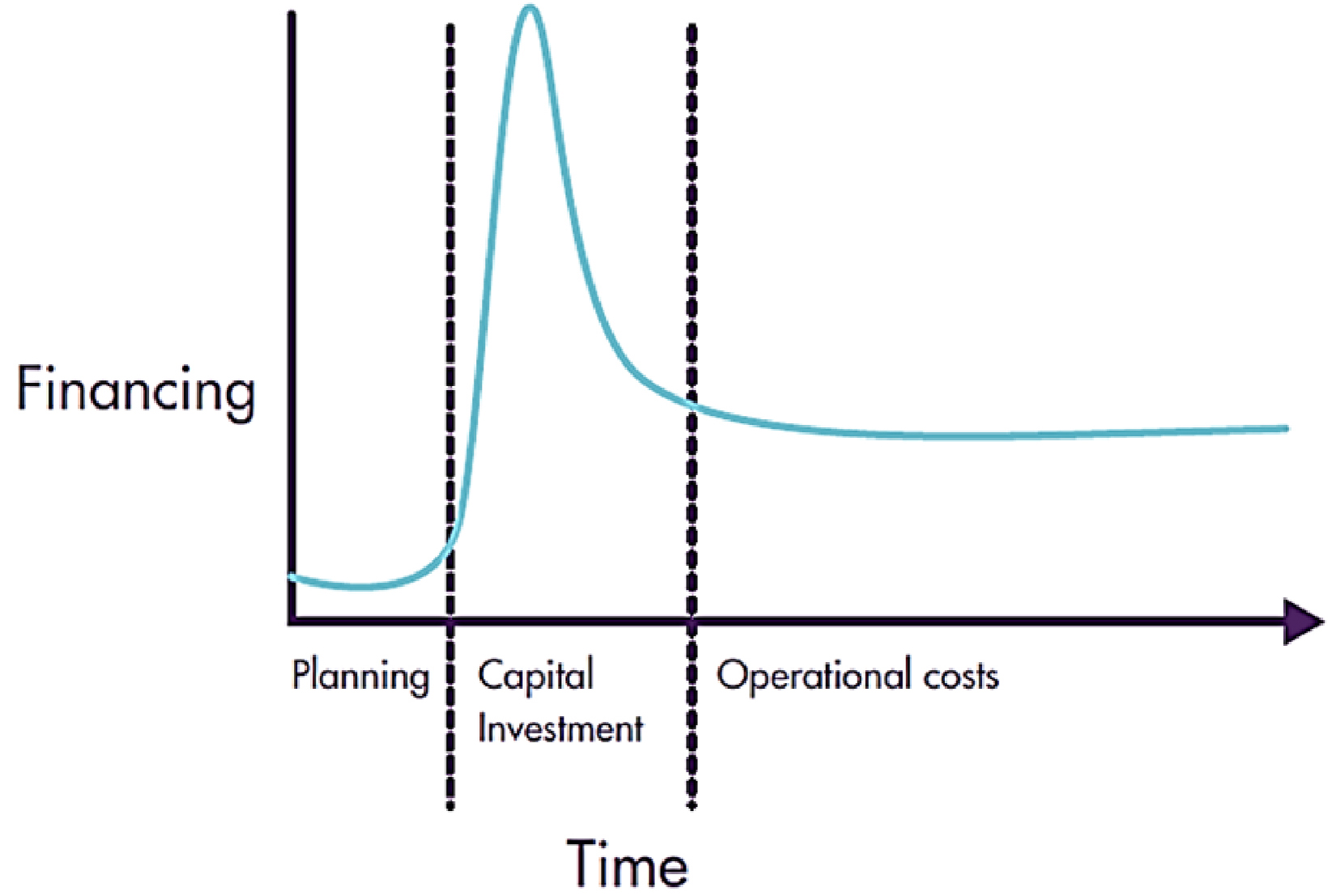
According to some sources, a problem for NBS financing is a high share of public sources, about three-quarters. For reduction, the costs are interesting (see Figure 2). It is clear that, on average, the highest costs are for the operational phase.
The new green jobs can be directly connected to the European Green Deal [83]. The EU Biodiversity Strategy for 2030 [63] and the EU Nature Restoration Law [84] reinforce these economic opportunities by creating demand for ecosystem restoration expertise and green employment across Member States.
This methodology is primarily designed to serve as a practical guide for developers of small, regional, and local-scale NBS projects. Still, it can also be adapted for use by practitioners engaged in larger-scale or multinational interventions. The comprehensive survey of publications on existing NBS initiatives has provided a valuable foundation for developing a simplified, yet robust, methodological framework to assist future developers. It was observed, however, that several prior methodologies exhibit excessive redundancy and complexity, which can discourage or burden new developers. Several authors have raised this observation. The burden that complex methods place on practitioners has been noted [15]; the redundancy in existing evaluation handbooks has been criticised [42]; and the interdisciplinary complexity of the science–policy–practice interface has been examined [85].
The primary intention of this developed methodology is to make the process of designing and implementing NBS projects as easy, understandable, and efficient as possible. By focusing on clarity and applicability, the approach aims to:
Reduce overall project costs by minimising redundant tasks.
Decrease workloads through clear phasing and decision points.
Shorten preparation time by providing concise procedures supported by existing knowledge bases.
A secondary objective is to significantly reduce the need for exhaustive desk analyses of the state-of-the-art knowledge in the field of NBS for every new project. Instead, this publication consolidates essential background information related to the Mission "Restore our Ocean and Waters by 2030" and the NBS framework, particularly adapted to the Danube River Basin (DRB) context.
Two significant sources are highlighted here for NBS developers, especially those dealing with the restoration of floodplains, wetlands, and water management ecosystems:
1. New Approaches for Floodplains and Wetlands Restoration Useful conceptual models and examples relevant to floodplain and wetland restoration can be found in [86]. These studies provide evidence-based strategies for hydrological restoration, ecosystem service enhancement, and the reintegration of natural processes in degraded landscapes. The current status and restoration options for floodplains along the Danube have been assessed in detail [87], and the multifunctionality of floodplain landscapes has been related explicitly to their management [88]. Together with the distinctive ecology of the Danube Basin [64], these provide essential context for planning restoration interventions that maximise co-benefits.
2. Danube Basin-Specific Water Management Targets
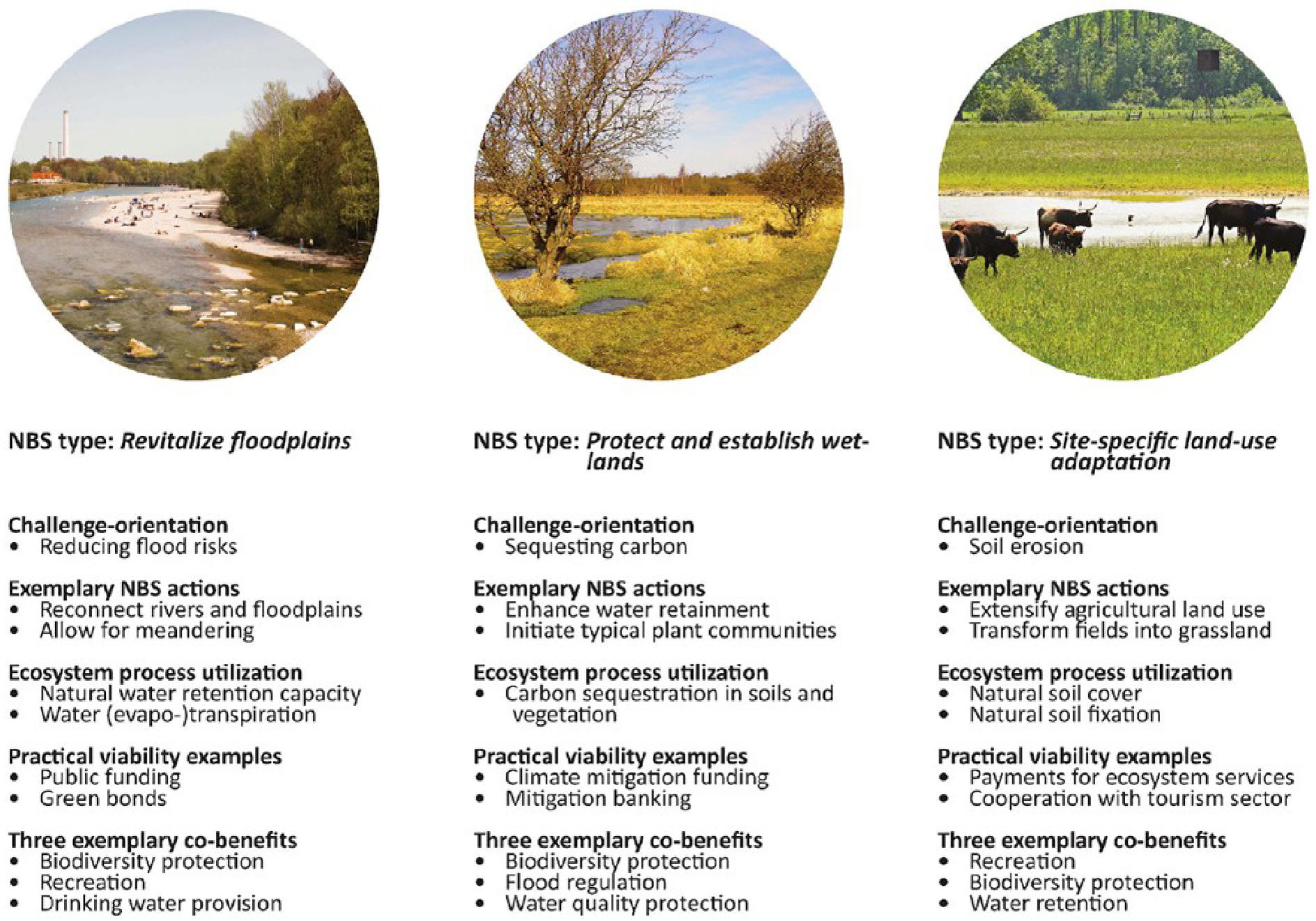
In addition to the Mission-defined targets, special attention is given to water management challenges unique to the DRB. Relevant restoration objectives for the Danube catchment are effectively summarised in Figure 3 of [89]. These include goals related to restoring river connectivity, enhancing floodplain functionality, and improving overall water quality in transboundary contexts.
The guidelines propose a phased project development approach comprising:
Preparatory Phase: Including NBS assessment, stakeholder engagement, and preliminary evaluation.
Restoration Phase: Actual implementation of the designed NBS interventions.
Operational Phase: Long-term management, monitoring, and adaptive governance.
Each phase is supported by a decision-point framework that allows early termination of the project if feasibility criteria are not met, thereby preventing unnecessary resource expenditure. Finally, citizen engagement, participatory governance, and respect for indigenous and local knowledge are emphasised throughout all phases, aligning with the principles of deliberative democracy.
In contemporary eco-restoration and NBS projects, the active engagement of citizens has become a key priority. This participatory approach is now considered essential for ensuring the success, sustainability, and societal acceptance of interventions. One notable initiative supporting this development is the toolbox for citizen engagement created within the Danube Lighthouse project Prep4Blue, which compiles practical approaches for engaging citizens with the Mission [90]. Building on this, a companion study sets out how citizen participation can be planned across the Mission to restore the ocean and waters [91]. This toolbox provides practical guidelines and methods for involving citizens not only as passive stakeholders but as active co-creators of NBS projects.
Deliberative democracy provides a strong theoretical foundation for citizen participation. Its foundations and frontiers have been laid out as a model of governance [92], while the legitimacy problems that arise when it is implemented have also been examined [93]. In contrast to traditional consultation processes, deliberative democracy emphasises mutual dialogue, co-decision-making, and collective responsibility. Citizens are viewed not merely as recipients of solutions but as legitimate contributors whose local and indigenous knowledge, practices, and customs can substantially enrich project design and implementation.
Additionally, the emerging concept of Post-Normal Science, in which uncertainty is high, values are contested, and the stakes of decision-making are significant, further justifies the need to include diverse knowledge systems and citizen perspectives in environmental governance. This approach aligns particularly well with the interdisciplinary and context-sensitive nature of NBS projects. From a practical standpoint, engaging citizens also has economic advantages. In the operational phase of NBS projects, citizen involvement in monitoring, maintenance, and adaptive management can substantially reduce costs. Voluntary contributions not only supplement human resources but also foster a sense of ownership and responsibility towards the restored ecosystems. Given that operational costs are often substantial (as highlighted in Figure 2), citizen participation can play a critical role in ensuring the project's long-term viability.
For efficient and transparent project realisation, the proposed methodology utilises a flowchart-based project structure. This framework visually represents the logical progression of project phases, key activities, and decision points, offering a user-friendly guide for implementers. Each major phase, Preparatory, Restoration, and Operational, is systematically broken down into sub-phases and associated with specific tasks, stakeholder engagements, and documentation requirements. The flowchart model offers several advantages:
Flexibility: It can be easily restructured and adapted in response to evolving project parameters, environmental conditions, or governance contexts.
Clarity: Activities and decision points are explicitly defined, enabling timely assessment of project feasibility and progress.
Efficiency: Critical decision points (typically three) are incorporated to enable early termination of projects that encounter insurmountable technical, legal, financial, or societal obstacles.
This structured, yet flexible, project realisation framework ensures that resources are optimally utilised and that projects remain adaptable to uncertainties and stakeholder feedback throughout their lifecycle.
The structural organisation of Nature-Based Solutions (NBS) projects has been discussed extensively in recent literature. A practitioner handbook has been issued for evaluating the impact of interventions [31]. A methodology has been set out for building a data and knowledge base from existing European projects [94]. An impact-evaluation framework has been developed for planning and assessing such projects [95]. These publications offer various approaches to NBS design, implementation, and evaluation. However, critical analysis reveals that many of these methodologies are either narrowly scoped, focusing on specific phases such as planning or monitoring, or are overly complex, making them less accessible to developers, particularly those working at local or regional levels. The high degree of methodological intricacy, while academically valuable, may hinder practical application and scalability in real-world restoration efforts. A more balanced and operationally friendly representation of the NBS project structure is found in [96]. Although their publication primarily addresses stakeholders' roles in NBS development, the proposed project structure, presented in Figure 4, offers a clearer, more manageable framework than earlier models. Figure 4 provides an overview of stages and steps for effective stakeholder engagement throughout the NBS project lifecycle.
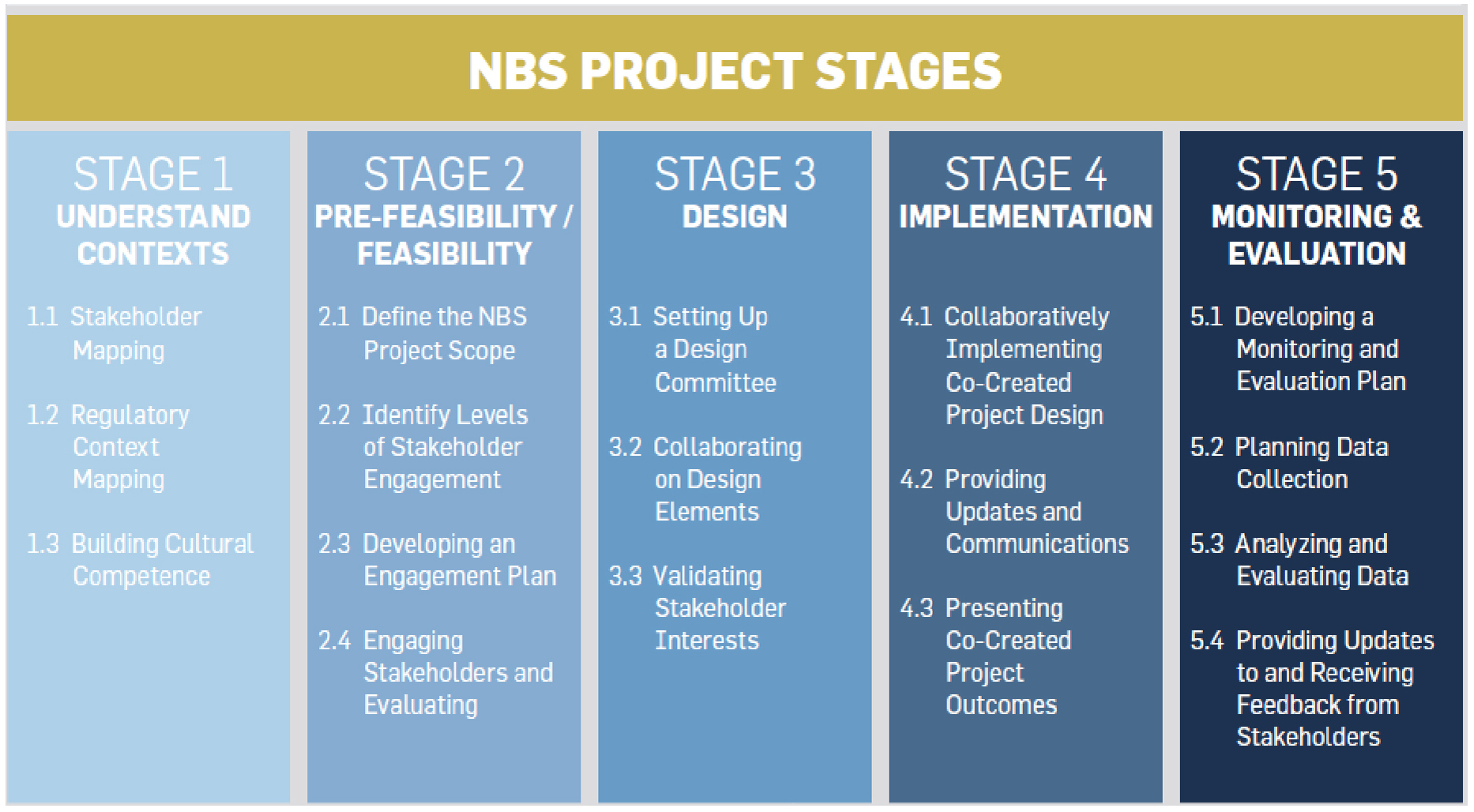
It emphasises:
Early and continuous stakeholder involvement,
Adaptive project management based on participatory feedback,
Integration of monitoring and evaluation processes from project inception.
This model aligns closely with the principles of participatory planning and governance advocated in contemporary NBS practices. Moreover, it supports the three-phase structure (Preparatory, Restoration, Operational) promoted in this methodology, ensuring that projects remain flexible, inclusive, and impact-oriented.
In conclusion, while various models of NBS project structuring exist, simplicity, clarity, and adaptability are key attributes that must guide future methodological developments. Project frameworks should empower implementers, not burden them with unnecessary procedural complexity. Accordingly, the flowchart-based approach adopted in this paper seeks to bridge the gap between scientific robustness and operational usability.
The development of an NBS project is proposed to follow a structured and sequential approach comprising three major components: 1) Preparatory Phase (NBS Assessment Phase), 2) Restoration Phase, and 3) Operational Phase. Each phase has specific objectives, activities, decision points, and expected outputs, ensuring the effectiveness and sustainability of the NBS intervention.
It is critical to the project's success and is subdivided into three subphases, which are reviewed below.
1.1. NBS Project Initiation. In this initial step, the proposed restoration approach is analysed to determine whether it qualifies as an NBS intervention. This preliminary assessment can often be conducted with moderate expert engagement, relying on guidelines provided herein and in [97]. Early engagement of stakeholders and citizens is strongly recommended, reflecting principles of participatory planning and deliberative democracy. If the preliminary evaluation is negative, further activities may be discontinued with only minor investments made to date.
Typical causes for negative evaluation and project termination at this stage include:
Legal and ownership issues,
Lack of stakeholder support,
Engineering or environmental feasibility concerns,
Insufficient funding availability.
1.2. Validation and Detailed Assessment of the project as NBS. In this second subphase, professional experts are engaged to validate the project's feasibility and to detail its NBS-specific characteristics. Key tasks include selecting indicators for monitoring project performance based on the frameworks proposed by [31], considering data collection and monitoring costs, and applying the RACER criteria (Relevant, Acceptable, Credible, Easy, Robust). The following essential documents should be produced:
Baseline Data Collection. A structured description of the current environmental status, expressed in terms of the selected indicators, establishes the reference point for future monitoring.
Theory of Change. This document articulates the expected project outcomes, outputs, intended and unintended impacts, synergies, and trade-offs. The Theory of Change explains the causal logic underpinning how an intervention will achieve its desired results. It is defined within the European Commission's impact-evaluation handbook for practitioners [31], and its causal logic is grounded in the broader practice of impact evaluation [98].
Monitoring and Evaluation Plan. A formal plan detailing monitoring activities, timelines, responsible parties, and evaluation methodologies to track project implementation and assess the success of NBS interventions.
1.3. Creation of the NBS Project Conceptual Design. This subphase finalises the Preparatory Phase by developing a Conceptual Design for the NBS intervention. Key aspects include:
Confirmation that the restoration will primarily rely on green and blue infrastructure (hybrid solutions are permissible under conditions).
Identification and resolution of any remaining obstacles, including technical, social, or regulatory barriers.
Deep integration of participatory planning and governance frameworks, ensuring community involvement in decision-making processes.
Completion of this subphase signals readiness to enter the Restoration Phase, pending positive validation at the second decision point.
It corresponds to the implementation of the designed NBS interventions. While structurally similar to conventional engineering projects, it distinguishes itself by strong stakeholder involvement in procurement processes, terms of reference, contractor selection, and monitoring activities. It also emphasises transparency and participatory governance throughout the construction and early restoration periods.
Public procurement procedures should align with best practices outlined in [99] to ensure open, competitive, and fair contracting processes.
Though often insufficiently addressed in traditional restoration projects, it is crucial to sustain the benefits of NBS over time. Its key elements are outlined below.
Monitoring and Evaluation: Implementation of the Monitoring and Evaluation Plan developed during the Preparatory Phase, with regular data collection, analysis, and reporting.
Governance of Restored Areas: Governance structures, preferably multi-stakeholder, should be defined either during the Preparatory Phase or at the beginning of the Operational Phase. Documented governance models from river restoration projects [100] and deliberative approaches [101] provide practical templates for multi-stakeholder coordination. Responsibilities must be clearly allocated, and governance mechanisms must ensure continuous participation by citizens and stakeholders.
Citizen Involvement and Voluntary Monitoring: Mobilising trained volunteers, such as local citizens and students, for routine monitoring tasks can significantly reduce operational costs and enhance community ownership. Citizen-science approaches offer structured frameworks for involving non-specialist volunteers in biodiversity and water-quality monitoring, generating valuable long-term datasets. The emergence of citizen science as a research practice has been charted [102], and practical guidance now exists on when and how to deploy it for monitoring [103].
Financial Sustainability: Sustainable financing mechanisms should be explored, including public funds, private sector partnerships, and volunteer contributions, to cover operational costs over the long term. The economic valuation of ecosystem services provides compelling arguments for investors and policymakers to support long-term financing. The seminal global valuation [2], its subsequent reassessment [79] and the broader ecosystem-services agenda [80] together make the economic case for sustained investment. Nature-based solutions have likewise been positioned as a key contributor to Europe's sustainable development [104].
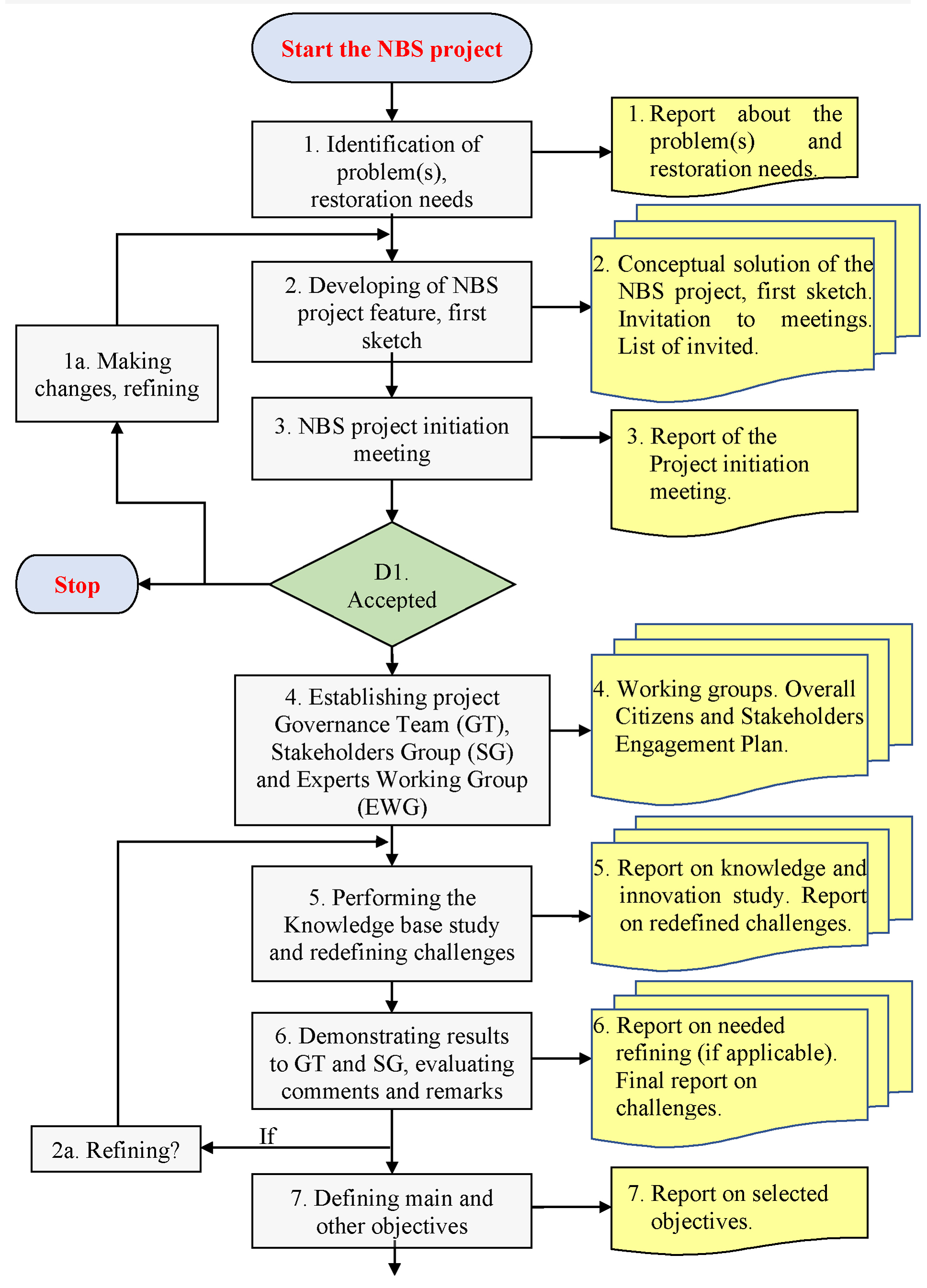
The Operational Phase can vary in duration, ranging from a few years to indefinite maintenance and adaptive management, depending on project objectives and ecosystem dynamics. The activities are specified in Table 1, with their numbers visualised in the flowchart in Figure 5, and the documentary outputs associated with the same numbered steps are specified in Table 2. Consequently, each step of the flowchart can be traced directly to its description in Table 1 and to the corresponding deliverable in Table 2.
| No. | Description |
|---|---|
| 1. | To be performed by the initiator, institution, enterprise, or individuals (it could be public, private, public-private, governmental institutions, scientific or technical advisors). |
| 2. | To be performed by PCT and, potentially, invited experts, through outsourcing. |
| 3. | PCT and invited experts, citizens' representatives, or authorities, present the projects and open the discussion. |
| D1. | The initiators and stakeholders/citizens consider the comments, remarks, and ideas presented and evaluate whether the project proposal can be validated as an NBS and implemented. They decide at the end of the meeting, or afterwards. The options are: |
| 1a. | Reconsidering the initiative, considering comments, recommendations, and conclusions from the Project Initiation Meeting. Repetition of checking and deciding. |
| No. | Description |
|---|---|
| 1. | Report about problems, expectations/vision and proposed NBS project/intervention. The document explains identified problems or opportunities. Tries to identify the root causes of the identified problems. Defines general overall objectives. Vision. It should also contain a proposal of several possible NBS and alternative grey/hybrid solutions based on local characteristics. Defines the provisional title of the project. |
| 2. | Conceptual solution of the project (the first sketch). |
| 3. | Report of the project initiation meeting and decision on how to continue: start the project, perform the suggested changes and reconsider the decision (short additional meeting), cessation of the activity. Includes the induction of innovative solutions and/or the development of new ones. |
| 4. | The decision on the structure and roles of GT, SG, and EWG. |
| 5. | Report on knowledge and innovation study. |
| 6. | Minutes of different meetings with the stakeholders with detailed explanations of comments, suggestions, and recommendations. Report on refinements needed. |
| 2a. | List of possible trade-offs. Recommendation on how to avoid or minimise trade-offs. |
The developed guidelines for the Nature-Based Solutions project assessment and implementation have been discussed with selected key stakeholders and citizen representatives. After a careful evaluation, their comments and suggestions were incorporated into the final methodology, reinforcing its relevance, applicability, and user-friendliness.
The main features of the proposed guidelines are summarised below.
1. A flowchart-based framework is a distinctive feature of the proposed methodology, enabling the description of the step-by-step procedure of NBS assessment and project development, including the often-overlooked Operational Phase. The flowchart approach ensures clarity and transparency, while its flexible design allows for easy modifications, branching of activities, and adaptation to diverse project contexts. This user-friendly structure is intended to support a wide range of actors, including NBS developers, decision-makers, authorities, Innovation Action projects, and other stakeholders.
2. Reduced dependence on comprehensive desk analyses by partially consolidating necessary background information and references, contrary to many existing guidelines that recommend extensive desk research at project initiation. This integration substantially reduces the time and cost required to reach the initial decision point (D.1) and promotes more efficient project initiation, especially critical for small- and medium-scale interventions.
3. Simplified preliminary assessment for small-scale projects, making it possible to perform preliminary NBS assessment solely using this publication, or with only moderate expert consultation (outsourcing). This practical approach enables significant reductions in expenditure and working time while maintaining scientific rigour and alignment with EU Mission objectives.
4. Monitoring and evaluation in the operational phase, with its importance emphasised, whereas it is an aspect frequently underrepresented in traditional restoration methodologies. Engaging trained volunteers, particularly for simple, frequent monitoring tasks, is an effective strategy to reduce operational costs while enhancing community engagement and stewardship of restored ecosystems.
The proposed framework is inherently flexible and can be adapted to a wide range of ecosystem restoration efforts beyond the Danube River Basin. Potential applications include other Lighthouse areas, such as the Mediterranean region (e.g., the Adriatic Sea), thus broadening the scope of NBS implementation within the Mission "Restore our Ocean and Waters by 2030" framework. Future refinement of the methodology should focus on: (i) Intensification of innovations, particularly in monitoring technologies, citizen science, and ecosystem-service valuation; (ii) Integration of Living Labs approaches, fostering real-world experimentation and co-creation processes with citizens, stakeholders, and policymakers. By evolving toward more dynamic, participatory, and technologically enhanced frameworks, NBS projects can better address the complex societal and environmental challenges of the coming decades.
This work was supported by the EcoDaLLi project, which has received funding from the European Union's Horizon Europe research and innovation programme under grant agreement No. 101093908. Views and opinions expressed are those of the author(s) only and do not necessarily reflect those of the European Union or the European Climate, Infrastructure and Environment Executive Agency (CINEA). Neither the European Union nor the granting authority can be held responsible for them. The authors confirm that they used AI tools solely to enhance the clarity and correctness of the manuscript's English. The content and analysis were entirely based on the authors' own assessment.
- , , Ecosystems and Human Well-being: Synthesis, 2005
- ,
The value of the world’s ecosystem services and natural capital ,Nature , Vol. 387 (6630), :253-2601997, https://doi.org/10.1038/387253a0 - ,
Global recognition of the importance of nature-based solutions to the impacts of climate change ,Global Sustainability , Vol. 3 , :e152020, https://doi.org/10.1017/sus.2020.8 - ,
The plant ecology of nature-based solutions for people, biodiversity and climate ,Journal of Ecology , Vol. 112 , :2424-24312024, https://doi.org/10.1111/1365-2745.14441 - ,
Sustainable nature-based solutions require establishment and maintenance of keystone plant-pollinator interactions ,Journal of Ecology , Vol. 112 , :2432-24412024, https://doi.org/10.1111/1365-2745.14353 - ,
A Framework for Assessing Benefits of Implemented Nature-Based Solutions ,Sustainability , Vol. 11 , :67882019, https://doi.org/10.3390/su11236788 - ,
Analysis of Nature-Based Solutions Research Trends and Integrated Means of Implementation in Climate Change ,Atmosphere , Vol. 14 , :17752023, https://doi.org/10.3390/atmos14121775 - ,
Building Urban Climate Resilience: Assessing Awareness, Perception, and Willingness regarding Nature-Based Solutions and Climate Change among Stakeholders in Iligan City, Philippines ,Urban Science , Vol. 8 , :532024, https://doi.org/10.3390/urbansci8020053 - ,
Nature-based solutions to climate change mitigation and adaptation in urban areas ,Ecology and Society , Vol. 21 , :art392016, https://doi.org/10.5751/ES-08373-210239 - ,
Assessing the effectiveness of marine nature-based solutions with climate risk assessments ,Global Change Biology , Vol. 30 , :e172962024, https://doi.org/10.1111/gcb.17296 - ,
Assessing nature-based solutions for transformative change ,One Earth , Vol. 4 , :730-7412021, https://doi.org/10.1016/j.oneear.2021.04.013 - ,
Framework for Planning and Evaluation of Nature-Based Solutions for Water in Peri-Urban Areas ,Sustainability , Vol. 14 , 2022, https://doi.org/10.3390/su14137952 - ,
Stakeholders’ perspectives on the operationalisation of the ecosystem service concept: Results from 27 case studies ,Ecosystem Services , Vol. 29 , :552-5652018, https://doi.org/10.1016/j.ecoser.2017.10.023 - ,
Nature-based solutions for urban biodiversity governance ,Environmental Science & Policy , Vol. 110 , :77-872020, https://doi.org/10.1016/j.envsci.2020.04.002 - ,
Bayesian Belief Networks for Integrating Scientific and Stakeholders Knowledge to Support Nature-Based Solution Implementation ,Frontiers in Earth Science , Vol. 9 , 2021, https://doi.org/10.3389/feart.2021.674618 - ,
Mainstreaming nature-based solutions through five forms of scaling ,Ambio , Vol. 53 , :212-2262024, https://doi.org/10.1007/s13280-023-01942-0 - ,
Enhancing river floodplain management with nature-based solutions ,WIREs Water , Vol. 11 , 2024, https://doi.org/10.1002/wat2.1723 - ,
Optimal allocation of nature-based solutions to achieve climate mitigation and adaptation goals ,People and Nature , Vol. 5 , :1034-10452023, https://doi.org/10.1002/pan3.10481 - ,
Integrating nature-based solutions and the conservation of urban built heritage ,Urban Forestry & Urban Greening , Vol. 63 , 2021, https://doi.org/10.1016/j.ufug.2021.127192 - Mission Ocean and Waters: Cross-basin Lessons and Insights from CSAs Prep4Blue, 2025
- ,
The natural flow regime: A paradigm for river conservation and restoration ,BioScience , Vol. 47 (11), :769-7841997, https://doi.org/10.2307/1313099 - ,
Synthesizing US river restoration efforts ,Science , Vol. 308 (5722), :636-6372005, https://doi.org/10.1126/science.1109769 - ,
River restoration, habitat heterogeneity and biodiversity: a failure of theory or practice? ,Freshwater Biology , Vol. 55 (Suppl 1), :205-2222010, https://doi.org/10.1111/j.1365-2427.2009.02372.x - , , Riparia: Ecology, Conservation and Management of Streamside Communities, 2005
- Baseline study for the implementation of lighthouses of the Mission Restore our ocean and waters by 2030, 2023
- IUCN's Position on Technical Issues, 2022
- , , Biodiversity, Climate Change, and Adaptation, 2008
- , , Natural solutions: protected areas helping people cope with climate change, 2010
- ,
Nature-Based Solutions: New Influence for Environmental Management and Research in Europe ,GAIA - Ecological Perspectives for Science and Society , Vol. 24 , :243-2482015, https://doi.org/10.14512/gaia.24.4.9 - Towards an EU research and innovation policy agenda for nature-based solutions and re-naturing cities, 2015
- Evaluating the impact of nature-based solutions: a handbook for practitioners, 2021
- , , IUCN Global Standard for Nature-based Solutions, 2020
- ,
The superior effect of nature based solutions in land management for enhancing ecosystem services ,Science of the Total Environment , Vol. 610-611 , :997-10092018, https://doi.org/10.1016/j.scitotenv.2017.08.077 - , Nature-based solutions and climate change - four shades of green, Nature-Based Solutions to Climate Change Adaptation in Urban Areas, 2017
- , , Nature-based solutions to address global societal challenges, 2016
- ,
Intervention ecology: Applying ecological science in the twenty-first century ,BioScience , Vol. 61 (6), :442-4502011, https://doi.org/10.1525/bio.2011.61.6.6 - ,
Nature-based solutions for urban climate change adaptation: linking science, policy, and practice communities for evidence-based decision-making ,BioScience , Vol. 69 (6), :455-4662019, https://doi.org/10.1093/biosci/biz009 - ,
Nature-based solutions for resilient landscapes and cities ,Environmental Research , Vol. 165 , :431-4412018, https://doi.org/10.1016/j.envres.2017.11.038 - ,
Barriers to and enablers of the adoption and implementation of nature-based solutions in Europe ,Journal of Environmental Policy & Planning , Vol. 23 (5), :649-6652021, https://doi.org/10.1080/1523908X.2021.1885412 - ,
Urban greening through nature-based solutions - Key characteristics of an emerging concept ,Sustainable Cities and Society , Vol. 49 , 2019, https://doi.org/10.1016/j.scs.2019.101620 - ,
Transitional path to the adoption of nature-based solutions ,Land Use Policy , Vol. 80 , :406-4092019, https://doi.org/10.1016/j.landusepol.2018.09.012 - ,
A critical perspective on the European Commission's publications Evaluating the impact of nature-based solutions ,Nature-Based Solutions , Vol. 2 , 2022, https://doi.org/10.1016/j.nbsj.2022.100027 - , , Nature-Based Solutions to Climate Change Adaptation in Urban Areas, 2017
- , Integrating the grey, green, and blue in cities, Nature-Based Solutions to Climate Change Adaptation in Urban Areas, 2017
- ,
Exploring trade-offs among the multiple benefits of green-blue-grey infrastructure for urban flood mitigation ,Science of the Total Environment , Vol. 703 , 2020, https://doi.org/10.1016/j.scitotenv.2019.134980 - ,
Assessing the co-benefits of green-blue-grey infrastructure for sustainable urban flood risk management ,Journal of Environmental Management , Vol. 239 , :244-2542019, https://doi.org/10.1016/j.jenvman.2019.03.036 - ,
A comprehensive review of blue-green infrastructure concepts ,International Journal of Environment and Sustainability , Vol. 6 (1), :15-362017, https://doi.org/10.24102/ijes.v6i1.728 - ,
Recognising barriers to implementation of Blue-Green Infrastructure: a Newcastle case study ,Urban Water Journal , Vol. 14 (9), :964-9712017, https://doi.org/10.1080/1573062X.2017.1279190 - ,
Green infrastructure for sustainable urban water management: Practices of five forerunner cities ,Cities , Vol. 74 , :126-1332018, https://doi.org/10.1016/j.cities.2017.11.013 - ,
From multifunctionality to multiple ecosystem services? A conceptual framework for multifunctionality in green infrastructure planning for urban areas ,Ambio , Vol. 43 (4), :516-5292014, https://doi.org/10.1007/s13280-014-0510-2 - ,
A review of nature-based solutions for urban water management in European circular cities ,Blue-Green Systems , Vol. 2 (1), :112-1362020, https://doi.org/10.2166/bgs.2020.932 - ,
A framework for assessing and implementing the co-benefits of nature-based solutions in urban areas ,Environmental Science & Policy , Vol. 77 , :15-242017, https://doi.org/10.1016/j.envsci.2017.07.008 - ,
Nature-based solutions in the urban context: terminology, classification and scoring for urban challenges and ecosystem services ,Science of the Total Environment , Vol. 779 , 2021, https://doi.org/10.1016/j.scitotenv.2021.146237 - ,
Nexus between nature-based solutions, ecosystem services and urban challenges ,Land Use Policy , Vol. 100 , 2021, https://doi.org/10.1016/j.landusepol.2020.104898 - ,
Effectiveness of small- and large-scale Nature-Based Solutions for flood mitigation: The case of Ayutthaya, Thailand ,Science of the Total Environment , Vol. 789 , 2021, https://doi.org/10.1016/j.scitotenv.2021.147725 - ,
What's behind the barriers? Uncovering structural conditions working against urban nature-based solutions ,Landscape and Urban Planning , Vol. 220 , 2022, https://doi.org/10.1016/j.landurbplan.2021.104335 - , , Climate Change 2022: Impacts, Adaptation and Vulnerability, 2022
- ,
Getting the message right on nature-based solutions to climate change ,Global Change Biology , Vol. 27 (8), :1518-15462021, https://doi.org/10.1111/gcb.15513 - ,
Nature-based solutions for hydro-meteorological risk reduction: a state-of-the-art review of the research area ,Natural Hazards and Earth System Sciences , Vol. 20 (1), :243-2702020, https://doi.org/10.5194/nhess-20-243-2020 - ,
Riverine flood plains: present state and future trends ,Environmental Conservation , Vol. 29 (3), :308-3302002, https://doi.org/10.1017/S037689290200022X - , , Directive 2000/60/EC establishing a framework for Community action in the field of water policy, 2000
- ,
Integrated valuation of a nature-based solution for water pollution control: Highlighting hidden benefits ,Ecosystem Services , Vol. 22 , :392-4012016, https://doi.org/10.1016/j.ecoser.2016.09.011 - COM(2020) 380 final EU Biodiversity Strategy for 2030: Bringing Nature Back into Our Lives, 2020
- , The Danube River Basin, Rivers of Europe, 2009
- ,
Freshwater biodiversity: importance, threats, status and conservation challenges ,Biological Reviews , Vol. 81 (2), :163-1822006, https://doi.org/10.1017/S1464793105006950 - ,
Global threats to human water security and river biodiversity ,Nature , Vol. 467 (7315), :555-5612010, https://doi.org/10.1038/nature09440 - ,
Mapping the world's free-flowing rivers ,Nature , Vol. 569 (7755), :215-2212019, https://doi.org/10.1038/s41586-019-1111-9 - ,
Extensive global wetland loss over the last three centuries ,Nature , Vol. 614 (7947), :281-2862023, https://doi.org/10.1038/s41586-022-05572-6 - Strategic Plan for Biodiversity 2011-2020 and the Aichi Targets, 2011
- ,
The potential for nature-based solutions to combat the freshwater biodiversity crisis ,PLOS Water , Vol. 2 (1), 2023, https://doi.org/10.1371/journal.pwat.0000126 - ,
Freshwater biodiversity conservation: recent progress and future challenges ,Journal of the North American Benthological Society , Vol. 29 (1), :344-3582010, https://doi.org/10.1899/08-171.1 - ,
Stakeholder participation for environmental management: A literature review ,Biological Conservation , Vol. 141 (10), :2417-24312008, https://doi.org/10.1016/j.biocon.2008.07.011 - Evaluating the impact of nature-based solutions: A summary for policy makers, 2021
- ,
New approaches in European governance? Perspectives of stakeholders in the Danube macro-region ,Regional Studies, Regional Science , Vol. 3 (1), :88-952016, https://doi.org/10.1080/21681376.2015.1116957 - ,
Delineating Locals: Transformations of Knowledge/Power and the Governance of the Danube Delta ,Journal of Environmental Policy & Planning , Vol. 13 (1), :1-212011, https://doi.org/10.1080/1523908X.2011.559087 - ,
State of the Art and Latest Advances in Exploring Business Models for Nature-Based Solutions ,Sustainability , Vol. 13 , 2021, https://doi.org/10.3390/su13137413 - ,
The health benefits of nature-based solutions to urbanization challenges for children and the elderly - A systematic review ,Environmental Research , Vol. 159 , :362-3732017, https://doi.org/10.1016/j.envres.2017.08.004 - ,
A quantitative review of urban ecosystem service assessments: concepts, models, and implementation ,Ambio , Vol. 43 (4), :413-4332014, https://doi.org/10.1007/s13280-014-0504-0 - ,
Changes in the global value of ecosystem services ,Global Environmental Change , Vol. 26 , :152-1582014, https://doi.org/10.1016/j.gloenvcha.2014.04.002 - ,
The ecosystem services agenda: bridging the worlds of natural science and economics, conservation and development, and public and private policy ,Ecosystem Services , Vol. 1 (1), :4-152012, https://doi.org/10.1016/j.ecoser.2012.07.011 - The vital role of nature-based solutions in a nature positive economy, 2022
- Indicators to measure social protection performance: implications for EC programming, 2017
- COM(2019) 640 final The European Green Deal, 2019
- , , Regulation (EU) 2024/1991 on nature restoration, 2024
- ,
The science, policy and practice of nature-based solutions: An interdisciplinary perspective ,Science of the Total Environment , Vol. 579 , :1215-12272017, https://doi.org/10.1016/j.scitotenv.2016.11.106 - ,
Identification of conservation and restoration priority areas in the Danube River based on the multi-functionality of river-floodplain systems ,Science of the Total Environment , Vol. 654 , :763-7772019, https://doi.org/10.1016/j.scitotenv.2018.10.322 - ,
Current status and restoration options for floodplains along the Danube River ,Science of the Total Environment , Vol. 543 , :778-7902016, https://doi.org/10.1016/j.scitotenv.2015.09.073 - ,
Multifunctionality of floodplain landscapes: relating management options to ecosystem services ,Landscape Ecology , Vol. 29 (2), :229-2442014, https://doi.org/10.1007/s10980-014-9989-y - ,
Planning nature-based solutions: Principles, steps, and insights ,Ambio , Vol. 50 , :1446-14612021, https://doi.org/10.1007/s13280-020-01365-1 - Deliverable D3.4: Engaging Citizens with Mission Ocean and Waters - A Toolbox of Approaches, 2025
- ,
Planning for citizen participation in the EU mission to restore our ocean and waters by 2030 ,Maritime Studies , Vol. 23 , :44, https://doi.org/10.1007/s40152-024-00385-x - , , Foundations and Frontiers of Deliberative Governance, 2012
- , , Deliberating in the Real World: Problems of Legitimacy in Deliberative Democracy, 2006
- ,
Methodology for development of a data and knowledge base for learning from existing nature-based solutions in Europe: The CONNECTING Nature project ,MethodsX , Vol. 7 , , https://doi.org/10.1016/j.mex.2020.101096 - An impact evaluation framework to support planning and evaluation of nature-based solutions projects, 2017
- Stakeholder Engagement Guide for Nature-Based Solutions, 2022
- Deliverable D2.1: Methodology for Mission Relevant NBS Assessment, 2024
- , , Impact Evaluation in Practice, 2010
- Public procurement of nature-based solutions: addressing barriers to the procurement of urban NBS, 2020
- ,
Governance models of nature-based solutions: How Rhine-Main, Frankfurt, Germany, operates urban river restoration ,Ecological Engineering , Vol. 158 , , https://doi.org/10.1016/j.ecoleng.2020.106077 - ,
Designing a knowledge co-production operating space for urban environmental governance ,Environmental Science and Policy , Vol. 62 , :90-98, https://doi.org/10.1016/j.envsci.2016.01.013 - ,
A new dawn for citizen science ,Trends in Ecology & Evolution , Vol. 24 (9), :467-471, https://doi.org/10.1016/j.tree.2009.03.017 - , , Choosing and Using Citizen Science: A Guide to When and How to Use Citizen Science to Monitor Biodiversity and the Environment, 2014
- ,
Nature-based solutions for Europe's sustainable development ,Conservation Letters , Vol. 10 (1), :121-124, https://doi.org/10.1111/conl.12216