


The rapid growth in global energy demand, coupled with escalating environmental challenges associated with organic waste disposal, has intensified interest in anaerobic digestion (AD) as a sustainable waste-to-energy pathway. AD enables the conversion of biodegradable waste into biogas, a renewable fuel primarily composed of methane and carbon dioxide, while simultaneously mitigating greenhouse gas emissions and improving sanitation [1], [2]. These advantages make AD particularly attractive for decentralized and resource-constrained regions, where access to centralized energy infrastructure remains limited.
Human excreta and kitchen waste are abundant organic residues generated in developing countries and represent largely untapped energy resources [3]. Individually, however, these substrates present operational challenges. Human excreta is often associated with high ammonia levels and pathogen risks, while kitchen waste is characterized by rapid acidification due to its high biodegradability [4], [5]. Co-digestion of these substrates has been widely reported to improve nutrient balance, dilute inhibitory compounds, and enhance microbial synergy, resulting in improved process stability and biogas yield [6], [7]. Despite these advantages, suboptimal operating conditions and process instability continue to limit methane productivity, particularly in small-scale and decentralized digesters.
Recent research has demonstrated that the use of low-cost additives and catalysts can significantly enhance anaerobic digestion performance by improving buffering capacity, stabilizing pH, and supplying essential trace minerals for methanogenic consortia [8]. Among these additives, ash-based materials have gained increasing attention due to their alkaline nature and rich mineral composition. Plant ash typically contains significant concentrations of potassium (K), calcium (Ca), and magnesium (Mg), which are known to neutralize volatile fatty acids, enhance alkalinity, and stimulate enzymatic activity in methanogenic pathways [9]–[11]. Unlike commercial chemical buffers or engineered catalysts, plant ash is locally available, inexpensive, and environmentally benign, making it particularly suitable for decentralized waste-to-energy systems.
Process optimization remains critical for achieving high and stable biogas yields. Temperature, pH, and moisture content strongly influence microbial metabolism, substrate hydrolysis, and mass transfer processes during anaerobic digestion [12]–[14]. Temperature governs enzymatic kinetics and microbial community structure, while pH directly affects methanogenic activity. Moisture content determines substrate accessibility and diffusion of soluble intermediates. Identifying the optimal combination of these parameters is therefore essential, especially when novel catalysts are introduced into the digestion system.
Statistical optimization techniques such as the Taguchi method offer a robust and efficient framework for evaluating multiple process parameters simultaneously with a reduced number of experimental runs. The Taguchi approach has been successfully applied in bioenergy systems to identify dominant factors, minimize process variability, and enhance performance reliability [15], [16]. However, limited studies have combined Taguchi optimization with ash-based catalysis for co-digestion systems involving human excreta.
The novelty of this study lies in the integrated application of (i) human excreta – kitchen waste co-digestion, (ii) locally sourced plant ash as a low-cost alkaline catalyst, and (iii) Taguchi L9 experimental design for systematic process optimization. In addition, kinetic modeling was employed to elucidate digestion dynamics and assess the influence of plant ash on microbial acclimatization and methane generation.
This study therefore aims to optimize biogas production from co-digestion of human excreta and kitchen waste using plant ash catalysis by evaluating the effects of temperature, pH, and moisture content through Taguchi design and ANOVA, and by validating the process using established kinetic models. The findings provide practical insights for designing efficient, low-cost, and scalable anaerobic digestion systems for decentralized energy production.
Human excreta and kitchen waste were collected from residential facilities within the Awka Educational Zone, Anambra State, Nigeria. Fresh human excreta was obtained from designated sanitation facilities, while kitchen waste consisted mainly of vegetable residues, cooked rice, cassava-based food remnants, and carbohydrate-rich leftovers. All substrates were transported to the laboratory in airtight containers and processed within 24 h of collection.
Non-biodegradable materials such as plastics, bones, and metals were manually removed. The kitchen waste was mechanically shredded to produce particles below 10 mm, while human excreta was homogenized by manual stirring. The two substrates were mixed at a 1:1 ratio on a volatile solids (VS) basis, following established recommendations for improved nutrient balance and digestion stability in co-digestion systems. Total solids (TS) and VS were determined according to standard methods.
Plant ash was produced from locally sourced agricultural biomass residues (predominantly hardwood and crop stalks) combusted under controlled open-air conditions. The ash was allowed to cool naturally, sieved through a 1 mm mesh to remove unburned particles, and stored in airtight containers to prevent moisture absorption prior to use.
Based on literature-reported compositions of agricultural biomass ash, the plant ash used in this study is rich in alkaline and alkaline-earth minerals, primarily potassium (K), calcium (Ca), and magnesium (Mg). These minerals are known to enhance anaerobic digestion by increasing alkalinity, neutralizing volatile fatty acids, and supplying essential micronutrients required for methanogenic enzymatic activity. The catalytic role of plant ash in this study is therefore attributed to its buffering capacity and mineral-mediated stimulation of microbial metabolism rather than to direct chemical catalysis.
Batch anaerobic digestion experiments were conducted using 1 L airtight glass digesters, each with a working volume of 800 mL. The digesters were loaded with the prepared substrate mixture and adjusted to the required moisture content using distilled water. A fixed dosage of plant ash catalyst was added to the designated experimental runs, while control experiments were conducted without catalyst addition.
Prior to sealing, the digesters were purged with nitrogen gas for 2 min to ensure anaerobic conditions. The reactors were then tightly sealed with rubber stoppers and maintained in temperature-controlled water baths. Digestion was carried out under mesophilic conditions, with temperatures varied according to the Taguchi experimental design. The digestion period lasted 30 days, during which biogas production was monitored daily.
A Taguchi L9 orthogonal array design was employed to optimize biogas production by evaluating the effects of three control factors at three levels each [18]:
Temperature: 30, 35, and 40 °C
pH: 6.5, 7.0, and 7.5
Moisture content: 70%, 80%, and 90%
The Taguchi approach was selected to minimize the number of experimental runs while enabling systematic evaluation of factor effects and interactions. Biogas yield was chosen as the performance response, and the “larger-the-better” signal-to-noise (S/N) ratio criterion was applied to identify optimal operating conditions and improve process robustness.
Daily biogas production was measured using the water displacement method, and the recorded volumes were corrected to standard temperature and pressure (STP). Cumulative biogas yield was expressed in mLg-1 VS.
Biogas composition, specifically methane (CH4) and carbon dioxide (CO2) concentrations, was determined using a gas chromatograph equipped with a thermal conductivity detector (TCD). Gas quality parameters, including moisture content, density, and calorific value, were calculated using standard thermodynamic correlations based on measured gas composition.
To describe the dynamics of biogas generation, cumulative biogas production data were fitted to three widely used kinetic models: first-order, modified Gompertz, and logistic models. Nonlinear regression analysis was performed using MATLAB software to estimate kinetic parameters, including ultimate biogas potential (B0), maximum biogas production rate (Rm), lag phase duration (λ), and first-order rate constant (k). Model performance was evaluated using the coefficient of determination (R2).
The cumulative biogas yield was modeled using the modified Gompertz and first-order kinetic equations, which are widely applied for evaluating digestion performance [12], [14]. Nonlinear regression analysis was performed using MATLAB software to estimate kinetic parameters and evaluate model fit (R2).
Cumulative biogas production was monitored daily over a 30-day mesophilic digestion period (35 ± 2 °C). The biogas volume was measured using water displacement or a gas flow meter, and methane content was determined using a gas analyzer.
To quantify the dynamics of biogas generation, three widely used kinetic models were applied:
This model assumes that the rate of substrate degradation is proportional to the remaining biodegradable fraction:
where are: B(t) ‒ cumulative biogas yield at time t (mL/g VS), B0 ‒ maximum biogas production potential (mL/g VS), k ‒ first-order rate constant (day-1), and t ‒ digestion time (days).
A widely accepted model for microbial growth-based biogas kinetic:
where are: B(t) ‒ cumulative biogas yield at time t (mL/g VS), B0 ‒ maximum biogas production potential (mL/g VS), Rm ‒ maximum biogas production rate (mL/g VS day), λ ‒ lag phase time (days), e ‒ Euler’s number (2.718), and t ‒ digestion time (days).
Used to describe symmetrical biogas production curves:
where are: B(t) ‒ cumulative biogas yield at time t (mL/g VS), B0 ‒ maximum biogas production potential (mL/g VS), Rm ‒ maximum biogas production rate (mL/g VS day), λ ‒ lag phase time (days), and t ‒ digestion time (days).
The kinetic parameters (B0, Rm, k, and λ) were estimated using nonlinear regression in MATLAB (R2023a) by minimizing the sum of squared errors between experimental and predicted biogas yields. Model performance was evaluated using the coefficient of determination (R2) and root mean square error (RMSE).
Analysis of variance (ANOVA) was performed to determine the relative contribution and significance of each process parameter on biogas yield at a 95% confidence level. Statistical analyses were conducted using Minitab 19 software. Factors with p-values less than 0.05 were considered statistically significant, while practical significance was assessed based on percentage contribution and response trends derived from the Taguchi analysis.
The cumulative biogas yields obtained from the Taguchi L9 experimental runs varied between 100.3 and 130.4 mL/g VS, indicating a strong dependence of digestion performance on operating conditions (Table 1). The highest yield was recorded at 40 °C, pH 7.0, and 90% moisture content, highlighting the importance of balanced mesophilic conditions for stable methane generation.
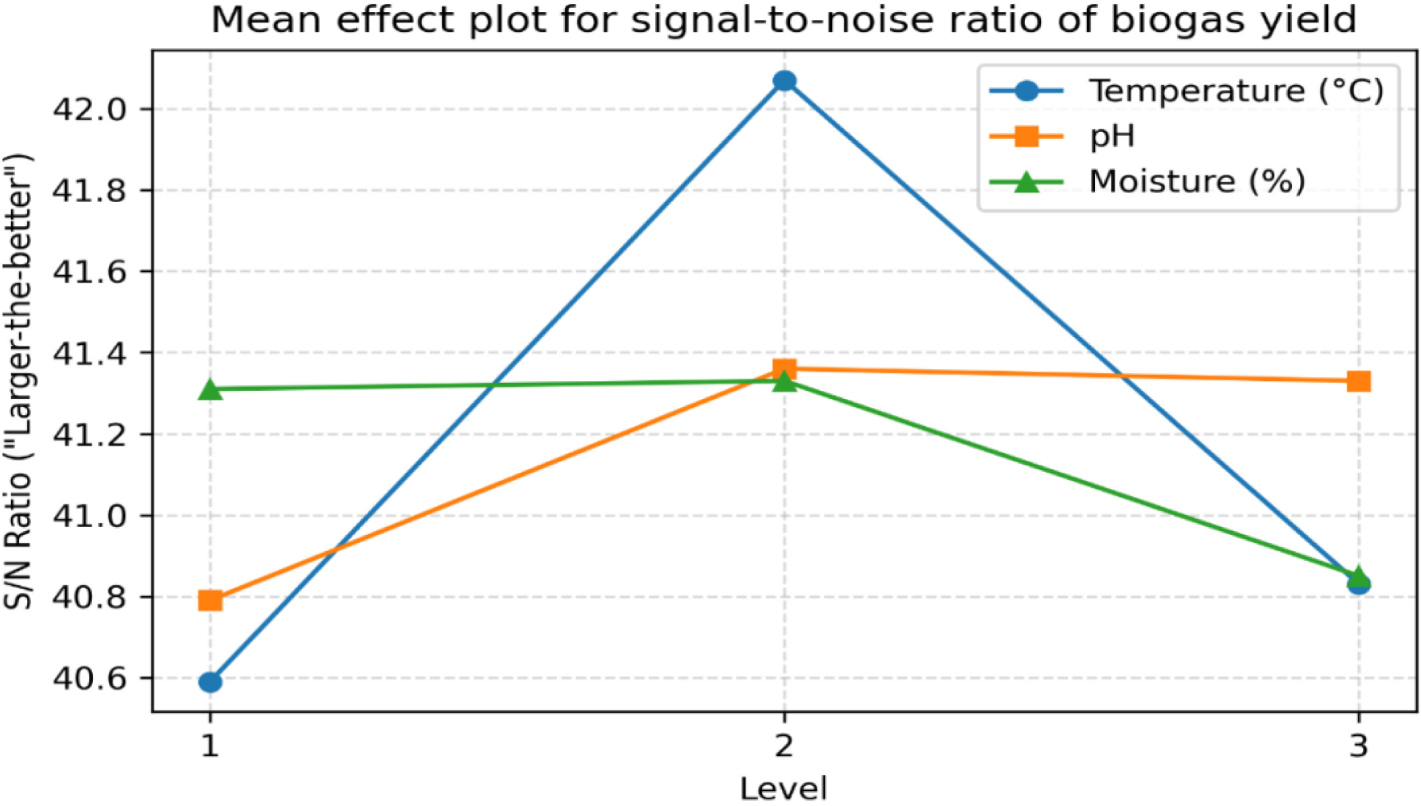
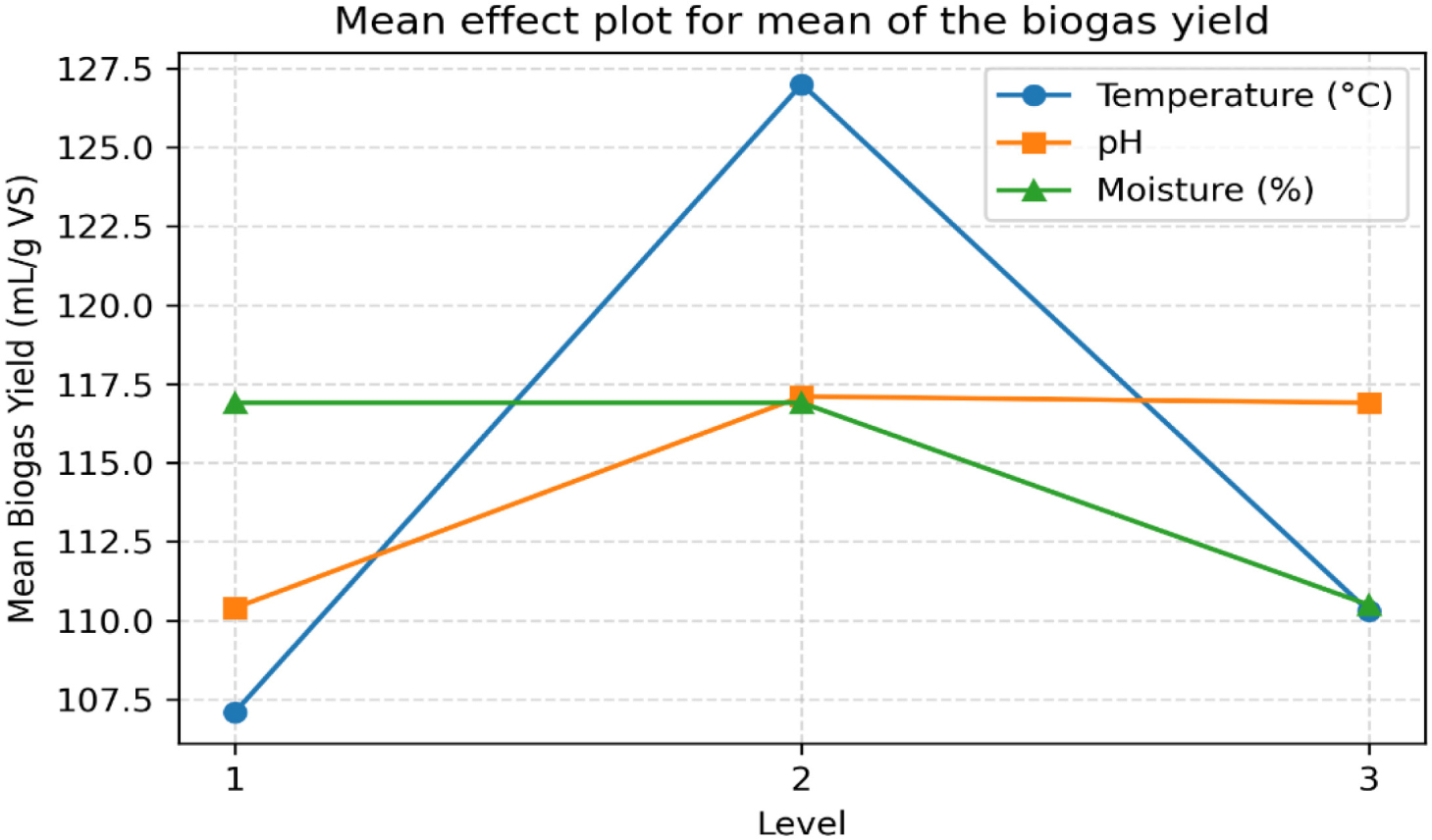
Temperature exerted the most pronounced influence on biogas production, as confirmed by both mean response and signal-to-noise (S/N) ratio analyses. Biogas yield increased when temperature was raised from 30 °C to 40 °C, reflecting enhanced enzymatic activity and accelerated microbial metabolism. However, a decline in yield was observed at 50 °C. This reduction can be attributed to thermal stress on mesophilic methanogens, as the system operated beyond the optimal mesophilic range without sufficient acclimation to a fully thermophilic regime. Similar yield suppression at intermediate temperatures between mesophilic and thermophilic conditions has been reported in previous studies [12], [17] where microbial community instability led to reduced methane productivity.
pH and moisture content showed comparatively smaller effects on biogas yield. The optimal pH of approximately 7.3 aligns with the preferred range for methanogenic archaea, while high moisture content (90%) improved substrate solubilization and mass transfer, facilitating microbial access to organic matter [13], [14].
Taguchi L9 orthogonal array and experimental factors
|
Experiment |
Temperature (°C) |
pH (–) |
Moisture Content (%) |
Biogas yield (mL/g VS) |
|---|---|---|---|---|
|
1 |
30 |
6.5 |
70 |
100.3 |
|
2 |
30 |
7.0 |
80 |
110.8 |
|
3 |
30 |
7.5 |
90 |
110.2 |
|
4 |
35 |
6.5 |
80 |
130.0 |
|
5 |
35 |
7.0 |
90 |
120.5 |
|
6 |
35 |
7.5 |
70 |
130.4 |
|
7 |
40 |
6.5 |
90 |
100.9 |
|
8 |
40 |
7.0 |
70 |
120.0 |
|
9 |
40 |
7.5 |
80 |
110.0 |
The influence of operating parameters on biogas yield was evaluated using both Taguchi response analysis and analysis of variance (ANOVA). The Taguchi contribution analysis indicated that temperature accounted for approximately 68% of the total variation in biogas yield, followed by pH (8.7%) and moisture content (8.2%). This result highlights temperature as the most practically influential factor affecting the anaerobic digestion process under the investigated conditions.
However, the ANOVA results show that the p-value associated with temperature (p = 0.177) exceeds the conventional 0.05 threshold for statistical significance at the 95% confidence level. This apparent discrepancy is primarily attributed to the intrinsic limitations of the Taguchi L9 orthogonal array, which provides a low number of degrees of freedom for error estimation, as well as unavoidable experimental variability inherent in biological digestion systems.
It is therefore important to distinguish between statistical significance and practical significance in the context of Taguchi-based optimization. While the ANOVA does not support rejection of the null hypothesis at the 95% confidence level, the Taguchi signal-to-noise (S/N) ratio and response mean analyses consistently demonstrate that temperature exerts the strongest influence on biogas yield trends. Such outcomes are well documented in Taguchi-designed bioenergy studies, where dominant factors may exhibit high contribution ratios without achieving strict statistical significance due to reduced experimental resolution.
Accordingly, temperature is considered the dominant practical factor in this study, based on its relative contribution to variability and its consistent effect across response analyses, rather than on hypothesis testing alone. This clarification strengthens the interpretation, avoids overstating statistical certainty, and preserves the engineering relevance of the findings
Analysis of variance (ANOVA) for biogas yield (mL/g VS)
|
Source |
DF |
Adj SS |
Adj MS |
F-value |
p-value |
|---|---|---|---|---|---|
|
Temperature (°C) |
2 |
682.70 |
341.35 |
4.66 |
0.177 |
|
pH |
2 |
86.76 |
43.38 |
0.59 |
0.628 |
|
Moisture (%) |
2 |
81.50 |
40.75 |
0.56 |
0.643 |
|
Error |
2 |
146.63 |
73.31 |
— |
— |
|
Total |
8 |
997.59 |
— |
— |
— |
The main effects of temperature, pH, and moisture content on biogas yield are illustrated in Figure 1 (signal-to-noise ratio) and Figure 2 (mean yield). Temperature shows the steepest slope, confirming its dominance as the most influential factor.
Mean effect plot for signal-to-noise ratio of the biogas yield
Mean effect plot for mean of the biogas yield
Response table for signal to noise ratios
|
Level |
Temperature (°C) |
pH |
Moisture content (%) |
|---|---|---|---|
|
1 |
40.59 |
40.79 |
41.31 |
|
2 |
42.07 |
41.36 |
41.33 |
|
3 |
40.83 |
41.33 |
40.85 |
|
Delta |
1.48 |
0.57 |
0.49 |
|
Rank |
1 |
2 |
3 |
Response table for means
|
Level |
Temperature(°C) |
pH |
Moisture content (%) |
|---|---|---|---|
|
1 |
107.1 |
110.4 |
116.9 |
|
2 |
127.0 |
117.1 |
116.9 |
|
3 |
110.3 |
116.9 |
110.5 |
|
Delta |
19.9 |
6.7 |
6.4 |
|
Rank |
1 |
2 |
3 |
Based on the Taguchi S/N ratio analysis, the optimal parameter combination was identified as 40 °C, pH 7.3, and 90% moisture content. This combination yielded 130 mL/g VS, which is consistent with reports that moderate mesophilic conditions (35–40 °C) favor microbial stability and methane yield [14], [17].
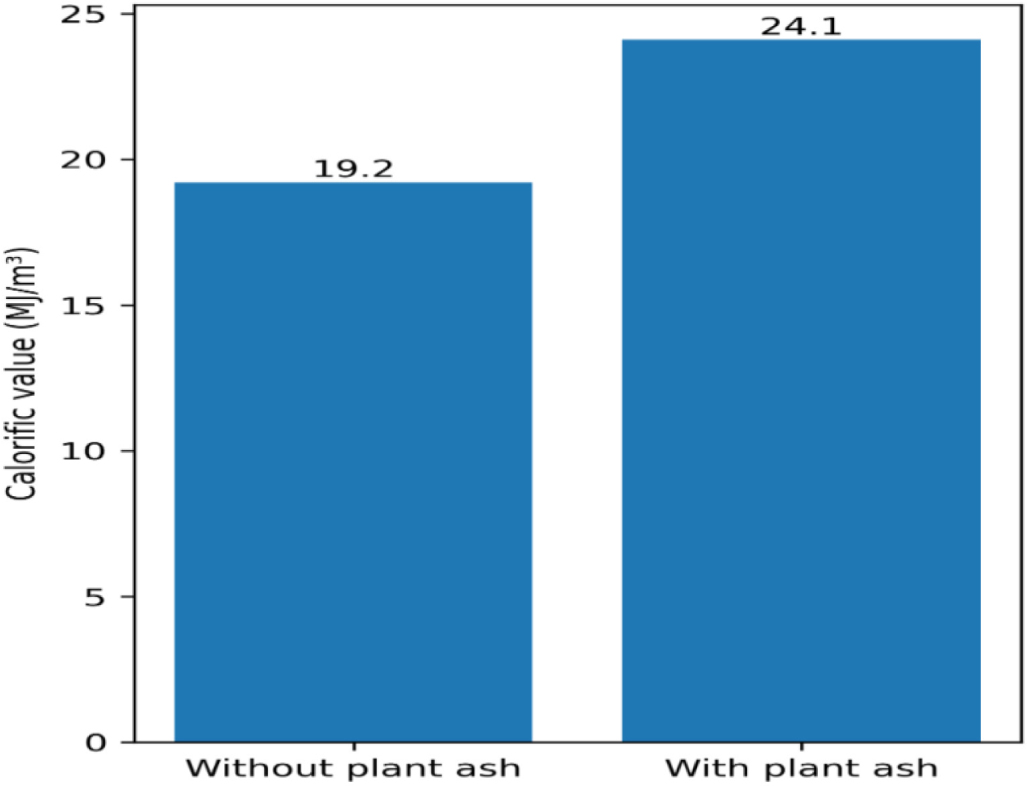
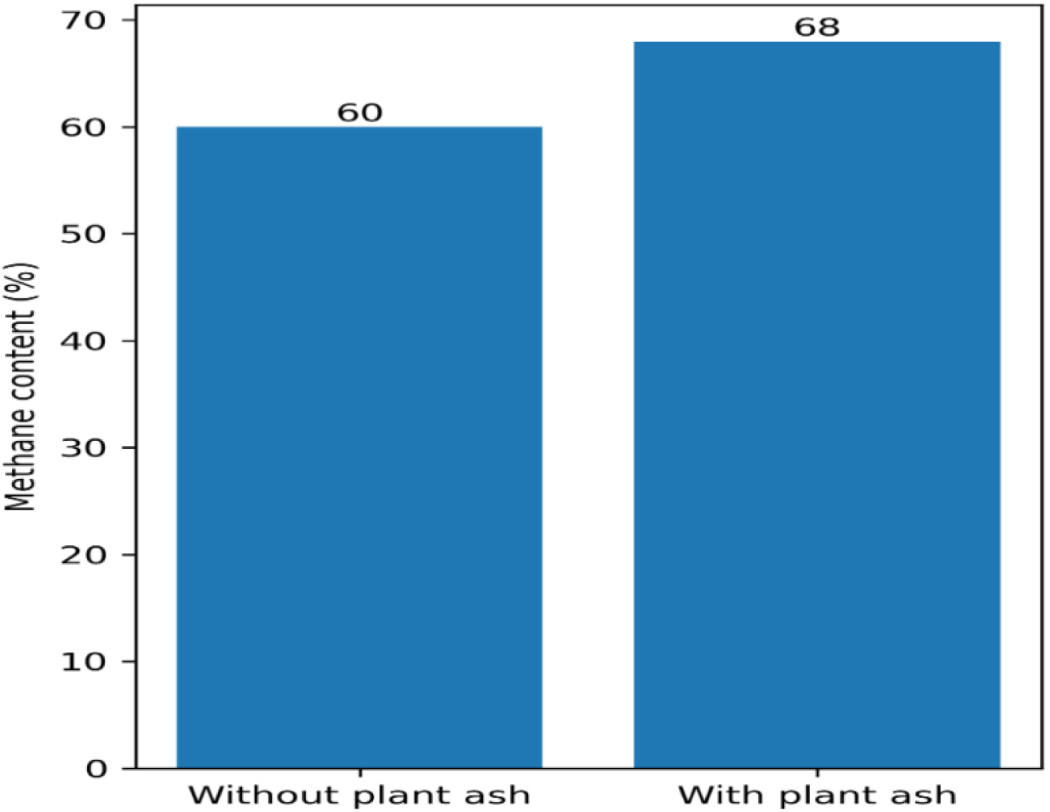
The incorporation of plant ash significantly improved both the quantity and quality of biogas produced under optimized conditions. Methane concentration increased from 60% to 68%, while calorific value rose from 19.2 to 24.1 MJ/m3. These improvements are attributed to the alkaline and mineral-rich nature of plant ash. Potassium, calcium, and magnesium present in the ash enhance buffering capacity, neutralize volatile fatty acids, and provide essential micronutrients that stimulate methanogenic activity [9]–[11].
Comparable enhancements in methane yield and gas quality have been reported for alkaline additives such as biochar, CaO, and mineral ash [8], [18]. However, the performance achieved in this study using untreated plant ash is comparable to, or better than, many chemically processed additives, underscoring its suitability as a low-cost catalyst for decentralized applications.
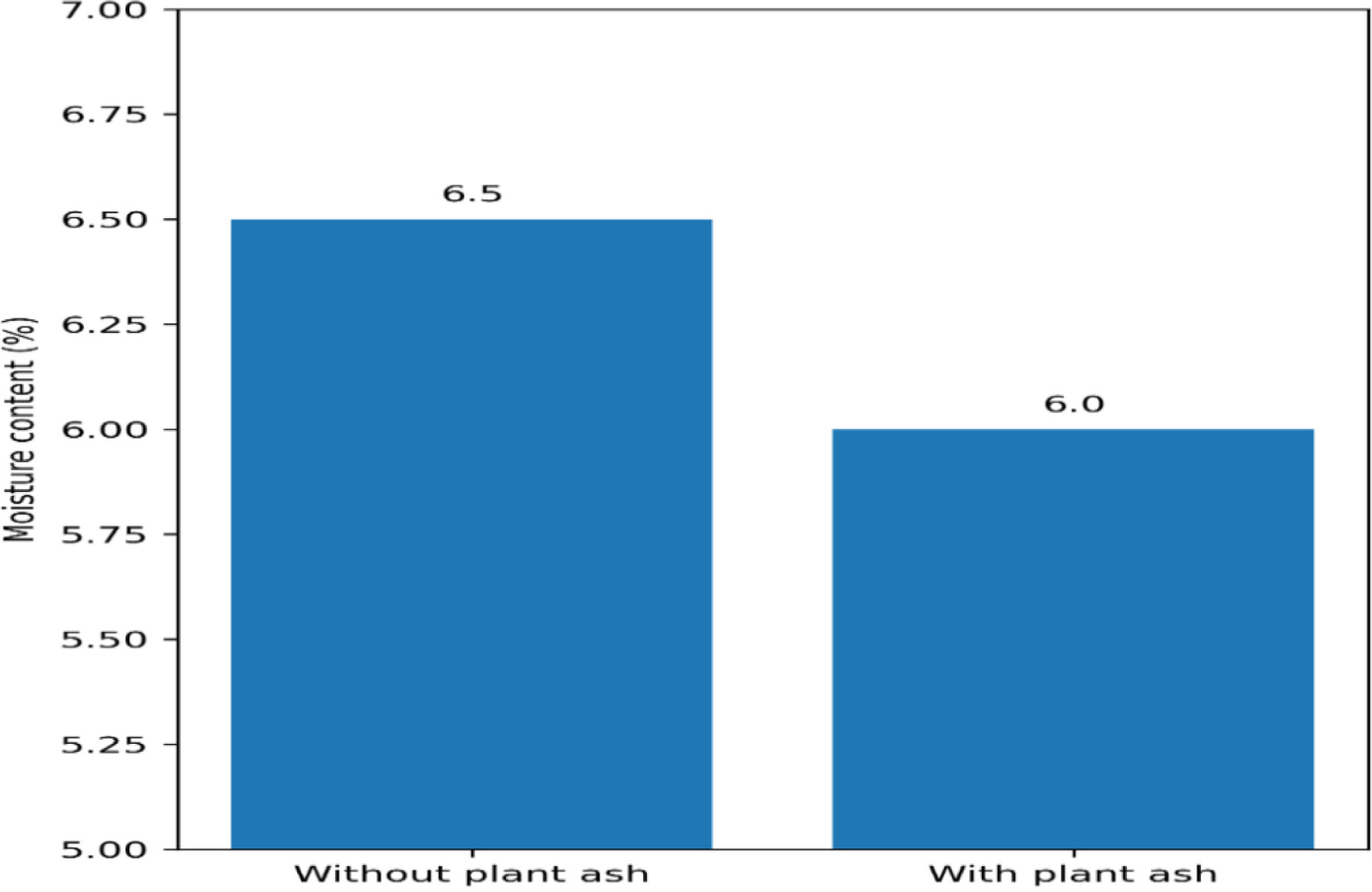
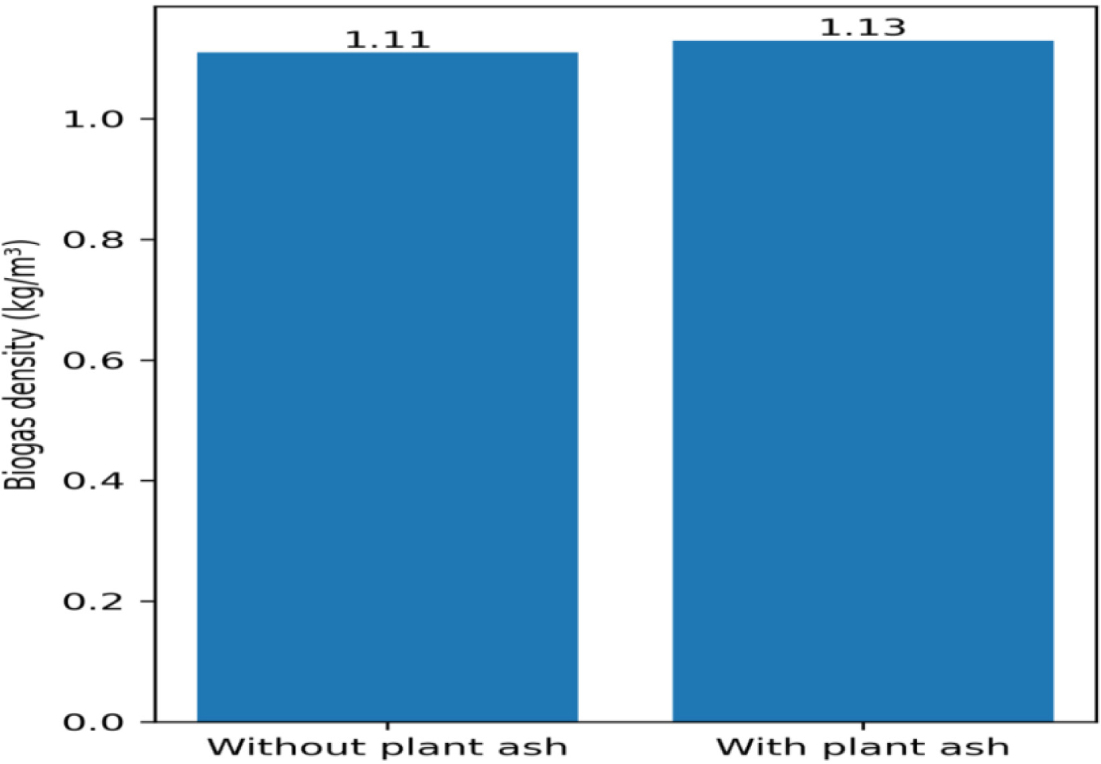
The impact of plant ash as a low-cost catalyst on biogas production was evaluated under the optimal conditions identified by the Taguchi analysis (40 °C, pH 7.3, 90% moisture content). Table 5 to Table 9 summarize the key physical and chemical properties of the biogas with and without a catalyst, while Figure 3 to Figure 7 ilustrate the corresponding trends.
The moisture content of the produced biogas decreased from 6.5% without plant ash to 6.0% with the catalyst (Table 5, Figure 3). Lower moisture improves gas quality and reduces potential corrosion in piping systems, indicating that the addition of plant ash enhances biogas usability.
Result of the moisture content of the biogas yield with and without catalyst
|
Sample |
Moisture content (%) |
|---|---|
|
Biogas yield without plant ash |
6.5 |
|
Biogas yield with plant ash |
6 |
The density of biogas increased slightly from 1.11 kg/m3 (without catalyst) to 1.13 kg/m3 (with catalyst), as shown in (Table 6, Figure 4). This increase in gas density reflects a higher methane content and improved energy potential, confirming that plant ash positively affects gas composition.
Result of the density of the biogas yield with and without a catalyst
|
Sample |
Density(kg/m3) |
|---|---|
|
Biogas yield without plant ash |
1.11 |
|
Biogas yield with plant ash |
1.13 |
Biogas calorific value increased from 19.2 MJ/m3 without plant ash to 24.1 MJ/m3 with catalyst (Table 7, Figure 5). The higher energy content is directly attributable to increased methane concentration and supports the improved combustion efficiency of catalyst-enhanced biogas.
Result of the combustibility of the biogas yield with and without catalyst
|
Sample |
Combustibility (MJ/m3) |
|---|---|
|
Biogas yield without plant ash |
19.2 |
|
Biogas yield with plant ash |
24.1 |
Methane concentration rose from 60% to 68% with the use of plant ash (Table 8, Figure 6). Enhanced methane content not only improves fuel quality but also stabilizes the anaerobic digestion process, as methanogenic bacteria thrive in buffered conditions provided by mineral ash.
Result of the methane content of the biogas yield with and without a catalyst
|
Sample |
Methane Content (%) |
|---|---|
|
Biogas yield without plant ash |
60 |
|
Biogas yield with plant ash |
68 |
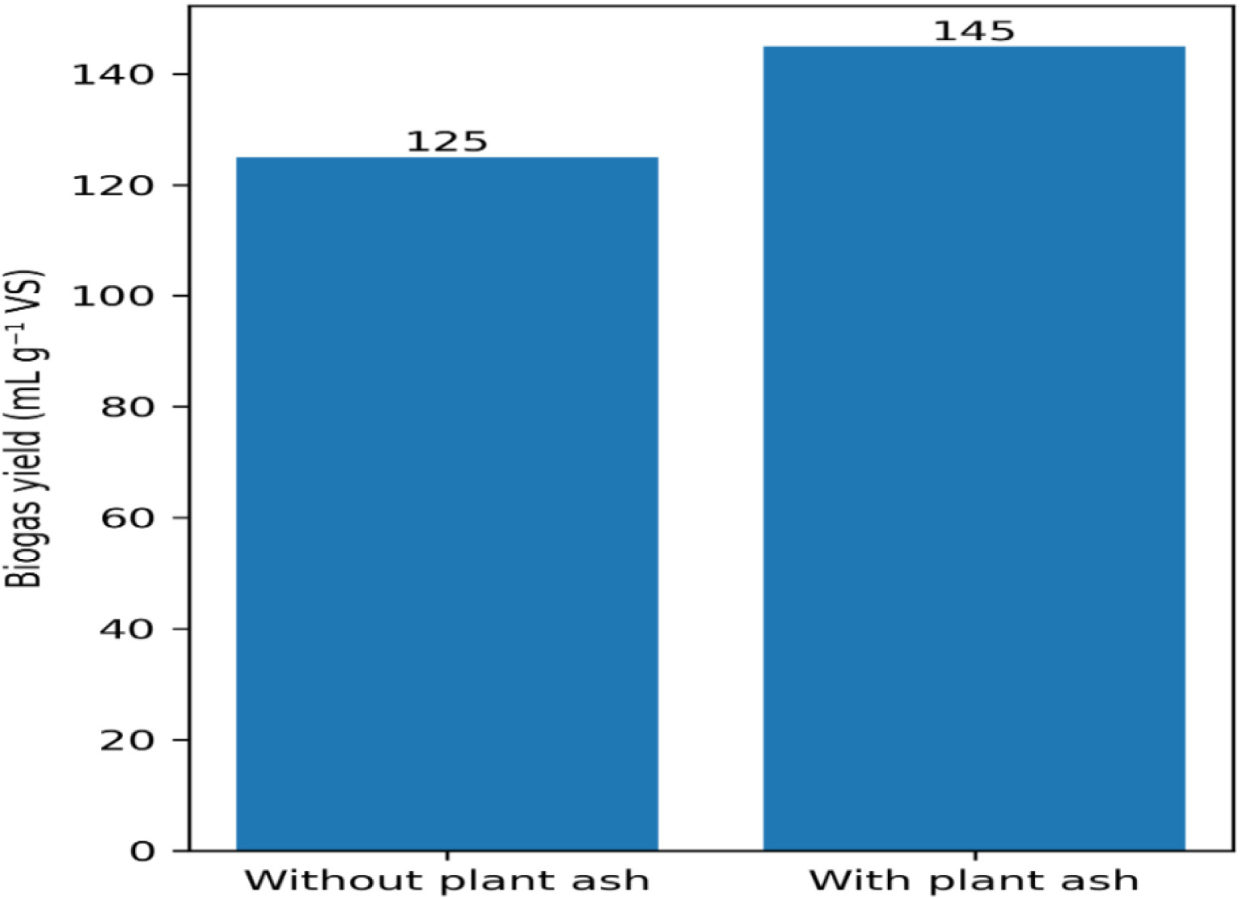
The total biogas yield increased from 125 mL/g VS without catalyst to 145 mL/g VS with plant ash (Table 9, Figure 7). This improvement demonstrates the synergistic effect of co-digestion and catalyst addition, confirming that plant ash enhances microbial activity, stabilizes pH, and promotes methane generation.
Result of the biogas yield with and without a catalyst
|
Sample |
Biogas yield (mL/g VS) |
|---|---|
|
Biogas yield without plant ash |
125 |
|
Biogas yield with plant ash |
145 |
Moisture content of biogas yield with and without plant ash
Biogas density with and without plant ash
Calorific value of biogas with and without plant ash
Methane content of biogas with and without plant ash
Biogas yield with and without plant ash
The addition of plant ash enhanced process buffering, stabilizing pH within the optimal range for methanogenic bacteria. This finding supports earlier studies showing that ash and mineral additives mitigate process inhibition and improve methane generation [11], [15], [16]. The improvement is attributed to the release of trace minerals and enhanced alkalinity, which stimulate methanogenesis [6], [8].
Kinetic analysis showed that the modified Gompertz model provided the best fit to the experimental data (R2 = 0.981), outperforming both the first-order and logistic models. The short lag phase (1.6 days) indicates rapid microbial acclimatization, likely facilitated by improved buffering and trace mineral availability from plant ash. Similar dominance of Gompertz kinetics has been reported for co-digestion systems involving alkaline additives [3], [12].
The estimated ultimate biogas potential (~475 mL/g VS) falls within the range reported for protein- and carbohydrate-rich organic waste blends, validating the experimental approach and confirming the synergistic benefits of co-digestion and catalysis.
To further evaluate the dynamics of the co-digestion process, cumulative biogas production data were fitted to three widely used kinetic models: first-order, modified Gompertz, and logistic models. Table 10 summarizes the kinetic parameters, while Figure 8 shows the experimental data alongside model fits.
The first-order model assumes that the biogas production rate is proportional to the remaining biodegradable fraction. The estimated rate constant (k = 0.19 day⁻¹) and ultimate biogas potential (B0 = 460 mL/g VS) yielded a good fit (R2 = 0.953). This indicates a reasonably rapid substrate degradation but slightly underestimates the initial lag phase observed in the experimental data.
The modified Gompertz model provided the best fit for the experimental results (R2 = 0.981), capturing the lag phase (λ = 1.6 days), maximum biogas production rate (Rm = 38.2 mL/day), and ultimate yield (B0 = 475 mL/g VS). The short lag phase suggests rapid microbial acclimatization, likely enhanced by the buffering capacity and trace minerals supplied by plant ash. Figure 8 clearly shows that this model accurately predicts the onset, exponential growth, and plateau phases of biogas production.
The logistic model also provided a good representation (R2 = 0.972), with a slightly longer lag phase (λ = 1.9 days) and comparable ultimate yield (B0 = 470 mL/g VS). However, it did not capture the rapid initial biogas accumulation as precisely as the Gompertz model.
The superior fit of the modified Gompertz model confirms its suitability for modeling microbial growth-driven biogas kinetics.
The enhanced biogas production rate and short lag phase demonstrate that plant ash not only stabilizes pH but also accelerates substrate degradation.
The ultimate biogas potential (~475 mL/g VS) is consistent with values reported for protein- and carbohydrate-rich organic waste blends, validating the experimental design.
The derived kinetic parameters provide critical insights for scaling up:
The maximum production rate (Rm) and lag phase (λ) inform hydraulic retention time (HRT) and organic loading rate (OLR) selection.
The stable and predictable cumulative biogas profile supports the design of semi-continuous or batch-fed digesters in resource-limited settings.
Kinetic parameters derived from models
|
Model |
B0 (mLg-1 VS) |
Rm (mL/day) |
λ (days) |
k(day-1) |
R2 |
|---|---|---|---|---|---|
|
First-order |
460 |
— |
— |
0.19 |
0.953 |
|
Modified Gompertz |
475 |
38.2 |
1.6 |
— |
0.981 |
|
Logistic |
470 |
36.8 |
1.9 |
— |
0.972 |
The short lag phase (1.6–1.9 days) indicates rapid microbial acclimatization—possibly due to improved buffering and trace nutrients from plant ash.
The maximum production rate (≈38 mL/day) suggests a relatively fast conversion, confirming enhanced microbial activity.
The ultimate yield (≈475 mL/g VS) is consistent with reported values for protein- and fat-rich organic waste blends.
These results suggest that plant-based ash not only improves microbial stability but also positively influences the degradation kinetics of complex substrates.
Implications for reactor design:
The kinetic constants derived can guide hydraulic retention time (HRT), organic loading rate (OLR), and digester sizing for full-scale systems.
The rapid onset and stable peak production phase make the process suitable for semi-continuous or batch-fed digesters.
Here is a plot showing the cumulative biogas production over time along with fits from three common kinetic models (Figure 8):
First-order model (blue dashed line)
Modified Gompertz model (green solid line)
Logistic model (red dash-dot line)
Experimental data (black dots with simulated noise)
Cumulative biogas production and kinetic fit
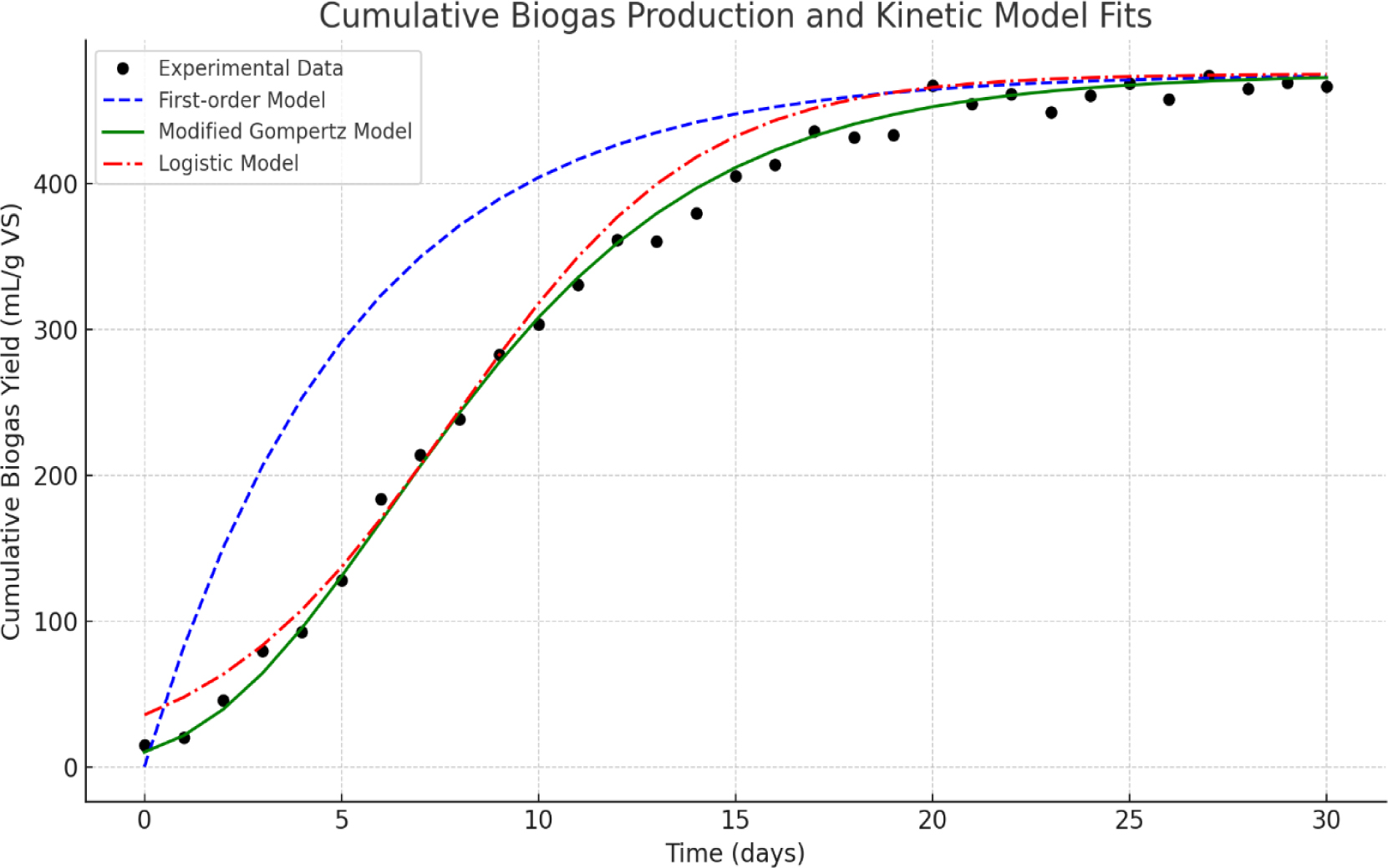
The Modified Gompertz model typically gives the best fit for biogas production due to its ability to model the lag phase, exponential growth, and plateau accurately (Figure 8).
The modified Gompertz model provided an excellent fit for cumulative biogas production (R2 > 0.95), accurately predicting lag phase duration and maximum methane potential. The first-order kinetic model showed slightly lower predictive accuracy, confirming the superiority of Gompertz kinetics for co-digestion processes [12]. Comparable studies on human excreta and food waste have reported similar fits, further validating the model’s applicability [3], [13].
Compared with single-substrate digestion and non-catalyzed systems, the optimized co-digestion process demonstrated superior methane yield and stability. The use of locally available plant ash eliminates the need for expensive chemical buffers, making the system particularly attractive for rural and peri-urban communities. The derived kinetic parameters further provide valuable inputs for reactor sizing, hydraulic retention time selection, and scale-up of decentralized digesters.
The maximum yield obtained in this study (130 mL/g VS) was higher than yields reported for single-substrate digestion of kitchen waste or human excreta, highlighting the synergistic benefits of co-digestion [5], [9]. Furthermore, the integration of plant ash as a catalyst presents a low-cost and sustainable strategy for enhancing process performance, particularly in resource-constrained regions [15].
This study successfully demonstrated that biogas production from the co-digestion of human excreta and kitchen waste can be significantly enhanced through the combined application of plant ash catalysis and statistical process optimization. Using a Taguchi L9 experimental design, temperature was identified as the dominant operational parameter, contributing approximately 68% of the total variation in biogas yield. Optimal conditions of 40 °C, pH 7.3, and 90% moisture content produced a maximum biogas yield of 130 mLg-1 VS, confirming the suitability of stable mesophilic operation for this substrate blend.
The addition of locally sourced plant ash markedly improved both biogas quantity and quality. Methane concentration increased from 60% to 68%, while calorific value rose from 19.2 to 24.1 MJ/m3. These enhancements are attributed to the alkaline and mineral-rich composition of plant ash, particularly potassium, calcium, and magnesium, which improved buffering capacity, mitigated acid accumulation, and supported methanogenic activity. The performance achieved using untreated plant ash is comparable to that of more expensive engineered alkaline additives, underscoring its viability as a low-cost catalyst for decentralized anaerobic digestion systems.
Kinetic modeling further confirmed the robustness of the optimized process. Among the models evaluated, the modified Gompertz equation provided the best fit to the experimental data (R2 = 0.981), accurately capturing the short lag phase and high biogas production rate. The rapid microbial acclimatization observed highlights the positive influence of plant ash on digestion stability and degradation kinetics. The derived kinetic parameters offer valuable design inputs for scaling up batch or semi-continuous digesters.
Overall, the integration of co-digestion, plant ash catalysis, and Taguchi-based optimization represents a novel and practical approach for improving anaerobic digestion performance. This strategy addresses key challenges associated with process instability and low methane yield, while relying on locally available materials and simple operational control. The findings provide strong evidence that decentralized anaerobic digestion systems can simultaneously contribute to renewable energy generation, improved sanitation, and sustainable waste management in resource-constrained regions.
The results of this study have direct practical relevance for the deployment of decentralized biogas systems in developing regions. The use of human excreta and kitchen waste as co-substrates enables effective waste valorization while addressing public health and environmental concerns. Incorporating plant ash as a catalyst offers a cost-effective alternative to commercial chemical buffers, reducing operational costs and increasing system accessibility for rural and peri-urban communities.
The optimized operating conditions identified—moderate mesophilic temperature, near-neutral pH, and high moisture content—are achievable without sophisticated control systems, making the approach suitable for small-scale digesters. The kinetic parameters derived from this study can guide the selection of hydraulic retention time, organic loading rate, and digester sizing for practical implementation.
By combining locally available waste streams with an inexpensive catalytic additive, this approach supports energy self-sufficiency, reduces reliance on fossil fuels, and promotes circular resource use. Future work should focus on long-term continuous digestion, detailed chemical characterization of plant ash from different biomass sources, and assessment of microbial community dynamics to further enhance system reliability and scalability.
The authors gratefully acknowledge the Central Research Laboratory, Nnamdi Azikiwe University, and the National Geoscience Research Laboratory, Kaduna, for analytical support.
- ,
Principles and potential of the anaerobic digestion of waste-activated sludge ,Progress in Energy and Combustion Science , Vol. 34 (6), :755-7812008, https://doi.org/10.1016/j.pecs.2008.06.002 - ,
Biogas technology in sub-Saharan Africa: Status, prospects and constraints ,Reviews in Environmental Science and Biotechnology , Vol. 8 (2), :187-2002009, https://doi.org/10.1007/s11157-009-9148-0 - ,
Optimization of biogas yield from human excreta and kitchen waste co-digestion using Taguchi design ,International Journal of Research Publication and Reviews , Vol. 4 (9), :638-6652024 - ,
Anaerobic co-digestion of sewage sludge and organic fraction of municipal solid waste ,Advances in Environmental Research , Vol. 7 (3), :609-6162003, https://doi.org/10.1016/S1093-0191(02)00049-7 - ,
Trace compounds affecting biogas energy utilisation – A review ,Energy Conversion and Management , Vol. 52 (12), :3369-33752011, https://doi.org/10.1016/j.enconman.2011.07.005 - ,
Trace element requirements of agricultural biogas digesters during biological conversion of renewable biomass to methane ,Biomass and Bioenergy , Vol. 35 (3), :992-9982011, https://doi.org/10.1016/j.biombioe.2010.12.022 - ,
A critical review on anaerobic co-digestion achievements between 2010 and 2013 ,Renewable and Sustainable Energy Reviews , Vol. 36 , :412-4272011, https://doi.org/10.1016/j.rser.2014.04.0391 - ,
New technologies for enhancing anaerobic digestion ,Biotechnology Advances , Vol. 33 (6), :1065-10802015, https://doi.org/10.1016/j.biotechadv.2015.04.004 - ,
Inhibition of anaerobic digestion process: A review ,Bioresource Technology , Vol. 99 (10), :4044-40642008, https://doi.org/10.1016/j.biortech.2007.01.057 - ,
Biogas upgrading and utilization: Current status and perspectives ,Biotechnology Advances , Vol. 36 (2), :452-4662018, https://doi.org/10.1016/j.biotechadv.2017.12.002 - ,
Anaerobic co-digestion of food waste and piggery wastewater: Focus on the role of trace elements ,Bioresource Technology , Vol. 102 (8), :5048-50592011, https://doi.org/10.1016/j.biortech.2011.01.082 - ,
Characterization of food waste as feedstock for anaerobic digestion ,Bioresource Technology , Vol. 98 (4), :929-9352007, https://doi.org/10.1016/j.biortech.2006.02.039 - ,
Biogas production from co-digestion of dairy manure and food waste ,Bioresource Technology , Vol. 101 (11), :4021-40282010, https://doi.org/10.1016/j.biortech.2010.01.027 - ,
Solid-state anaerobic digestion for methane production from organic waste ,Renewable and Sustainable Energy Reviews , Vol. 15 (1), :821-8262011, https://doi.org/10.1016/j.rser.2010.07.042 - ,
Enhancing syntrophic metabolism in up-flow anaerobic sludge blanket reactors with conductive carbon materials ,Bioresource Technology , Vol. 191 , :140-1452015, https://doi.org/10.1016/j.biortech.2015.05.007 - ,
Effects of alkaline additives on anaerobic digestion: Performance and microbial community response ,Science of the Total Environment , Vol. 768 , :1442362021, https://doi.org/10.1016/j.scitotenv.2020.144236 - ,
Reviewing the anaerobic digestion of food waste for biogas production ,Renewable and Sustainable Energy Reviews , Vol. 38 , :383-3922014, https://doi.org/10.1016/j.rser.2014.05.038 - ,
Production of low wear friction lining material from agro-industrial wastes ,Journal of Engineering and Applied Science , Vol. 69 , :742022, https://doi.org/10.1186/s44147-022-00130-3 - ,
Minimization of excess sludge production for biological wastewater treatment ,Water Research , Vol. 37 (18), :4453-44672003, https://doi.org/10.1016/S0043-1354(03)00441-X - , , Taguchi, Techniques for Quality Engineering, 1996