


Recent years have witnessed rapid progress in technology and the economy [1], with the manufacturing of electrical and electronic products becoming one of the fastest-growing industries [2]. Waste generated from electrical and electronic equipment is a major type of complex waste as it encompasses a diverse array of materials, including metals, plastics, and chemicals, which are intrinsically intertwined, posing challenges in the processing and recycling of this waste stream. These materials frequently incorporate hazardous components, necessitating specialised disposal protocols [3]. The rate of Waste Electrical and Electronic Equipment (abbreviation: WEEE) generation is significant and continues to grow globally. According to recent estimates, over 50 Mt of WEEE are generated annually worldwide [4]. In the European Union alone, the generation of WEEE is estimated to be around 12 Mt/y [5]. The growing demand for electronic products requires significant resources, particularly various metals like gold, silver, copper, palladium, and tantalum that are used in electronic components [6]. Additionally, plastics, glass, and rare earth metals such as neodymium and lithium are essential for modern technologies [7]. From an economic perspective, it is projected that e-waste recycling could generate around 2×10⁹ EUR in revenue in Europe [8]. Furthermore, factors like increased economic development, urbanisation, Industry 4.0 advancements, and technological innovation contribute to the rapid turnover of products [9]. The rise of an information-focused society has led to high consumption rates of Electrical and Electronic Equipment [8], with the growth rate for WEEE typically being three times faster than that of municipal waste [10]. To address this issue, there is a growing shift towards adopting circular economy principles [11]. The circular economy focuses on designing products with their entire lifecycle in mind [12], aiming to minimise waste and maximise resource recovery [13]. By transitioning to a circular economy model, industries can reduce reliance on virgin resources [14], enhance material recovery processes, and ultimately contribute to a more sustainable future [15].
According to these, the European Union has implemented legislation to improve e-waste management, such as the Waste Shipment Regulation, which prohibits the export of hazardous e-waste to non-OECD countries [14]. Directives like the second WEEE Directive and the RoHS2 Directive have also contributed by regulating hazardous substances in electronic equipment and promoting e-waste collection and recycling [15]. Despite these improvements, there are still challenges in changing consumer behaviour and adopting circular economy practices. As part of the European Green Deal, a New Circular Economy Action Plan was introduced, focusing on promoting longer product lifetimes through a circular electronics initiative [16]. Given the depletion of raw materials, alternative extraction solutions from reclaimed landfills can provide critical raw materials. However, this requires sustainable waste management practices and secondary material market development [17]. The EU's Critical Raw Materials Act aims to extract rare earth elements from waste streams based on their economic importance and supply risk [18]. Overall, clear regulations are needed for responsible material extraction and recycling to utilise electronic waste effectively.
Urban mining is closely related to circular economy principles and plays a crucial role in efficient waste management and resource conservation [16]. Urban mining recovers valuable materials from urban settings, including buildings, infrastructure, and electronic waste, reducing the environmental impact of traditional mining and promoting sustainable use of rare metals and other materials [17]. The recovery of precious metals, such as gold, silver, and platinum, from discarded electronic devices presents a significant opportunity [18]. Copper is another frequently recovered metal sourced from electrical cables and wires [19]. Additionally, aluminium and iron play significant roles, as they are commonly found in construction materials and transportation equipment [20]. Leveraging urban mining techniques can diminish the need for conventional mining by enabling the recycling and reuse of existing materials [21].
This practice has become increasingly important due to a variety of factors. As cities expand, there is a heightened need for resources like metals, minerals, and rare earth elements. Another factor contributing to urban mining is the greater recognition of the environmental impact caused by traditional mining methods. Such activities have significant consequences, such as deforestation, water pollution, and habitat destruction. Urban mining presents a more sustainable option by utilising existing material stocks within cities rather than relying on new resource extraction [22]. However, a lack of awareness and understanding about this concept remains a major obstacle. Many individuals are still unaware of the potential value hidden in urban environments, such as recyclable or reusable materials. Additionally, the implementation challenges could be attributed to technological barriers. Jacobs (1961) suggested the extraction of rare metals and other raw materials in cities in her book “The Economy of Cities” [23]. Today, numerous researchers and organisational units consider urban mining a viable approach for recovering secondary raw materials from electronic waste [24]. The term urban mining also refers to the extraction of valuable materials from industrial and urban activities and associated services and information flows. Waste materials from human activities, or man-made ores, are also referred to as anthropogenic sources [25]. Moreover, it is important to note that urban mining is closely related to the concept of the circular economy, as both aim to promote sustainable resource use and waste reduction. Consequently, the combination of urban mining and circular economy principles facilitates the reduction of resource extraction and significantly promotes sustainable economic growth and conservation of natural resources [26]. One of the greatest potentials of urban mining lies in its application to landfills, which can be effective in recovering various end-of-life products from human consumption, such as industrial electrical and non-electrical equipment waste, construction and demolition waste, municipal solid waste, end-of-life vehicles, and electronic and electrical equipment waste [27].
The current literature commonly examines the advantages of urban mining and circular economy concepts, but it also highlights several specific gaps. Firstly, there is often a dearth of detailed quantitative analyses regarding the efficiency of material recovery across various technologies. Secondly, comprehensive comparisons of different urban mining techniques are frequently absent, leaving uncertainty around the most cost-effective methods. Additionally, limited research exists on how urban mining can be integrated into specific circular economy models, as well as insufficient exploration of technological and policy barriers. This paper seeks to fill the existing knowledge gap by providing detailed quantitative data on the recovery efficiencies and theoretical recoverable potentials of different materials along the four most recovered precious metals.
The reviewed articles collectively highlight the growing importance of urban mining and e-waste management in promoting sustainability and resource efficiency. While some studies focus on technological advancements and machine learning applications for optimising copper recovery from printed circuit boards, others explore broader frameworks such as community engagement and regulatory implications [28]. A common thread is the emphasis on circular economy principles [29], whether addressing the reuse of construction materials, as demonstrated in urban mining feasibility studies [30], or the complexities of value recovery from e-waste. Innovative methods [17], including hyperspectral imaging and the integration of 3D city modelling [31] further underscore the interdisciplinary nature of this research field. Despite progress, challenges remain in achieving scalability, the need for specialised expertise, and the development of harmonised policies, all of which are essential for widespread adoption and impactful implementation.
This paper addresses the pressing issue of e-waste in Hungary by evaluating urban mining as a sustainable resource recovery strategy. Specifically, this paper provides a comprehensive, data-driven analysis of the theoretically recoverable metal stocks from EEE waste streams based on national waste management data and average metal content values. The novelty of this research lies in its quantitative approach to estimating resource recovery potential at a national scale, a perspective that is underrepresented in current literature. By focusing on Hungary as a study area, this work contributes valuable insights into urban mining's role in supporting circular economy objectives and resource efficiency, offering a replicable framework for other regions facing similar waste management challenges.
This research hypothesises that the recovery rates of precious metals from e-waste are substantially influenced by the technologies and preprocessing methods employed and also exhibit measurable regional and temporal variations. The theoretical potential for recovering these metals can be estimated using a combination of time-series data, comparative analysis, and scenario modelling, highlighting the viability and scalability of urban mining practices. The study introduces a comprehensive methodology for assessing urban mining processes by integrating regional data on waste generation, treatment techniques, and material composition. The novel aspect lies in its systematic quantification of recoverable precious metals in WEEE through advanced statistical methods and scenario-based modelling. Furthermore, the exploration of regional variations and recovery coefficients provides new insights to optimise urban mining practices and evaluate the environmental advantages of such processes.
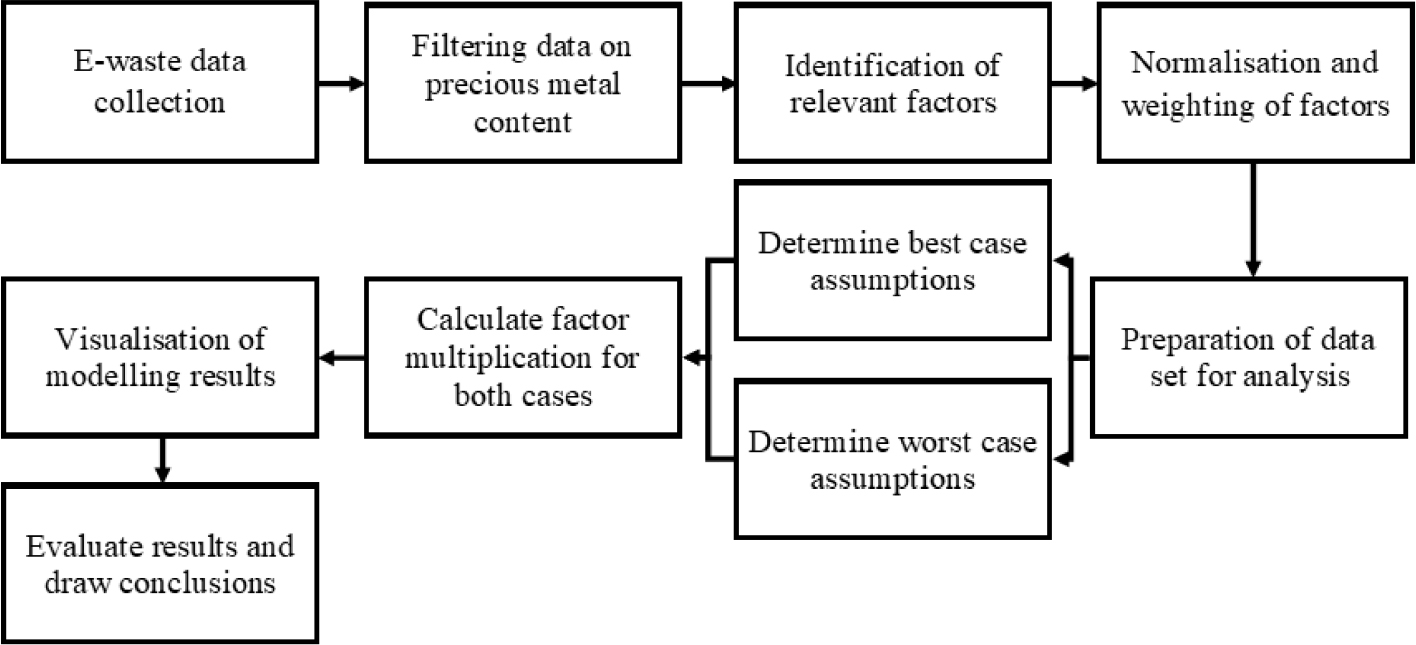
The aim of the current research is to assess the potential for precious metals recovery using theoretical potential information on urban mining processes. A significant volume of data from various sources on a broad spectrum of WEEE was analysed in the paper. This paper will analyse data by first compiling comprehensive information on the performance of diverse urban mining techniques employed for recovering precious metals. This entails calculating fundamental statistical measures, such as the mean and standard deviation, regarding the recovery rates, and conducting comparative analyses to identify the most effective methodologies. To evaluate the theoretical potential for recoverable resources, the investigation will estimate the total quantity of precious metals that could potentially be extracted from various waste sources by theoretical models and scenario analyses (Figure 1).
A conceptual diagram depicting the workflow and techniques of the research methodology
When gathering data on urban mining, a range of data sources was utilised to obtain a comprehensive and precise understanding of the composition and volume of urban waste. The main source for EU-27 data was the Statistical Office of the European Union [32], while information for Hungary was derived from the National Environmental Information System, Unified Waste Management Information System Module [33]. The specific category of waste examined falls under HAC code “1602 - Waste electrical and electronic equipment”.
The analysis encompassed aspects such as regional and time-series distribution of waste treatment, generation, and treatment data. Subsequently, the collected data from various sources was structured in a standardised format to facilitate comparability and subsequent analysis. The methods for gathering data were planned to guarantee that the data accurately represent the amount and types of urban waste, are authoritative, and have undergone at least one round of data review and validation. Put simply, the data was sourced from secondary sources. Significant attention was also given to controlling the quality of the collected data to minimise potential biases during the collection process. After organising and preparing the gathered information, it was ready for additional analysis.
To ensure the quality and relevance of the data for analysis, several criteria were applied. To explore the international situation, the EU-27 Member States were analysed for the period 2010-2021, the period of the available datasets. Exploring the situation in Hungary, data directly related to municipal waste and precious metal recovery were focused on, covering a range of regions (8 regional units: HU11, HU12, HU21, HU22, HU23, HU31, HU32, HU33) and time period (2004-2022). Only comprehensive and detailed data that represented type-ident waste types and treatment methods was included, excluding any incomplete or overly generalised information. Additionally, potential biases and errors were controlled for, and any data with significant discrepancies were verified.
After the data was collected, data cleaning was conducted to remove inaccurate or repetitive entries, ensuring improved reliability for analysis. The repeated entries were addressed through merging and filtering. Following this process, the dataset was categorised and further grouped according to processing method, recyclability, material composition, and spatial distribution. After cleaning, the data were categorised to facilitate the analysis process. Statistical software was then used for compiling descriptive statistics and creating visual representations of the data. Additionally, analysis of variance was performed to compare differences among various waste streams and provide a dependable basis for drawing subsequent conclusions. To track changes in the time series data, the relative growth rate was also established.
The main objective of the research is to determine the recoverable amount by scenario analysis, taking into account both the lower and upper limits. The recovery rates depend on the technology used, pre-processing techniques, and the quality and composition of the waste. In this research, a hypothetical potential exploration is carried out according to the calculation method in Eq (1).
Where MNM represents the potential quantity of precious metal, MW stands for the initial waste amount and a signifies the extraction coefficient. The recovery coefficient varies from 0.01 to 0.30 g/kg for gold [34], 0.10 to 1.00 g/kg for silver, 0.005 to 0.02 g/kg for palladium, and from 50.0 to 150.0 g/kg for copper [35]. The research, therefore, analyses an upper limit with hypothetically ideal 100 % efficiency, as well as an end product of a process constrained by the literature, which is burdened with losses.
Figure 2 illustrates the average recycling rates for WEE following separation and sorting from 2010 to 2021. Croatia showed the highest recycling rate at 91.8 ± 5.66 %, followed by Finland (89.2 ± 1.41 %) and Slovakia (88.9 ± 2.42 %). Hungary ranked twelfth among member states with a rate of 83.9 ± 2.52 %.
Average recycling rate for waste of electrical and electronic equipment (WEEE) separately collected in EU-27 (%, 2010-2021)
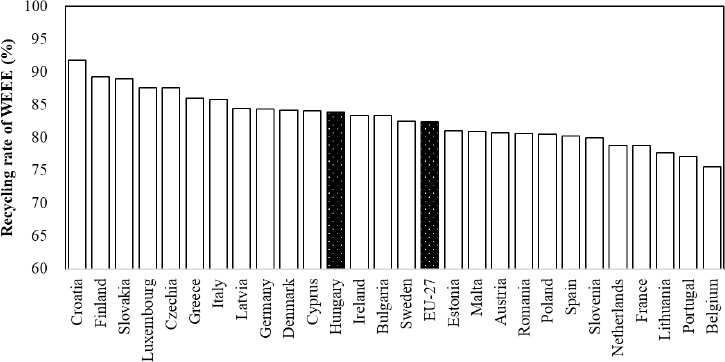
During this period, the recycling rates in Malta increased by 26.8 %, Croatia by 14.7 %, and Lithuania by 11.9 %. However, the overall trend for EU-27 was negative, with a decline of -0.70 %. Fifteen member states showed positive changes, while twelve experienced negative shifts; Hungary's rate dropped by -2.70 %. Portugal witnessed the most significant decrease, with a fall of -33.3 % in the recycling rate.
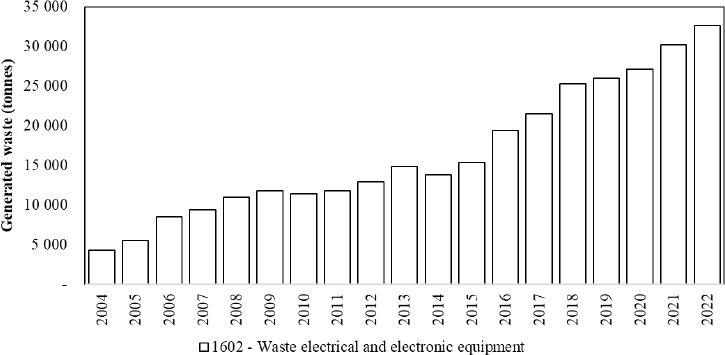
In Hungary, between 2004 and 2022, the total amount of waste generated amounted to 312,594.24 t. In 2004, the volume of waste generated was only 4,247.64 t, whereas by 2022, it had increased to 32,620.65 t. This represents a growth of +668.0 % over the study period, with these two years marking the minimum and maximum values in the dataset, respectively. The quantity of waste categorised in this paper generally exhibited a consistent upward trend, with minor fluctuations occurring between 2010 and 2014, the peak year being 2013 with 14,889.18 t. The average annual rate of change was +12.7 %, and the average volume of waste generated was 16,452.3 ± 8,411.6 t. Figure 3 illustrates the temporal progression of the amount of waste categorised under 1602 - Waste electrical and electronic equipment. The slope of 1449.3 indicates that the amount of WEEE waste increases by this value for each time unit, reflecting a steady growth trend. The intercept of 1958.8 represents the estimated amount of WEEE waste at the starting point of the data. The determination coefficient of 0.9401 signifies that approximately 94.01 % of the variation in WEEE waste generation can be explained by the time trend. This high R² value demonstrates a strong relationship between time and waste amount, indicating that the model fits the data very well.
Time series of waste generation classified as “1602 - Waste electrical and electronic equipment” in Hungary (t, 2004-2022)
Between 2004 and 2022, the Central Transdanubian region (HU21) of Hungary generated the highest amount of waste, totalling 63,577.3 t, followed by the capital, Budapest (HU11), with 61,858.4 t. The least amount of waste, 9,068.3 t, was produced in the Southern Transdanubian region (HU23). Despite this, the largest increase occurred in the Pest region (HU12) with a +3902.5 % change.
In the HU21 region, which led in terms of quantity, the increase was +1028.7 %. No decreasing trends were observed in any region. Figure 4 illustrates the potential stocks of recoverable gold, silver, palladium, and copper based on aggregated waste generation data, considering both the lower and upper bounds of applied factors. This range encompasses the hypothetical potential achievable under the assumption of a 100 % circular economy between 2004 and 2022. The total recoverable quantity of gold ranged from a minimum of 3.13 t to a maximum of 93.8 t (2004-2022). In contrast, the silver recovery potential was defined within an interval ranging from 31.3 t (minimum) to 312.6 t (maximum). The lower and upper limits for palladium were 1.56 t and 6.25 t, respectively. As anticipated, the greatest potential was calculated for copper, with lower and upper bounds of 15,629.7 t and 46,889.1 t, respectively, during the period from 2004 to 2022. The distribution of the calculated average values provides significant insights into the potential recovery of gold, silver, palladium, and copper, particularly in the context of metal recovery from waste streams.
Recovery potential of precious metal from generated WEEE in Hungary (t, 2004-2022)
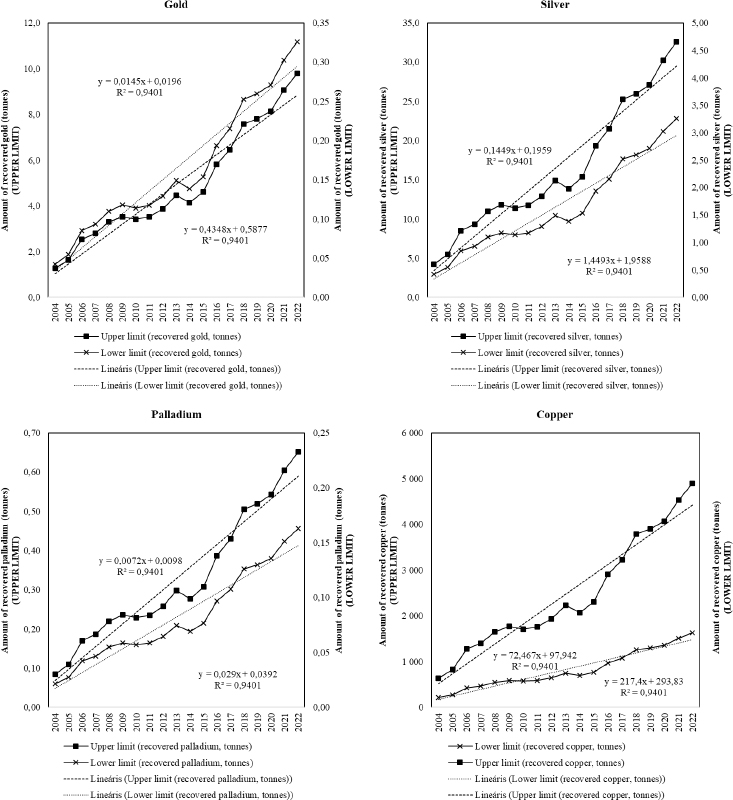
The average recovery potential of gold is estimated to have a lower limit of 0.165 ± 0.084 t and an upper limit of 4.94 ± 2.52 t, indicating that while the quantity of recoverable gold could be substantial, the actual yield is highly dependent on the efficiency of the recovery processes. For silver, the average recovery potential ranges from 1.65 ± 0.84 t to 16.5 ± 8.41 t, suggesting that silver may be more abundantly present in waste streams, but the variability in recovery processes could lead to significant differences in potential yields. Palladium, while present in smaller quantities, also shows a meaningful potential with a lower limit of 0.082 ± 0.042 t and an upper limit of 0.329 ± 0.168 t. This suggests that although palladium is relatively scarce in waste streams, its recovery is nonetheless important, particularly given its growing industrial significance. Copper, by contrast, exhibits the largest recovery potential, with a lower limit of 822.6 ± 420.6 t and an upper limit of 2,467.8 ± 1,261.7 t. This vast potential indicates that copper could be the most valuable target for urban mining efforts, and further development in waste processing technologies could have a particularly significant impact on copper recovery. Overall, these average values clearly demonstrate that the quantities of recoverable metals can vary widely, serving as a key indicator of the potential of urban mining. The variability underscores the need for continued technological advancements to maximise the efficiency and effectiveness of recovery from waste streams.
The amount of waste managed in Hungary between 2004 and 2022 totalled 353,925.6 t (Figure 5). The most common waste management procedures were as follows: dismantling of waste electrical and electronic equipment (29.3 %), sorting by material quality (14.1 %), sorting (12.9 %), shredding (6.48 %), and landfilling with technical protection (placement in covered, insulated cells isolated from the environment and each other) (6.41 %). The amount of waste disposed of in this manner underwent approximately a +2251.2 % increase, with disposal quantities rising from 129.6 t in 2004 to 3,047.2 t in 2022. The total amount of waste rendered harmless throughout the entire cycle was 22,676.03 t. The average annual change rate was +39.1 %/y. The average amount for the period under review was 1,193.5 ± 1031.5 t.
Time series of waste disposed as “1602 - Waste electrical and electronic equipment” in Hungary (t, 2004-2022)
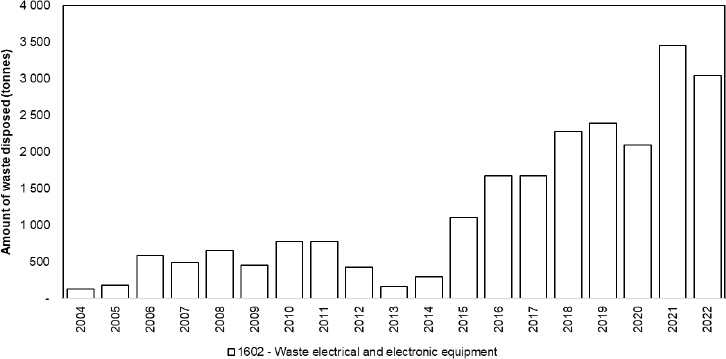
Figure 6 illustrates the retrievable stock of gold, silver, palladium, and copper based on data on deposited, neutralised waste, referencing the lower and upper values of the applied factors, thus covering the hypothetical potential that could have been achieved theoretically between 2004 and 2022 through the acceptance of a 100 % circular economy. It thereby expresses the potential representing the extent of deposited, wasted noble metal potential over time. The lower value of the total retrievable gold quantity was 0.23 t, while the upper value was 6.80 t.
Precious metal potential recoverable by urban mining from landfilled WEEE in Hungary (t, 2004-2022)
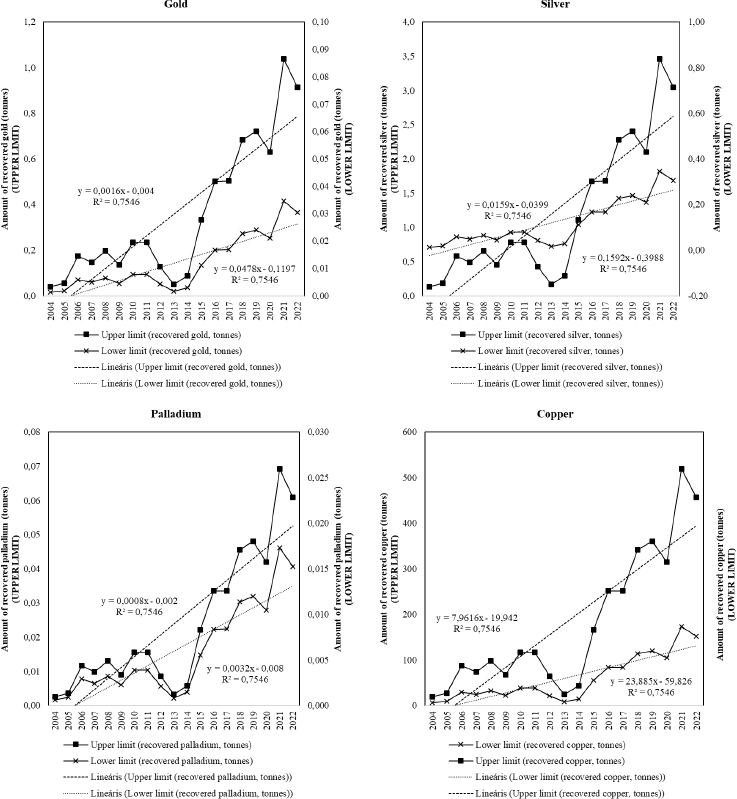
In contrast, for silver, an interval between 2.27 t (lower value) and 22.7 t (upper value) could be defined. The lower value of palladium was marked as 0.11 t, while the upper value was 0.45 t. The largest potential, as expected, was calculable in the case of copper. The magnitude of the lower value ranged from 1,133.8 t between 2004 and 2022, while the upper value measured 3,401.4 t.
The distribution of the obtained mean values for the potential recovery of gold, silver, palladium, and copper provides important insights into the variability and potential magnitude of urban mining efforts. The data indicates a significant range of possible outcomes, reflecting the inherent uncertainties in estimating recoverable metal quantities from waste streams.
For gold, the mean potential ranges from a lower limit of 0.0119 ± 0.01 t to an upper limit of 0.358 ± 0.309 t. This wide range suggests that, while there is potential for recovering a notable amount of gold from waste, the actual yield could vary substantially depending on factors such as the efficiency of recovery processes and the concentration of gold in the waste materials. The large relative standard deviation highlights the challenges in predicting gold recovery accurately and underscores the importance of improving technological and methodological approaches to urban mining.
Similarly, the potential for silver recovery is estimated between 0.119 ± 0.103 t at the lower bound and 1.19 ± 1.03 t at the upper bound. The considerable range and standard deviation indicate that silver, like gold, presents a valuable but highly variable opportunity for recovery. The relatively higher mean values for silver compared to gold reflect its more widespread presence in electronic waste, but the high variability suggests that consistent recovery may be difficult without optimised processes.
Palladium shows the smallest potential in absolute terms, with a lower limit of 0.006 ± 0.005 t and an upper limit of 0.024 ± 0.021 t. Although palladium is a critical metal in many high-tech applications, its lower abundance in the waste streams analysed leads to lower overall recovery potential. The narrow range, coupled with significant relative uncertainty, points to a need for targeted efforts to enhance palladium recovery, particularly as its demand continues to grow in industries such as automotive catalysts and electronics.
Copper, by contrast, exhibits the highest recovery potential, with a mean lower limit of 59.7 ± 51.6 t and an upper limit of 179.0 ± 154.7 t. This large potential range underscores copper's prominence in electronic and industrial waste, making it a primary target for urban mining initiatives. The significant variability in the estimates suggests that, while copper recovery is highly promising, achieving the upper limits of this potential will require substantial advancements in collection, sorting, and processing techniques.
Overall, the distribution of these mean values highlights the complexity and uncertainty involved in estimating recoverable metal quantities from waste. It emphasises the need for continued research and technological development to narrow these ranges and improve the reliability of urban mining as a resource recovery strategy. Furthermore, these estimates provide a framework for policymakers and industry stakeholders to assess the economic viability of recovery efforts and to prioritise investments in technologies that can maximise the yield of valuable metals from urban waste streams.
The analysis of WEEE recycling rates and waste generation trends from 2010 to 2021 provides a comprehensive understanding of the complexities surrounding resource recovery and waste management in the EU and Hungary. The data reveals a multifaceted landscape: while some EU member states, such as Croatia, Finland, and Slovakia, have achieved noteworthy recycling rates, the overall trends across the EU-27 suggest a modest decline in recycling performance. Similarly, Hungary has experienced a gradual reduction in recycling rates over the same period. Concurrently, Hungary has witnessed a significant increase in total waste generation, particularly pronounced in regions like Pest and Central Transdanubia, underscoring an urgent need for robust resource recovery initiatives and effective waste management policies to address these pressing challenges.
Examining WEEE waste generation in Hungary over a broader period, from 2004 to 2022, reveals an extraordinary increase of 668%, with annual volumes rising from 4,247.64 t to 32,620.65 t. This dramatic growth underscores the critical need for more effective and scalable waste management and recycling strategies. Metals like copper demonstrate significant recovery potential, presenting opportunities for resource recovery efforts to focus on materials with high economic and environmental value. However, recovery rates for other valuable metals, such as gold, silver, and palladium, show considerable variability, emphasising the need for advancements in waste processing technologies and more sophisticated predictive models to ensure accurate recovery estimates and optimised recycling processes.
Furthermore, the data highlights stark regional disparities in waste generation, with Central Transdanubia and Budapest emerging as areas of particularly high production levels. These disparities suggest that region-specific challenges are a critical component of the broader waste management landscape and point to the necessity of implementing tailored strategies to address the unique characteristics and needs of different regions.
Urban mining has emerged as a promising and innovative solution, providing an alternative to traditional mining by enabling the recovery of valuable metals directly from urban waste streams [36]. This approach is firmly rooted in circular economy principles, offering the dual benefits of reducing reliance on virgin resources while supporting the transition to a sustainable, resource-efficient economy [15]. However, despite its potential, the variability observed in recovery rates underscores significant technical and logistical challenges [37]. These challenges include optimising pre-processing techniques, improving collection and sorting systems, and advancing recycling technologies to enhance efficiency and minimise material losses [38]. Addressing these issues is essential to fully realising the benefits of urban mining and integrating it as a cornerstone of sustainable waste management in the EU and Hungary.
This paper presents a comprehensive analysis of WEEE recycling rates, waste generation trends, and the potential for urban mining in Hungary and the EU. The findings offer valuable insights into the critical intersections of sustainability, resource recovery, and waste management. The analysis emphasises the urgent need to advance waste processing technologies to optimise recovery efficiencies for high-value metals such as copper, gold, silver, and palladium. These advancements could significantly enhance the economic viability of recycling operations while reducing environmental impacts. Furthermore, the observed regional disparities in waste generation across Hungary underline the importance of designing region-specific strategies that address unique waste management challenges and resource recovery opportunities.
The significant increase in waste quantities in Hungary, coupled with variability in the recoverable content of metals, underscores the potential benefits of transitioning to a circular economy model. By integrating urban mining into national and EU-level waste management strategies, Hungary and its European counterparts can reduce their reliance on finite primary resources, mitigate environmental degradation, and foster long-term sustainable growth. Urban mining, as a component of the circular economy, represents a transformative approach that aligns economic and environmental goals, emphasising the recovery of valuable materials from waste streams that would otherwise be discarded.
Advancing waste processing technologies should be a priority for future research, particularly in enhancing recovery rates and minimising losses of critical materials. Additionally, deepening the understanding of regional variations in waste generation is essential to effectively tailor strategies to local needs. Furthermore, developing sophisticated predictive models can further improve planning and decision-making, empowering stakeholders to anticipate and address emerging challenges in resource recovery and waste management.
Implementing a robust and forward-thinking policy framework is crucial for driving these efforts. Policies that incentivise recycling initiatives, urban mining, and sustainable waste management practices will be pivotal in overcoming existing barriers to the adoption of circular economy principles. This includes providing financial incentives for companies to adopt advanced recycling technologies, enacting regulations mandating higher recovery rates for specific materials, and launching public awareness campaigns to promote participation in recycling programs. Such policies will not only accelerate Hungary's transition towards a circular economy but also position the country as a leader in sustainable resource management within the EU.
- ,
“The digital economy: Challenges and opportunities in the new era of technology and electronic communications,” ,Ain Shams Engineering Journal , Vol. Vol. 15 (No. 2), 2024, https://doi.org/10.1016/j.asej.2023.102411 - ,
“A Stochastic Programming Approach with Improved Multi-Criteria Scenario-Based Solution Method for Sustainable Reverse Logistics Design of Waste Electrical and Electronic Equipment (WEEE),” ,Sustainability , Vol. Vol. 8 (No. 12), 2016, https://doi.org/10.3390/su8121331 - ,
“Towards an Assessment Methodology to Support Decision Making for Sustainable Electronic Waste Management Systems: Automatic Sorting Technology,” ,Sustainability , Vol. Vol. 8 (No. 1), 2016, https://doi.org/10.3390/su8010084 - ,
“A comprehensive review of used electrical and electronic equipment management with a focus on the circular economy-based policy-making,” ,J Clean Prod , Vol. Vol. 389 , 2023, https://doi.org/10.1016/j.jclepro.2023.136132 - ,
“Go Green with WEEE: Eco-friendly Approach for Handling E-waste,” ,Procedia Comput Sci , Vol. Vol. 46 , :1317-13242015, https://doi.org/10.1016/j.procs.2015.01.059 - ,
“How to efficient and high-value recycling of electronic components mounted on waste printed circuit boards: Recent progress, challenge, and future perspectives,” ,J Clean Prod , Vol. Vol. 415 , 2023, https://doi.org/10.1016/j.jclepro.2023.137815 - ,
“Rare earth elements: A review of applications, occurrence, exploration, analysis, recycling, and environmental impact,” ,Geoscience Frontiers , Vol. Vol. 10 (No. 4), :1285-13032019, https://doi.org/10.1016/j.gsf.2018.12.005 - ,
“Recycling of WEEEs: An economic assessment of present and future e-waste streams,” ,Renewable and Sustainable Energy Reviews , Vol. Vol. 51 , :263-2722015, https://doi.org/10.1016/j.rser.2015.06.010 - ,
“The Potential Material Flow of WEEE in a Data-Constrained Environment—The Case of Jordan,” ,Recycling , Vol. Vol. 9 (No. 1), 2024, https://doi.org/10.3390/recycling9010004 - ,
“Customized disassembly and processing of waste electrical and electronic equipment,” ,Manuf Lett , Vol. Vol. 9 , :7-102016, https://doi.org/10.1016/j.mfglet.2016.07.001 - ,
“Towards a circular economy: An emerging economies context,” ,J Bus Res , Vol. Vol. 122 , :725-7352021, https://doi.org/10.1016/j.jbusres.2020.05.015 - ,
“Zero-waste initiatives and circular economy in the U.S.: A review: Exploring strategies, outcomes, and challenges in moving towards a more sustainable consumption model,” ,International Journal of Science and Research Archive , Vol. Vol. 11 (No. 1), :204-2212024, https://doi.org/10.30574/ijsra.2024.11.1.0031 - ,
“On the Definition, Assessment, and Enhancement of Circular Economy across Various Industrial Sectors: A Literature Review and Recent Findings,” ,Sustainability , Vol. Vol. 15 (No. 23), 2023, https://doi.org/10.3390/su152316532 - ,
“Does circular economy mitigate the extraction of natural resources? Empirical evidence based on analysis of 28 European economies over the past decade,” ,Ecological Economics , Vol. Vol. 203 , 2023, https://doi.org/10.1016/j.ecolecon.2022.107607 - ,
“Importance of Circular Economy for Resource Optimization in Various Industry Sectors – A Review-based Opportunity Analysis,” ,International Journal of Applied Engineering and Management Letters , Vol. Vol. 7 (No. 2), :191-2152023, https://doi.org/10.47992/IJAEML.2581.7000.0182 - ,
“The sustainable development goals, urban mining, and the circular economy,” ,Extr Ind Soc , Vol. Vol. 16 , 2023, https://doi.org/10.1016/j.exis.2023.101367 - ,
“A comprehensive review of urban mining and the value recovery from e-waste materials,” ,Resour Conserv Recycl , Vol. Vol. 190 , 2023, https://doi.org/10.1016/j.resconrec.2022.106840 - ,
“Towards sustainable metal recovery from e-waste: A mini review,” ,Sustainable Chemistry for the Environment , Vol. Vol. 2 , 2023, https://doi.org/10.1016/j.scenv.2023.100001 - ,
“Recovery of valuable metals from waste cables by employing mechanical processing followed by spouted bed elutriation,” ,Particuology , Vol. Vol. 45 , :74-802019, https://doi.org/10.1016/j.partic.2018.12.002 - ,
“Heavy metal pollution in the environment and their toxicological effects on humans,” ,Heliyon , Vol. Vol. 6 (No. 9), 2020, https://doi.org/10.1016/j.heliyon.2020.e04691 - ,
“Potential and relevance of urban mining in the context of sustainable cities,” ,IIMB Management Review , Vol. Vol. 29 (No. 3), :210-2242017, https://doi.org/10.1016/j.iimb.2017.06.001 - ,
“A Review of Urban Mining in the Past, Present and Future,” ,Advances in Recycling & Waste Management , Vol. Vol. 02 (No. 02), 2017, https://doi.org/10.4172/2475-7675.1000127 - ,
The Death and Life of Great American Cities , 1961 - ,
“A systematic review of the factors – Barriers, drivers, and technologies – Affecting e-waste urban mining: On the circular economy future of developing countries,” ,J Clean Prod , Vol. Vol. 436 , 2024, https://doi.org/10.1016/j.jclepro.2024.140645 - ,
“Cobalt Recovery from Li-Ion Battery Recycling: A Critical Review,” ,Metals , Vol. Vol. 11 (No. 12), 2021, https://doi.org/10.3390/met11121999 - ,
“Managing operations for circular economy in the mining sector: An analysis of barriers intensity,” ,Resources Policy , Vol. Vol. 69 , 2020, https://doi.org/10.1016/j.resourpol.2020.101752 - ,
“Assessing the recycling efficiency of copper from end-of-life products in Western Europe,” ,Resour Conserv Recycl , Vol. Vol. 48 (No. 2), :141-1652006, https://doi.org/10.1016/j.resconrec.2006.01.003 - ,
“Model development of community-based willingness to recycle for urban mining,” ,Clean Eng Technol , Vol. Vol. 19 , 2024, https://doi.org/10.1016/j.clet.2024.100732 - ,
“Mining the Built Environment: Telling the Story of Urban Mining,” ,Buildings , Vol. Vol. 11 (No. 9), 2021, https://doi.org/10.3390/buildings11090388 - ,
“Urban mining in buildings for a circular economy: Planning, process and feasibility prospects,” ,Resour Conserv Recycl , Vol. Vol. 174 , 2021, https://doi.org/10.1016/j.resconrec.2021.105754 - ,
“3D CITY MODELS FOR URBAN MINING: POINT CLOUD BASED SEMANTIC ENRICHMENT FOR SPECTRAL VARIATION IDENTIFICATION IN HYPERSPECTRAL IMAGERY,” ,ISPRS Annals of the Photogrammetry, Remote Sensing and Spatial Information Sciences , Vol. Vol. V-4–2020 , :223-2302020, https://doi.org/10.5194/isprs-annals-V-4-2020-223-2020 - ,
“Food waste and food waste prevention by NACE Rev. 2 activity - tonnes of fresh mass,” , - ,
“OKIR DB Browser” , - ,
“Challenges and opportunities in the recovery of gold from electronic waste,” ,RSC Adv , Vol. Vol. 10 (No. 8), :4300-43092020, https://doi.org/10.1039/C9RA07607G - ,
“Recovery of metals and valuable chemicals from waste electric and electronic materials: a critical review of existing technologies,” ,RSC Sustainability , Vol. Vol. 1 (No. 5), :1085-11082023, https://doi.org/10.1039/D3SU00034F - ,
“Urban mining of e-waste management globally: Literature review,” ,Cleaner Waste Systems , Vol. Vol. 9 , 2024, https://doi.org/10.1016/j.clwas.2024.100162 - ,
“Supply chain resilience: A review from the inventory management perspective,” ,Fundamental Research , 2024, https://doi.org/10.1016/j.fmre.2024.08.002 - ,
“Advancing Plastic Recycling: Challenges and Opportunities in the Integration of 3D Printing and Distributed Recycling for a Circular Economy,” ,Polymers , Vol. Vol. 15 (No. 19), 2023, https://doi.org/10.3390/polym15193881