



Microplastics, defined as plastic particles smaller than 5 mm, have emerged as a pervasive pollutant in aquatic environments worldwide [1]. They can be broadly classified into primary microplastics, which are manufactured in small sizes for use in personal care products, industrial abrasives, and pre-production pellets, and secondary microplastics, which result from the fragmentation of larger plastic debris through physical, chemical, and biological degradation processes [2]. Major sources of microplastics include domestic activities such as laundry effluents that release synthetic textile fibres [3], industrial discharges containing polymer residues, and the breakdown of mismanaged plastic packaging materials [4]. The physical and chemical characteristics of microplastics, particularly their size, shape, and density, play a critical role in determining their transport, distribution, and environmental fate in freshwater ecosystems [5]. Once ingested by aquatic organisms, microplastics can cause physical harm such as gastrointestinal blockage, reduced feeding activity, and mortality, as well as physiological effects including decreased reproductive success and altered growth [6]. Furthermore, microplastics can act as vectors for hazardous chemicals and pathogens, increasing the potential ecological and human health risks associated with their presence [7]. Indonesia is widely recognised as one of the most significant contributors of plastic waste to the global ocean. Within this context, the present study advances current knowledge by explicitly identifying and comparing source-specific microplastic discharge pathways in domestic wastewater, industrial effluents, and agricultural runoff within a single urban river system.
Rivers play a pivotal role in transporting microplastics from terrestrial environments to marine ecosystems, acting as conduits that integrate inputs from multiple anthropogenic activities along their courses [8]. The primary pathways of MP entry into riverine systems include domestic wastewater discharges, which often contain synthetic fibres from laundry effluents; industrial effluents, which may release polymer fragments, resin pellets, or process-related microplastics; and agricultural runoff [9], which can transport degraded mulch film, irrigation pipe residues, and other synthetic materials [10]. Within river systems, microplastics are distributed between the surface water column and the sediment compartment, with sediment often functioning as a long-term sink due to gravitational settling and hydrodynamic conditions [11]. Factors such as flow velocity, seasonal variation, riparian vegetation, land use, and proximity to pollution sources significantly influence the abundance, distribution, and retention time of microplastics in both water and sediments [12].
In Indonesia, research on microplastics has predominantly focused on marine and coastal environments, with numerous studies reporting their abundance, polymer types, and potential ecological impacts in seawater, sediments, and biota [13]. Investigations in freshwater systems, particularly urban rivers in Java, remain limited despite their critical role as conduits of plastic waste to the ocean. A recent study provided the first evidence of microplastics in the water and sediments of the Surakarta City river basin [10], highlighting the presence of fibres and fragments predominantly composed of polyethylene (PE) and polypropylene (PP). Source-specific studies are essential for developing targeted mitigation strategies, improving waste management practices, and providing baseline data for long-term monitoring of MP pollution in riverine ecosystems [14].
Nonetheless, comprehensive evaluations that connect specific pollution sources, such as domestic wastewater, industrial effluents, and agricultural runoff, to variations in microplastic abundance, morphology, and polymer composition are notably lacking in the Indonesian context. This gap reflects the broader research focus in Indonesia, which has predominantly prioritised marine and coastal environments over freshwater systems [15]. In Southeast Asia, there is a paucity of studies that explicitly correlate the morphology and polymer composition of microplastics with specific pollution sources in riverine environments, despite the region being identified as a global hotspot for plastic waste leakage [16].
Research conducted in Europe and China has demonstrated that microplastic profiles vary systematically according to the predominant anthropogenic activities. For instance, investigations in China have revealed that industrial activities are primary contributors to fragment-type microplastics, whereas agricultural regions are frequently associated with plastic films resulting from mulch use [17]. Talbot and Chang demonstrated that land-use patterns and wastewater treatment efficiency significantly influence spatial and temporal variations in microplastic abundance within freshwater systems [18]. More recent evaluations have underscored that variations in regional waste management practices and socio-economic conditions substantially shape microplastic source signatures in riverine environments [19].
Surakarta, located in Central Java, Indonesia, is traversed by several interconnected river systems. These include the Bengawan Solo, the longest river in Java, and its tributaries, such as Kali Sroyo, as well as numerous irrigation canals serving surrounding agricultural areas [20]. These waterways receive inputs from diverse anthropogenic activities along their courses. Domestic sources arise from densely populated residential areas that discharge untreated or partially treated household wastewater directly into the rivers, contributing microplastic fibres from laundry effluents and fragments from degraded packaging materials. Industrial sources originate from various manufacturing facilities, including textile, food processing, and plastic production plants, which may release synthetic polymer residues and process-related microplastics into adjacent water bodies [21]. Agricultural sources are associated with runoff carrying degraded fragments of mulch films, irrigation hoses, and agrochemical containers, especially during rainfall events [3]. The potential risk is heightened because river water in the region is extensively used for irrigation, aquaculture, and, in some cases, domestic needs, creating direct pathways for microplastic exposure to both aquatic organisms and human populations [2].
Characterising the morphology and polymer composition of microplastics is essential for tracing their sources and assessing potential environmental risks. Variations in shapes such as fibres, often associated with synthetic textiles; fragments, typically derived from the breakdown of larger plastic items; films, commonly originating from packaging materials and agricultural mulch; and pellets, linked to industrial raw materials, can provide valuable clues regarding their origin and pathways into aquatic systems [22]. Similarly, identifying the polymer types, including polypropylene (PP), polyethylene (PE), polyethylene terephthalate (PET), polystyrene (PS), and others, is critical for source attribution and understanding their buoyancy, degradation rates, and potential to adsorb hazardous chemicals [23]. Among the available analytical techniques, stereomicroscopy is widely employed for initial morphological classification and particle counting. At the same time, Fourier Transform Infrared spectroscopy (FTIR) has become the standard method for accurate polymer identification due to its ability to detect specific functional groups and differentiate between polymer types [24]. Combining morphological and chemical characterisation not only enhances the accuracy of pollution source tracking but also supports ecological risk assessments and the formulation of targeted mitigation strategies [25].
This research provides the first source-specific characterisation of microplastics in Indonesian urban rivers, explicitly linking morphological and polymeric variations to domestic, industrial, and agricultural inputs. This study aims to identify and characterise microplastics present in both sediments and surface water collected from three distinct river sites in Surakarta, each influenced by different dominant pollution sources: domestic wastewater, industrial effluents, and agricultural runoff. The research further seeks to analyse the relationships between pollution sources and microplastic characteristics, including abundance, morphological types (e.g., fibres, fragments, films, pellets), colour variations, and polymer compositions as determined through stereomicroscopy and FTIR spectroscopy.
Sampling was conducted during the dry season in July 2024, under stable hydrological conditions, with no significant rainfall recorded in the 72 hours preceding the sampling. This period was intentionally selected to minimise short-term hydrological disturbances, such as runoff pulses and sediment resuspension, thereby ensuring comparability among sampling sites. Average ambient temperatures during the sampling period ranged from 26 to 32 °C, and river flow conditions remained relatively stable across all locations. Sampling was performed at three representative river sites in the Surakarta region, each influenced by a distinct dominant pollution source. Sampling was conducted at three representative sites along different river stretches in the Surakarta region. The first site was the Kedung Pedhet River in Mojosongo, Surakarta (7°33'15.5"S 110°50'23.0"E), which is characterised by high population density and is dominated by domestic wastewater inputs from residential households. The second site was the Jenes River in Laweyan, Surakarta (7°34'17.2"S 110°47'34.3"E), located in the traditional batik production area, where industrial effluents from batik manufacturing and related small-scale industries constitute the major pollution source. Batik is a textile industry characterised by wax-resist dyeing processes that predominantly use synthetic dyes, resins, and polymer-based materials. The third site was the Sroyo River in Desa Sroyo, Jaten Subdistrict, Karanganyar (7°32'35.8"S 110°52'38.0"E), which flows through agricultural land and is mainly influenced by agricultural runoff, including mulch film residues, fertilisers, and pesticides from rice fields and vegetable farms.
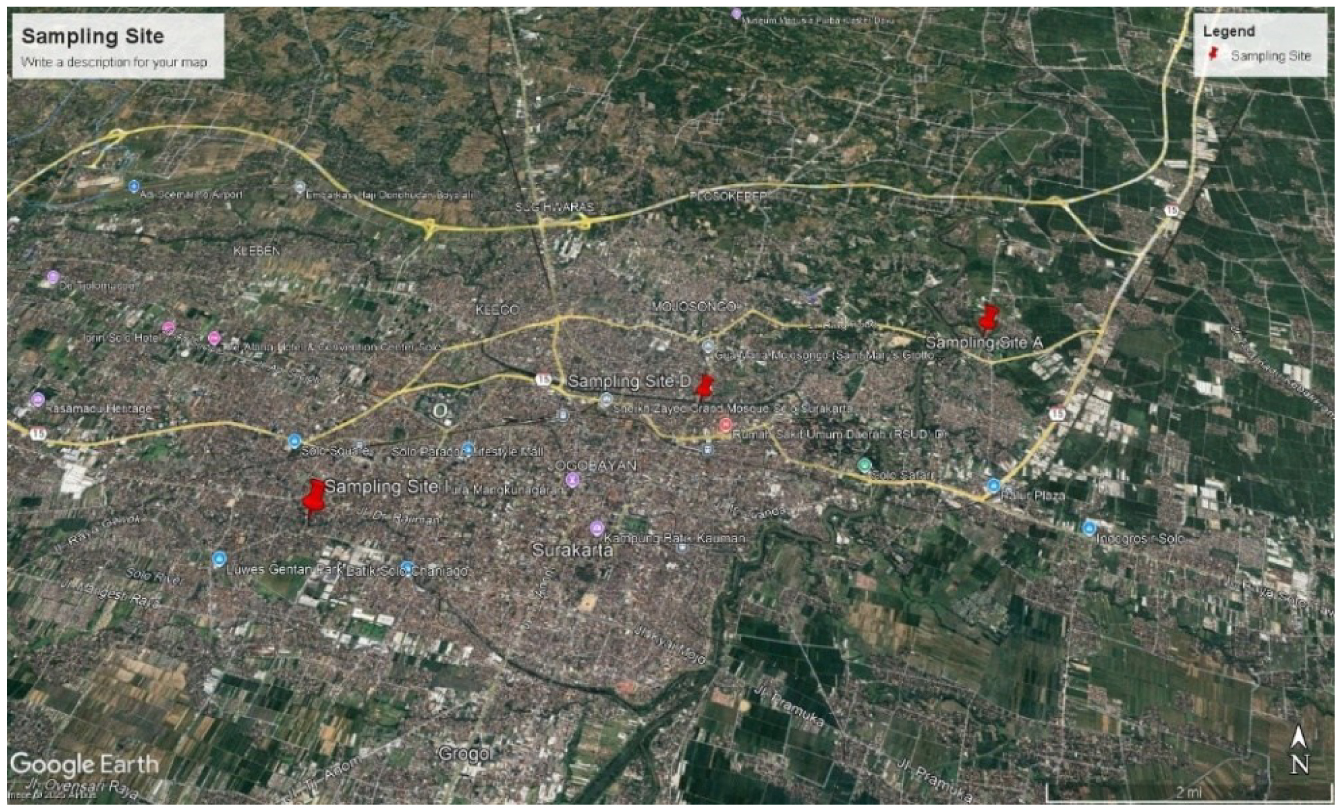
In this study, Sampling Site D (domestic) denotes the domestic wastewater site, Sampling Site I refers to the industrial (batik production) site, and Sampling Site A (agricultural) pertains to the agricultural runoff site. At each site, both surface water and sediment samples were collected in triplicate during the sampling campaign. The research location map (Figure 1) illustrates the distribution of the three sampling sites, marked as Sampling Site A (agricultural), Sampling Site D (domestic), and Sampling Site I (industry), across the Surakarta region. Triplicate sampling per site was adopted following widely used protocols in microplastic studies, which ensure reproducibility while remaining feasible under logistical constraints. Although larger sample sizes may improve statistical power, triplicates are generally considered adequate for detecting consistent source-specific patterns in microplastic abundance and composition [26].
The materials used in this study included zinc chloride (ZnCl2) solution for microplastic extraction from sediments, Whatman No. 41 filter paper with a pore size of 20–25 μm, and distilled water for cleaning all equipment. The instruments and tools comprised a stainless-steel scoop for sediment collection, 300 mL glass bottles for surface water sampling, 500 mL glass beakers, clean polyethylene bags, aluminum foil, a magnetic stirrer, an analytical balance for precise weighing of sediment samples, a vacuum pump for filtration, standard laboratory glassware, a stereomicroscope with 10–45× magnification for visual identification, and a Fourier Transform Infrared Spectroscopy with Attenuated Total Reflectance (ATR-FTIR) operating over a spectral range of 4000–400 cm−1.
Sediment and surface water sampling were conducted at three sites, each representing a different
dominant pollution source. At each site, three sediment subsamples were
collected from the riverbed at approximately 10 m intervals using a
stainless-steel scoop from the top 5 cm layer [26]. The subsamples were wrapped in aluminium foil, sealed in clean
polyethylene bags, and transported to the laboratory, where they were air-dried
at room temperature and large debris, such as leaves, stones, and shells, was
manually removed. For microplastic extraction, 20 g of dried sediment from each
subsample was placed in a 200 mL glass beaker containing 200 mL of a 15% w/v
ZnCl2 solution. The mixture was stirred for 5 min using a
magnetic stirrer, allowed to settle for 30 min, and the supernatant was decanted
and filtered through a Whatman No. 41 filter paper (pore size 20–25 μm) under
vacuum filtration. Surface water sampling involved collecting three 300 mL
samples per site at 10 cm depth using pre-cleaned glass bottles, pooling them
into a composite sample (900 mL total), and filtering them immediately through
the same filter type [27]. All filters
were stored in clean Petri dishes until analysis. Visual identification of
microplastics was performed under a stereomicroscope at 40× magnification [
Microplastics concentration in water [particles/L]:
where: N denotes the number of particles in the water sample, and V − volume of water [L].
Microplastics concentration in sediment [particles/kg]:
where: N denotes the number of particles in the sediment sample, and m − mass of sediment [kg].
Due to time and instrument constraints, not all visually identified particles were analysed using FTIR. Instead, a representative subsample of approximately 25–30% of the total particles from each site and matrix (water and sediment) was selected for polymer identification [22], [25]. This approach provides reliable polymer composition profiles while maintaining analytical feasibility.
Sediment samples were initially wrapped in aluminium foil before being placed in clean polyethylene bags, which functioned solely as secondary external containers. Direct contact between the samples and polyethylene was meticulously avoided. Procedural blanks confirmed the absence of polyethylene contamination during handling. Rigorous quality assurance protocols were implemented to mitigate potential contamination during sample handling and analysis. Laboratory personnel donned cotton lab coats and nitrile gloves throughout all procedures to minimise the risk of synthetic fibre shedding. All glassware and equipment were meticulously rinsed with pre-filtered distilled water before use. The distilled water employed for cleaning and dilutions was pre-filtered through Whatman GF/F filters (0.7 μm) to eliminate potential microplastic contamination.
Procedural blanks were incorporated by filtering pre-filtered distilled water under identical laboratory conditions, using the same equipment for environmental samples. These blank controls were processed along with each batch of samples to account for potential airborne or procedural contamination. No microplastic particles were detected in the blanks, indicating negligible laboratory contamination during the analyses. These measures align with established international recommendations for minimising laboratory contamination in microplastic studies [22].
Statistical analyses were conducted to test for significant differences in microplastic abundances among the three sampling sites (domestic, industrial, and agricultural). Data normality was first assessed using the Shapiro–Wilk test. For normally distributed data, one-way analysis of variance (ANOVA) was applied, followed by Tukey’s HSD post-hoc test to identify pairwise differences. The nonparametric Kruskal-Wallis test was employed for data that did not meet normality assumptions, with Dunn’s post-hoc test for multiple comparisons. All statistical analyses were performed using R software (version R-4.5.1) with significance set at p < 0.05.
Figure 2 shows the variation in microplastic concentrations in surface water across the three sampling sites, reflecting pollution from domestic, industrial, and agricultural sources.
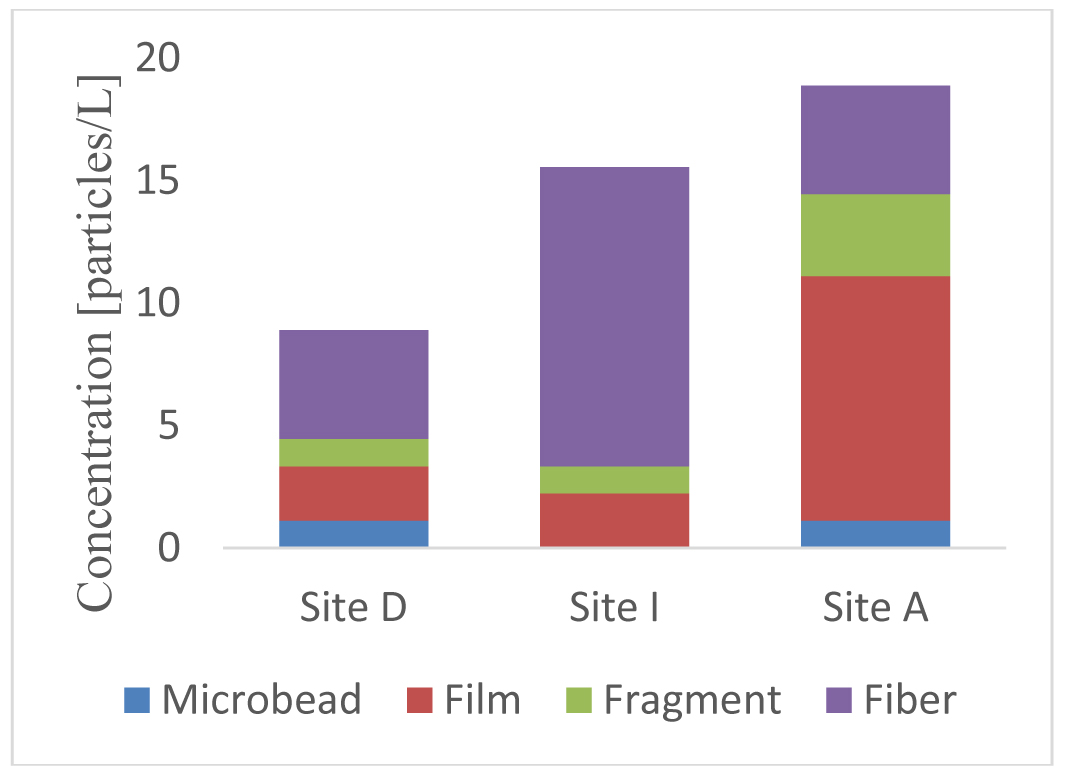
The highest concentrations were recorded at the domestic site, likely due to high loads of synthetic fibres from laundry wastewater, detergent residues, and packaging debris entering the river system [27]. Industrial sites exhibited elevated levels of fragments and films, which are commonly associated with manufacturing processes, packaging materials, and polymer-based coatings [26]. Agricultural runoff contributed microplastics primarily in the form of films and coloured fragments, consistent with the degradation of polyethylene mulch films and other agro-plastics. Variations in microplastic abundance can also be influenced by hydrodynamic conditions, including flow velocity, seasonal fluctuations, and riparian vegetation cover, which can enhance particle deposition or resuspension [28].
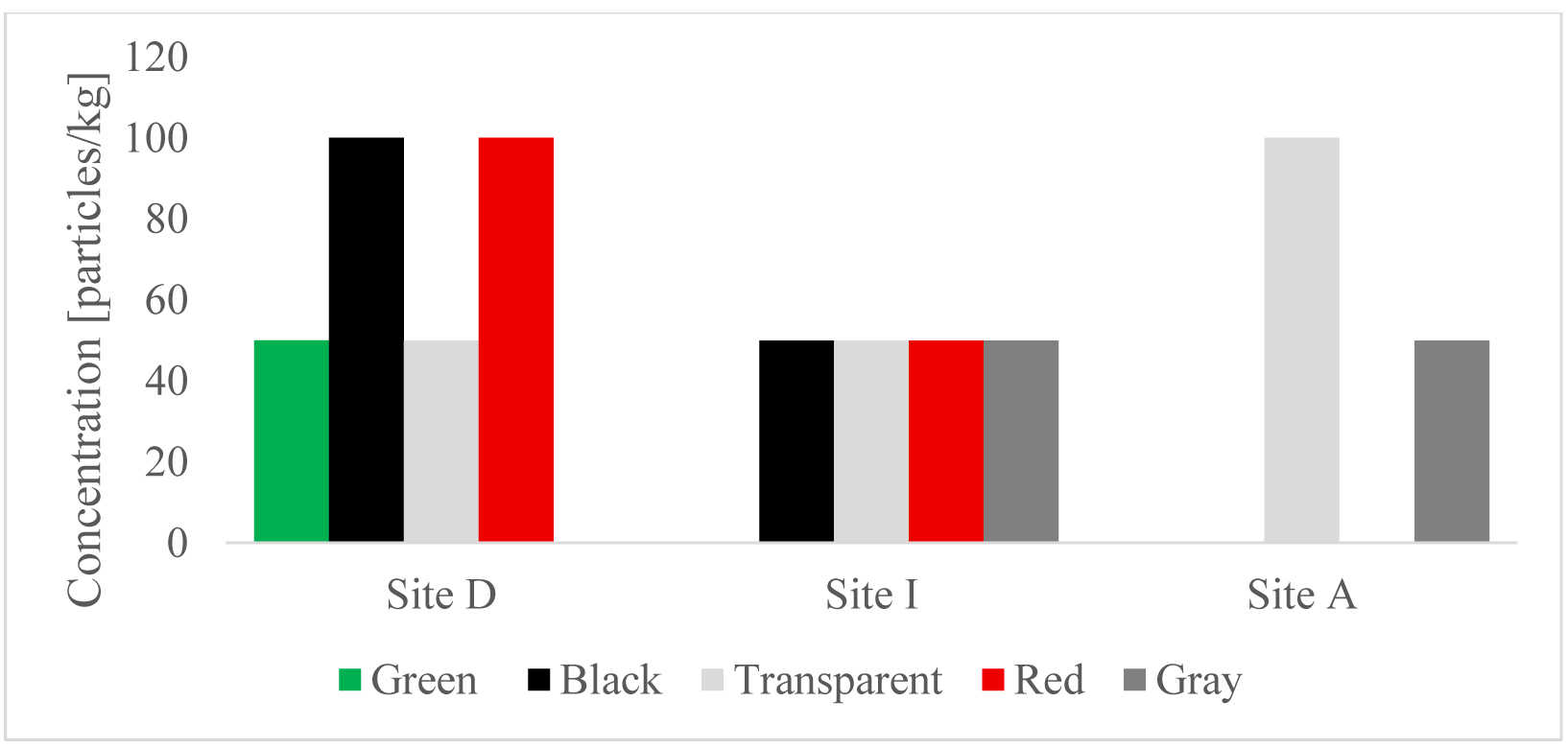
Figure 3 presents the colour distribution of microplastic particles in surface water, providing insight into their potential sources and environmental weathering processes. Transparent and white particles dominated at the domestic site, consistent with the breakdown of clear packaging films and household plastics. Blue and black fibres were prevalent at the industrial site, potentially originating from synthetic textiles and coloured polymer products used in production processes. At the agricultural site, green and brown particles were more common, likely linked to the use of coloured mulch films and agricultural twines [26]. The persistence of certain colours may be due to differences in pigment stability, while others fade over time due to UV degradation and biofouling [25].
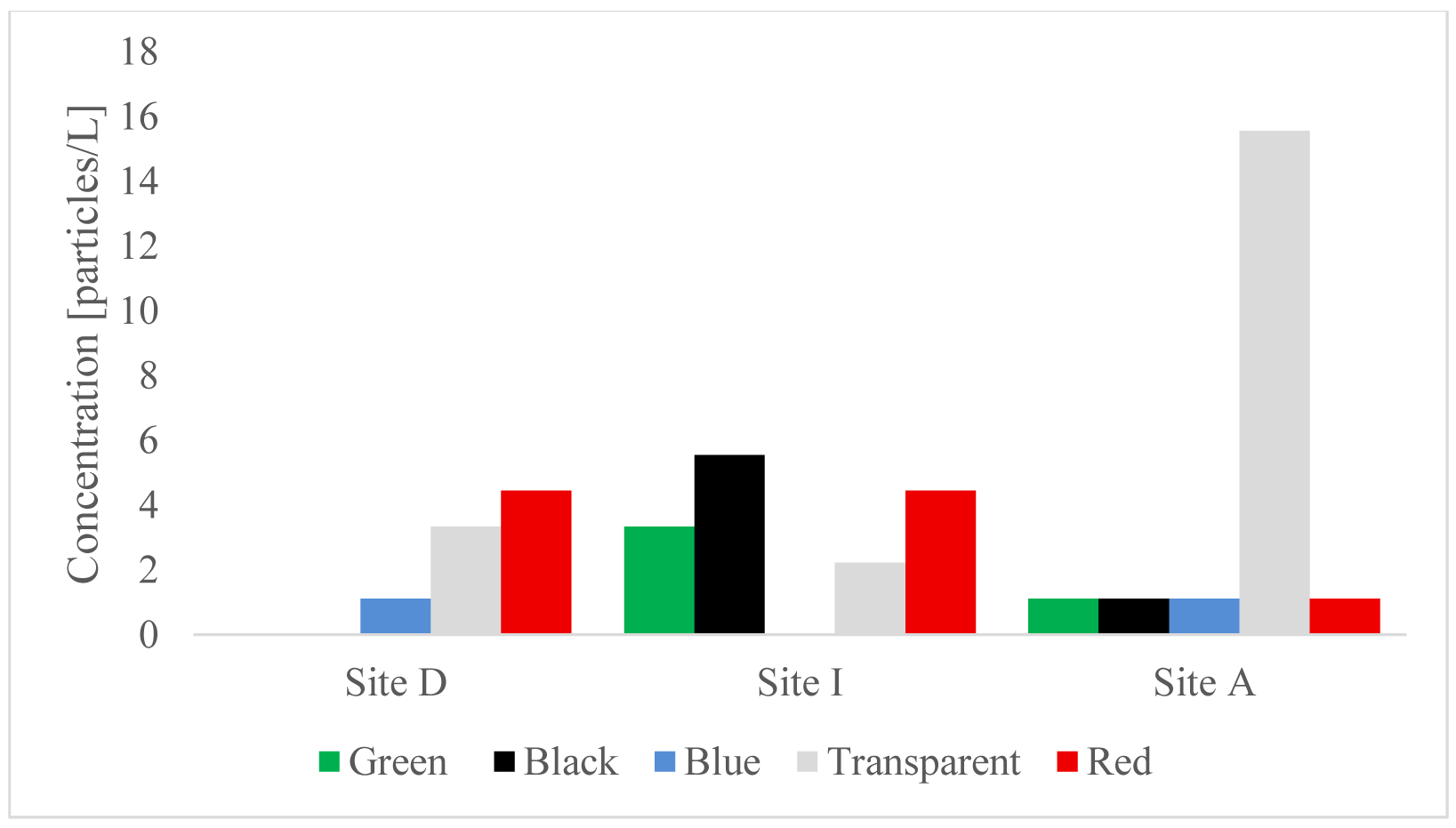
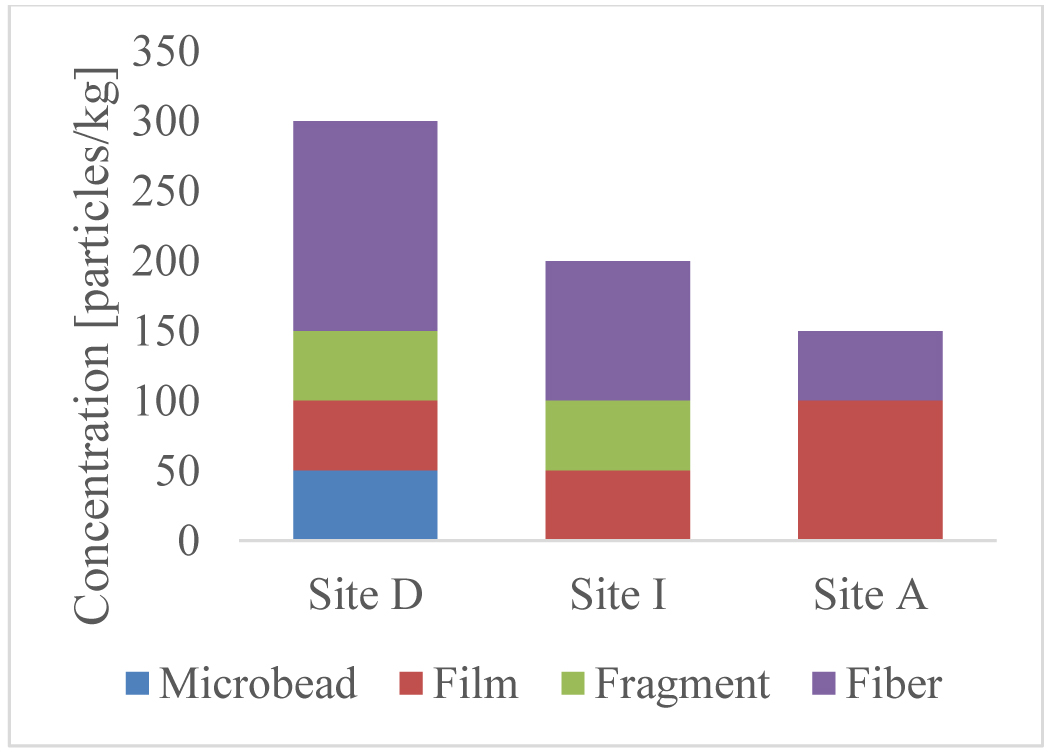
Figure 4 illustrates the concentration of microplastics in sediment samples across the three sampling sites, highlighting sediments as long-term sinks for microplastics. The domestic site exhibited the highest sedimentary concentrations, possibly due to continuous inputs and reduced flushing during low-flow conditions. Industrial sediments contained significant proportions of hard fragments, whereas agricultural sediments had a higher proportion of films. The accumulation of microplastics in sediments is influenced by particle density, size, and shape, as well as local hydrology and sediment composition [26].
Statistical comparisons confirmed that microplastic abundances differed significantly among sites (ANOVA/Kruskal–Wallis, p < 0.05). The domestic site exhibited significantly higher concentrations than the industrial and agricultural sites, while no significant difference was detected between the latter. Similar patterns were observed in sediment samples, with the domestic site consistently showing significantly higher microplastic loads than the other locations.
As shown in Figure 2, microplastic concentrations in surface water varied significantly among the three sampling sites under study. Statistical comparisons, summarised in Table 1, confirmed that microplastic abundances differed significantly (ANOVA, p < 0.05), with the domestic site exhibiting higher concentrations than the industrial and agricultural sites. Similar patterns were observed in sediments, with Kruskal-Wallis tests indicating significantly greater loads at the domestic site than at other locations. At the same time, no significant difference was detected between the industrial and agricultural sites. Overall, the findings confirm that the domestic wastewater input is the dominant source of microplastic pollution in Surakarta’s rivers.
| Sample type | Test used | df | Test statistic F/χ2 | p-value | Post-hoc results p < 0.05 |
|---|---|---|---|---|---|
| Surface water [particles/L] | One-way ANOVA | 2, N−3 | F = 5.87 | 0.012 | Domestic > Industrial, Domestic > Agricultural |
| Sediment [particles/kg] | Kruskal-Wallis | 2 | χ2 = 8.34 | 0.015 | Domestic > Industrial, Domestic > Agricultural |
Figure 5 shows the colour distribution of microplastic particles in sediment samples, which largely mirrors the patterns observed in surface water. Transparent and white particles were dominant in domestic sediments, while blue and black particles were more abundant in industrial sediments. Agricultural sediments showed a greater share of green and brown particles. Over time, biofouling and sediment burial can alter particle appearance, causing originally bright colours to fade or change [26].
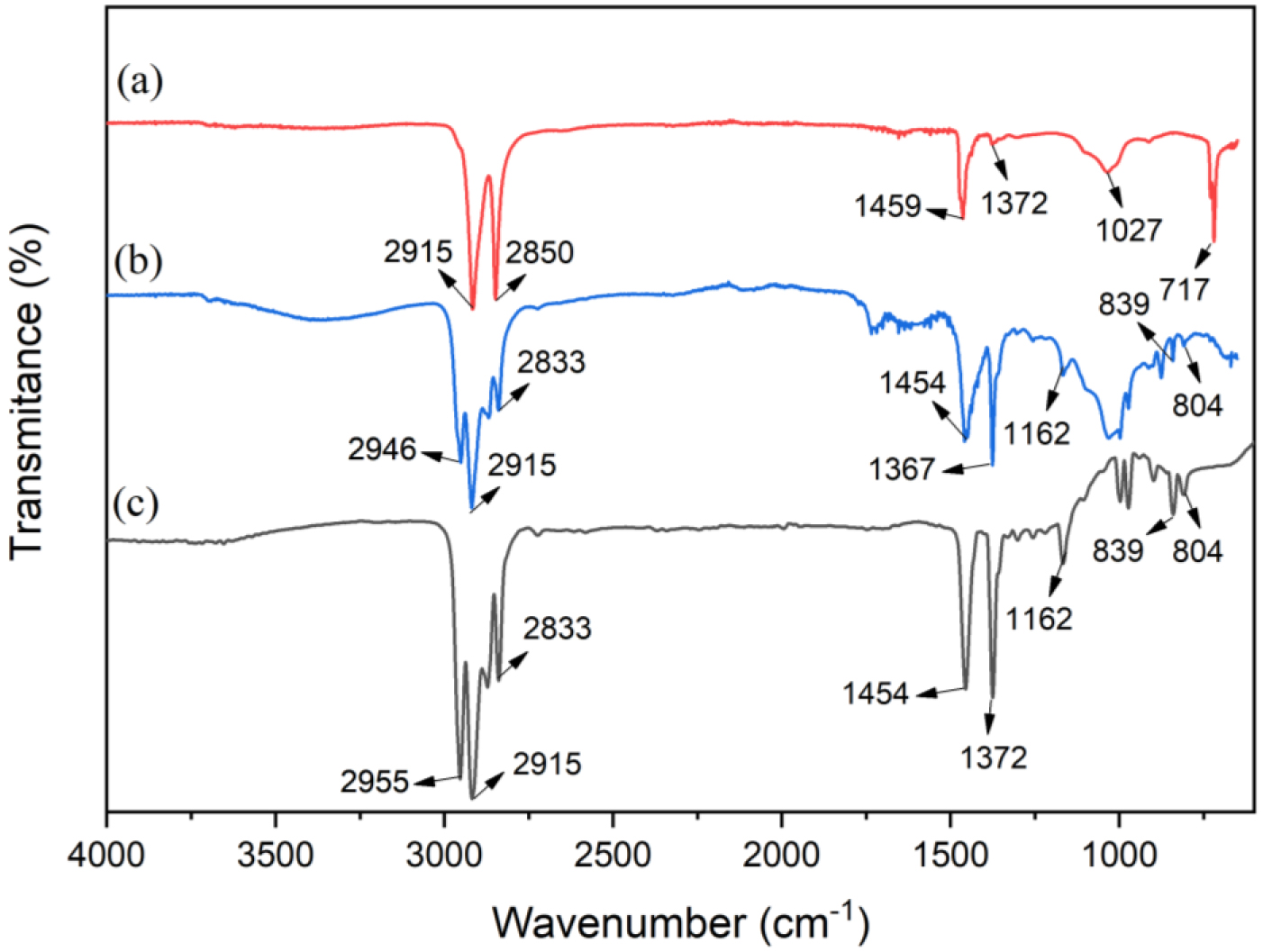
ATR-FTIR analysis identified polyethylene (PE), polypropylene (PP), and polyethylene terephthalate (PET) as the dominant polymers in both surface water and sediment samples (Figure 6). PE was characterised by strong CH2 stretching vibrations at 2915 cm−1 and 2848 cm−1, CH2 bending at 1465 cm−1, and CH2 rocking at 720 cm−1. PP exhibited CH3 asymmetric stretching near 2950 cm−1 and bending modes around 1375 cm−1. PET was identified by C=O stretching at 1715 cm−1 and aromatic C-H bending at 870 cm−1. The polymer distribution patterns suggest a strong link between local human activities and microplastic pollution sources, with domestic inputs contributing more PET from textiles and bottles, industrial sources providing PP from packaging, and agricultural sources introducing PE from mulch films [9].
The predominance of fibres at the domestic site can be attributed to untreated laundry effluents, which are known to release large quantities of synthetic microfibers during washing cycles [29]. In Surakarta, the absence of advanced wastewater treatment plants further intensifies microfiber discharge into rivers, as most households discharge greywater directly into nearby waterways. Seasonal variations in laundry frequency, particularly during festive periods, may also contribute to higher microfiber loads. In terms of polymer types, the dominance of PE, PP, and PET reflects local consumption and production patterns. Polyethylene (PE) is widely used in agricultural mulch films and single-use plastic bags; polypropylene (PP) in packaging and household goods; and polyethylene terephthalate (PET) in textiles and bottled beverages, all of which are heavily consumed in Surakarta and throughout Indonesia [30], [31]. These findings indicate that microplastic pollution profiles in Surakarta rivers are not only a function of site-specific waste inputs but also mirror broader socio-economic consumption trends and industrial production activities.
Figure 6 and Table 2 present representative ATR-FTIR spectra of microplastic particles from the three sampling sites, confirming polyethylene (PE), polypropylene (PP), and polyethylene terephthalate (PET) as the dominant polymers. PE was characterised by strong CH2 stretching vibrations at 2915 cm−1 and 2848 cm−1, CH2 bending at 1465 cm−1, and CH2 rocking at 720 cm−1. PP exhibited CH3 asymmetric stretching near 2950 cm−1 and bending modes around 1375 cm−1. PET was identified by C=O stretching at 1715 cm−1 and aromatic C–H bending at 870 cm−1. In total, 27% of the visually identified particles were analysed with FTIR, yielding representative spectra that confirmed PE, PP, and PET as the dominant polymers across sites. The polymer distribution patterns suggest a strong link between local human activities and microplastic pollution sources, with domestic inputs contributing more PET from textiles and bottles, industrial sources providing PP from packaging, and agricultural sources introducing PE from mulch films.
| Sampling Site | Wavenumber [cm−1] | Assignment |
|---|---|---|
| Site D (Domestic) | 717 |
CH2 rock |
| Site I (Industrial) | 804 |
CH2 rock, C-C stretch, C-H stretch |
| Site A (Agricultural) | 804 |
CH2 rock, C-C stretch, C-H stretch |
The primary contribution of this study is the quantitative evidence demonstrating that distinct anthropogenic sources produce statistically distinct microplastic fingerprints within a single urban river system. Domestic wastewater was identified as the predominant source of fibres and PET polymers, industrial batik activities were found to contribute disproportionately to PP fragments, and agricultural runoff was primarily linked to PE films. These source-specific profiles were validated through an integrated approach involving morphological, polymeric, and statistical analyses. The detection of microplastics in both water and sediments at all sites underscores their widespread occurrence in urban and peri-urban river systems. Potential ecological impacts include ingestion by aquatic organisms, leading to physical harm, reduced feeding efficiency, and impaired reproduction [25]. Furthermore, microplastics can act as vectors for persistent organic pollutants and heavy metals, exacerbating their toxicity [28]. Effective management strategies should include reducing plastic inputs by improving wastewater treatment, promoting biodegradable alternatives, and enhancing public awareness campaigns. Long-term monitoring and source-specific mitigation approaches are essential to address microplastic contamination in freshwater ecosystems.
Beyond the quantitative differences observed across sites, the findings also carry significant ecological and socio-economic implications. Ecologically, the high abundance of fibres and fragments in domestic and industrial sites poses a potential risk to aquatic organisms, as these morphologies are more readily ingested by fish and benthic invertebrates, leading to gastrointestinal blockage, reduced feeding efficiency, and bioaccumulation in food webs [19]. The dominance of polyethylene and polypropylene polymers, known for their persistence and buoyancy, suggests greater mobility in river systems and a higher likelihood of downstream transport into larger rivers and, eventually, into the ocean, thereby contributing to regional-scale plastic leakage [26].
From a socio-economic perspective, Surakarta’s rivers provide critical water resources for irrigation, aquaculture, and in some cases, household use. The presence of microplastics in both sediments and surface water implies potential contamination of crops and fish, raising concerns over food safety and public health [32]. This situation could increase economic burdens related to water treatment and threaten the livelihoods of communities that depend on fisheries and agriculture [29].
The source-specific patterns observed in this study highlight the need for targeted waste management interventions: improving domestic wastewater treatment, enforcing industrial effluent standards, and promoting sustainable agricultural practices. Together, these ecological and socio-economic implications underscore the urgency of integrated policy measures to address microplastic pollution in urban rivers. By linking microplastic characteristics with specific anthropogenic sources, this study provides not only scientific evidence but also actionable insights to guide local authorities and align with broader sustainability frameworks, including SDG 6 (Clean Water and Sanitation) and SDG 14 (Life Below Water).
While prior research conducted in Europe and China has documented microplastic characteristics that vary by source, the current findings reveal a distinct pattern in the prevalence of fibres and PET at domestic locations, indicative of inadequate wastewater treatment infrastructure. In contrast to studies from temperate regions, the greater prevalence of films at agricultural sites underscores the increased use of plastic mulch in tropical agricultural practices. While the study was conducted in Indonesia, its findings are directly relevant to other developing and emerging economies characterised by limited wastewater treatment, small-scale industries, and agriculture with high levels of plastic use. The results indicate that strategies to mitigate microplastic pollution should prioritise filtration of domestic wastewater, implement sector-specific controls on industrial effluents, and manage agricultural plastics. These insights have the potential to inform microplastic policy frameworks beyond Indonesia, particularly in regions such as Southeast Asia, South Asia, Africa, and Latin America.
The source-specific profiles identified in this study have significant implications for environmental management and policy formulation in Indonesia. Firstly, the predominance of fibres in domestic sites underscores the urgent need to enhance municipal wastewater treatment systems. Installing advanced filtration technologies, such as membrane bioreactors or fine-screening devices, could substantially reduce the discharge of synthetic microfibers from laundry effluents. Pilot projects in major Indonesian cities could serve as models for scaling up such infrastructure nationwide. Secondly, the detection of elevated levels of fragments and films at industrial sites underscores the need to enforce stricter effluent regulations, particularly for the batik industry and other small-scale manufacturers in Surakarta. Developing industry-specific effluent standards that include microplastic parameters, routine monitoring, and non-compliance penalties would help mitigate direct industrial contributions. Incentivising the adoption of closed-loop water recycling systems in batik production could further reduce plastic leakage. Thirdly, the presence of films and colored fragments in agricultural runoff indicates the need for more sustainable management of agro-plastics. Local governments should introduce policies encouraging biodegradable mulch films and establish collection schemes for used irrigation pipes and plastic containers. Extension services could be mobilised to train farmers on best practices for the use and disposal of agro-plastics, ensuring productivity and environmental sustainability. At a broader scale, integrating microplastic pollution into existing river basin management plans would provide a holistic framework for addressing this issue. Aligning these interventions with national environmental goals and international frameworks such as SDG 6 (Clean Water and Sanitation) and SDG 14 (Life Below Water) would enhance policy coherence and attract international support for implementation.
This study provides the first source-specific characterisation of microplastics in Surakarta’s river systems, demonstrating that domestic, industrial, and agricultural sources each generate distinct abundance patterns, morphologies, and polymer profiles. Polyethylene and polypropylene dominated across sites, with fibres and fragments as the most common morphologies, indicating both widespread household contributions and industrial inputs. These findings highlight the urgent need for improved wastewater treatment infrastructure, stricter industrial effluent controls, and better management of agricultural plastic use. Beyond Surakarta, the results contribute to the global understanding of microplastic pollution in Southeast Asian urban rivers and support policy interventions aligned with SDG 6 (Clean Water and Sanitation) and SDG 14 (Life Below Water).
The authors would like to thank UPT Lab Terpadu, Universitas Sebelas Maret, Surakarta, for providing laboratory facilities and technical assistance during sample preparation and analysis. Appreciation is also extended to the field team members for their support during sampling activities.
- ,
The removal of microplastics from water by coagulation: A comprehensive review ,Science of the Total Environment , Vol. 851 , 2022, https://doi.org/10.1016/j.scitotenv.2022.158224 - ,
Removal of microplastics from the environment. A review ,Environmental Chemistry Letters , Vol. 18 (3), :807-8282020, https://doi.org/10.1007/s10311-020-00983-1 - ,
Distribution and importance of microplastics in the marine environment: A review of the sources, fate, effects, and potential solutions ,Environment International , Vol. 102 , :165-1762017, https://doi.org/10.1016/j.envint.2017.02.013 - ,
Production, use, and fate of all plastics ever made ,Science Advances , Vol. 3 (7), 2017, https://doi.org/10.1126/sciadv.1700782 - ,
Atmospheric microplastics: A review on current status and perspectives ,Earth-Science Reviews , Vol. 203 , 2020, https://doi.org/10.1016/j.earscirev.2020.103118 - ,
The physical impacts of microplastics on marine organisms: A review ,Environmental Pollution , Vol. 178 , :483-4922013, https://doi.org/10.1016/j.envpol.2013.02.031 - ,
Human Consumption of Microplastics ,Environmental Science & Technology , Vol. 53 (12), :7068-70742019, https://doi.org/10.1021/acs.est.9b01517 - ,
River plastic emissions to the world’s oceans ,Nature Communications , Vol. 8 , :1-102017, https://doi.org/10.1038/ncomms15611 - ,
Microplastic pollution in the surface water and sediments from Kallar Kahar wetland, Pakistan: occurrence, distribution, and characterization by ATR-FTIR ,Environmental Monitoring and Assessment , 2022, https://doi.org/10.1007/s10661-022-10171-z - ,
First evidence of microplastics in the water and sediment of Surakarta city river basin, Indonesia ,Marine Pollution Bulletin , Vol. 196 , 2023, https://doi.org/10.1016/j.marpolbul.2023.115677 - ,
Occurrence and spatial distribution of microplastics in river shore sediments of the Rhine-Main area in Germany ,Environmental Science & Technology , Vol. 49 (10), :6070-60772015, https://doi.org/10.1021/acs.est.5b00492 - ,
Association of ambient air pollutants and birth weight in Ningbo ,Environmental Pollution , Vol. 249 , :629-6372019, https://doi.org/10.1016/j.envpol.2019.03.076 - ,
Environmental effects of the Deepwater Horizon oil spill: A review ,Marine Pollution Bulletin , Vol. 110 (1), :28-512016, https://doi.org/10.1016/j.marpolbul.2016.06.027 - ,
Patterns of trace element bioaccumulation in jelly fish Rhizostoma pulmo (Cnidaria, Scyphozoa) in a Mediterranean coastal lagoon from SE Spain ,Marine Pollution Bulletin , Vol. 110 (1), :143-1542016, https://doi.org/10.1016/j.marpolbul.2016.06.069 - ,
Microplastics in freshwaters and drinking water: Critical review and assessment of data quality ,Water Research , Vol. 155 , :410-4222019, https://doi.org/10.1016/j.watres.2019.02.054 - ,
Current status of microplastic pollution in China’s aquatic environment and its interactions with metal pollutants on aquatic organisms ,Water Research X , Vol. 28 , 2025, https://doi.org/10.1016/j.wroa.2025.100392 - ,
Pollution status of microplastics in the freshwater environment of China: a mini review ,Water Emerging Contaminants & Nanoplastics , Vol. 1 (1), 2022, https://doi.org/10.20517/wecn.2021.05 - ,
Microplastics in freshwater: A global review of factors affecting spatial and temporal variations ,Environmental Pollution , Vol. 292 , 2022, https://doi.org/10.1016/j.envpol.2021.118393 - ,
A catchment-scale perspective of plastic pollution ,Global Change Biology , Vol. 25 (4), :1207-12212019, https://doi.org/10.1111/gcb.14572 - ,
Occurrence and abundance of meso and microplastics in sediment, surface waters, and marine biota from the South Pacific region ,Marine Pollution Bulletin , Vol. 160 , 2020, https://doi.org/10.1016/j.marpolbul.2020.111572 - ,
Microplastic pollution in the sediment of Jagir Estuary, Surabaya City, Indonesia ,Marine Pollution Bulletin , Vol. 150 , 2020, https://doi.org/10.1016/j.marpolbul.2019.110790 - ,
Microplastics in the Marine Environment: A Review of the Methods Used for Identification and Quantification ,Environmental Science & Technology , Vol. 46 , :3060-30752012, https://doi.org/10.1021/es2031505 - ,
Microplastics in environment: global concern, challenges, and controlling measures ,International Journal of Environmental Science and Technology , Vol. 20 (4), :4673-46942023, https://doi.org/10.1007/s13762-022-04261-1 - ,
Focal plane array detector-based micro-Fourier-transform infrared imaging for the analysis of microplastics in environmental samples ,Environmental Chemistry , Vol. 12 , :563-5812015, https://doi.org/10.1071/EN14205 - ,
Methods for sampling and detection of microplastics in water and sediment: A critical review: Density separation ,Trends in Analytical Chemistry , Vol. 110 , :150-1592019, https://doi.org/10.1016/j.trac.2018.10.029 - ,
Validation of a Method for Extracting Microplastics from Complex, Organic-Rich, Environmental Matrices ,Environmental Science & Technology , Vol. 52 , :7409-74172018, https://doi.org/10.1021/acs.est.8b01517 - ,
High-levels of microplastic pollution in a large, remote, mountain lake ,Marine Pollution Bulletin , Vol. 85 (1), :156-1632014, https://doi.org/10.1016/j.marpolbul.2014.06.001 - ,
Impacts of baseflow and flooding on microplastic pollution in an effluent-dependent arid land river in the USA ,Environmental Science and Pollution Research , Vol. 28 , :45375-453892021, https://doi.org/10.1007/s11356-021-13724-w - ,
Release of synthetic microplastic plastic fibres from domestic washing machines: Effects of fabric type and washing conditions ,Marine Pollution Bulletin , Vol. 112 (1–2), :39-452016, https://doi.org/10.1016/j.marpolbul.2016.09.025 - ,
Plastic waste inputs from land into the ocean ,Science , Vol. 347 (6223), :768-7712015, https://doi.org/10.1126/science.1260352 - ,
Occurrence and abundance of microplastics in coral reef sediment: A case study in Sekotong, Lombok-Indonesia ,Advances in Environmental Sciences Bioflux , Vol. 10 (1), :23-292018, https://doi.org/10.5281/zenodo.1297719 - ,
Anthropogenic debris in seafood: Plastic debris and fibers from textiles in fish and bivalves sold for human consumption ,Scientific Reports , Vol. 5 , 2015, https://doi.org/10.1038/srep14340