- HOME
- SCOPE
- EDITORIAL BOARD
- INSTRUCTIONS FOR AUTHORS
- INSTRUCTIONS FOR REVIEWERS
- PUBLICATION ETHICS
- COPYRIGHT POLICY
- ARTICLE PUBLISHING FEE
- WHERE WE ARE INDEXED
- AWARDS
Under the patronage of:

Journal Metrics
Impact factor (2025): 2.1
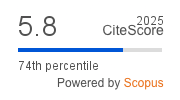
CiteScore best quartile: Q1
Source Normalized Impact per Paper (SNIP): 0.701
AI-Driven Forecasting of Hydrogen and Aluminium Hydroxide Production from Aluminium Slag in Saudi Arabia
Journal of Sustainable Development of Energy, Water and Environment Systems
Volume 14, Issue 4, December 2026, 1140743
DOI: https://doi.org/10.13044/j.sdewes.d14.0743
 , Mohamed Mahmoud2, Mian M Shaukat1
2 Polytechnic University of Milan, Milan, Italy
Abstract
The rapid growth of aluminium production in Saudi Arabia has led to proportionally greater amounts of industrial waste, presenting both environmental risks and opportunities for resource recovery. The hydrolysis of waste aluminium slag through seawater to create green hydrogen along with aluminium hydroxide is presented in this work as a potential to improve waste management through the conversion of aluminium waste into marketable products, thereby reducing greenhouse gas emissions and creating financial opportunities that promote sustainable resource management and green energy solutions, supporting the kingdom’s Vision 2030 energy transition plans. This case study utilises the XGBoost machine learning algorithm to forecast aluminium production growth in Saudi Arabia and to estimate future availability of aluminium slag, as well as hydrogen and aluminium hydroxide production. Economic growth and industrial demand served as the basis for these estimates. The model achieved a Mean Absolute Percentage Error of 6.9%, and analysis shows that aluminium production is projected to increase from 784.88 kilotonnes in 2025 to 1,058.42 kilotonnes in 2041, with slag generation rising from 156.98 to 211.68 kilotonnes and enabling up to 6.83 million kilograms of green hydrogen and 176.2 kilotonnes of aluminium hydroxide annually by 2041. The economic analysis indicated that the process relies strongly on the dual-value stream generated by hydrogen and aluminium hydroxide, supporting the commercial attractiveness of aluminium slag valorisation. The economic viability, carbon-mitigation benefits, and industrial-growth potential of this approach contribute to sustainable energy research by integrating AI-driven forecasting with circular waste-to-hydrogen valorisation to decarbonise the aluminium sector in the region.

Total views: 186 | Total downloads: 58


