


The extraction and burning of fossil fuels are two of the primary drivers of global warming and climate change [1]. Wind turbines (WT) can reduce the negative environmental impacts of conventional fossil fuels by offering a cleaner alternative [2]. Therefore, one of the most significant strategies to decarbonize the energy sector and reach carbon neutrality is to switch to renewable sources, where wind energy plays a prominent role. Furthermore, the price of wind energy has decreased, making it often more affordable than fossil fuels [3]. As a result, wind power has increased dramatically in recent years and is currently one of the renewable energy sources with the fastest rate of growth in the world [4]. The Global Wind Energy Council (GWEC) report states that by the end of 2022, the world's wind power capacity had increased to 906 GW [5]. By 2030, the wind energy market is anticipated to grow to a value of 102.4 billion USD worldwide [6]. According to European Commission wind energy is predicted to be the largest electricity generation source in the European Union (EU) as early as 2027. It is predicted that about half of Europe's electricity could come from wind energy [7]. This transition is closely aligned with global sustainability agendas, particularly the United Nations Sustainable Development Goals, where wind energy directly supports SDG 7 (Affordable and Clean Energy) by increasing the share of renewable energy in the global energy mix [8]. However, when WT components reach the end of their operational lives, they produce a substantial amount of waste. According to a study, most WT in the world are nearing the end of their serviceable lives, and by 2050, about 43 million tons of End-of-Life (EoL) WT blades waste will be produced, of which 40% will come from China, 25% from Europe, 16% from the United States (US), and 19% from the rest of the world [9].
The issue of how to handle decommissioned components has become essential as more WTs near the end of their useful lives. In response, the circular economy (CE) concept has been proposed as a means of fundamentally rethinking WT system design, construction, use, and decommissioning. A CE aims to "design out waste and pollution, keep products and materials in use, and regenerate natural systems," according to the Ellen MacArthur Foundation (EMF) [10]. Instead of concentrating only on recycling or waste management, this point of view indicates upstream tactics like eco-design, product longevity, reuse, and regenerative processes. In order to categorize CE solutions based on their impact, Scholars have developed hierarchical frameworks called R-ladders. Potting et al. formalized a 10-tier R-ladder that includes Refuse, Rethink, Reduce, Reuse, Repair, Refurbish, Remanufacture, Repurpose, Recycle, and Recover Energy are the interventions in this hierarchy, which is arranged from lowest to highest effort (in terms of energy and material use) [11]. Kirchherr et al. reaffirmed the conceptual foundation of this hierarchy with a comprehensive review of CE definitions, emphasizing the importance of resource conservation maximizing strategies [12]. Landfilling, which is beyond the R-ladder, is nevertheless a common EoL solution for WT, despite the focus on these strategies [13]. Therefore, the need for a shift to more sustainable, higher-order CE alternatives is made evident by its continuous use, which provides no material recovery and goes beyond the principles of the CE. Additionally, WT construction requires a substantial amount of resources, particularly vital raw materials like Rare Earth Elements (REEs) [14]. The circularity of a WT could reduce the need for these raw materials and the environmental impact of extraction and processing by recovering and recycling resources. This is essential for long-term sustainability and risk reduction in the supply chain. However, studies of the CE usually focus on specific components or materials of the WT system rather than adopting a thorough, system-level perspective [15]. As an example, some studies concentrate on recycling WT blades but might overlook the larger system of WT production, use, and EoL [7]. Such an approach can ignore important systemic interdependencies and lead to an inadequate understanding of the difficulties in putting CE into practice.
The effective integration of CE into complex system like WT system requires coordination and alignment at each of these levels. Moreover, the most of current research is on improving energy yields while ignoring thorough environmental impact analyses that take into account material footprints, CO2 reductions, and the sustainable disposal of retired parts [16]. This focus may cause sustainability in general and the CE concepts to be neglected, so all the possible CE strategies need to be considered in literature. To address this gap, this study provides a systematic and exploratory mapping of CE strategies in WT systems. By combining automated text analysis with manual review, the study examines patterns of thematic attention across circular strategies, materials, components, and environmental impact indicators. The objective is not to establish causal relationships, but to provide a structured overview of research trends and to identify gaps that may inform future research, policy development, and industry practices. The study is structured based on the following research questions:
1: Which CE strategies dominate the WT literature?
2: Which WT components and materials are most frequently studied in the context of CE strategies?
3: What environmental impact indicators are most commonly assessed in relation to CE in WT systems?
4: What are the trends and gaps in the current literature regarding a holistic implementation of CE strategies across the WT lifecycle?
To ensure a systematic approach to the literature mapping, the following steps are proposed: collecting candidate articles, filtering by circularity and wind energy content, counting frequency of topics in article and correlating topics and an extensive manual review. This is achieved as follows:
A systematic literature dataset was compiled to analyse the application of circular economy strategies in WT systems. The primary sources of research articles were ScienceDirect [17], MDPI [18], and the Wind Energy journal (Wiley Online Library) [19]. These sources were selected to ensure a balanced representation of multidisciplinary research (ScienceDirect), open-access publications (MDPI), and domain-specific studies focused on wind energy systems (Wind Energy journal). Access was obtained through an institutional subscription, allowing inclusion of both open-access and subscription-based articles.
The following keywords were used to find results for each of these sources: “Circular economy of wind energy,” “Circular economy of wind parks,” and “Circular economy of wind turbines”. Since retrieving articles without a limit would result in an unmanageable amount of data, an upper limit was set. After this limit, the quality and relevance of the remaining results declined. For ‘ScienceDirect’ and ‘MDPI’ the first 100 results are considered. While for ‘Wiley (Wind Energy), the newest 200 articles were considered. For the Wind Energy journal, no distinction was made between the terms “wind energy”, “wind farms” and “wind turbines”, as these topics inherently fall within the scope of the journal.
Although the aim is to obtain the first 100 suggestions, not all of them were downloadable, hence Table 1 shows the total number of articles downloaded. Each article is manually stored as PDF. Finally, the number of articles obtained were 283 from Science Direct, 60 from MDPI, and 197 from Wiley (Wind Energy) [20].
Database |
Search Keywords (Number of Article) |
||
|---|---|---|---|
Circular economy of wind energy |
Circular economy of wind parks |
Circular economy of wind turbines |
|
ScienceDirect |
96 |
94 |
93 |
MDPI |
34 |
0 |
24 |
Wiley (Wind Energy) |
197 |
A first filtering step was applied following duplicate removal, based on the occurrence of the terms “circular economy” and “wind turbine”. This step was intended only to exclude clearly unrelated articles; therefore, a low threshold of 0.5 occurrences per 10,000 words (dimensionless) was adopted. The counting process was performed automatically using Python. Each article was processed as text, with special characters removed and all text converted to lowercase, following a text-processing approach similar to that described previously [21]. Images and non-textual elements were not included in the analysis. To account for differences in document length, all results are reported as occurrences per 10,000 words. In this process images are not recognized. Results are presented per 10,000 words to normalize different length texts.
Four main groups are identified for comparison. CE strategies, environmental impacts, WT components and Materials. To ensure that verbs can be found in all their conjugations, they were stemmed (taken to their basic root). This is represented by an “*”, where taking refus* as example, it would include refuse, refused or refusing. Finally, words considered per group are:
CE strategies/Re-principles: refus*, rethink*, reduc*, repair*, reus*, refurbish*, remanufactur*, repurpose*, recover*, recycl*, restor*/regenerat*, remin* [22].
Environmental: based on DIN EN 15804 [23] the following adapted concepts are used: global warming, ozone depletion, particulate matter, acidification, eutrophication, photochemical ozone, ionizing radiation, abiotic depletion, resource depletion, water deprivation, ecotoxicity, human toxicity, land use [24].
WT components: blade, tower, nacelle, generator, cable, foundation, gearbox [25].
Materials: concrete, metal, copper, glass fib*, plastic, steel, permanent magnet, composite, fibre-reinforced plastic, thermoplastic, carbon fibre, rare earth [25].
No filtering was applied in the frequency and correlation analysis; however, the same counting approach defined in the exclusion criteria was consistently applied to all articles. The resulting dataset is structured as a matrix in which each row represents an article and each column represents an indicator. Each cell contains the frequency of that indicator within the corresponding article. Pearson correlation was used to assess relationships between indicators based on their frequency distributions. To evaluate the robustness of the analysis, additional non-parametric methods (Spearman and Kendall) were also tested, showing consistent trends. Although not all statistical assumptions are fully satisfied, Pearson correlation was retained due to the continuous nature of the normalized frequency data and its interpretability for co-occurrence patterns. A correlation matrix was constructed using the frequencies of all indicators, and statistical significance is reported using p-values. For clarity, p-values of 0.05, 0.01, and 0.001 are denoted by *, **, and ***, respectively. Only absolute correlations are analysed, and comparisons are presented between two groups at a time.
Finally, main steps of the article processing are shown in Figure 1. After counting word frequency and filtering out unrelated articles based on predefined thresholds, a total of 76 articles were selected for detailed analysis as shown in Figure 2.
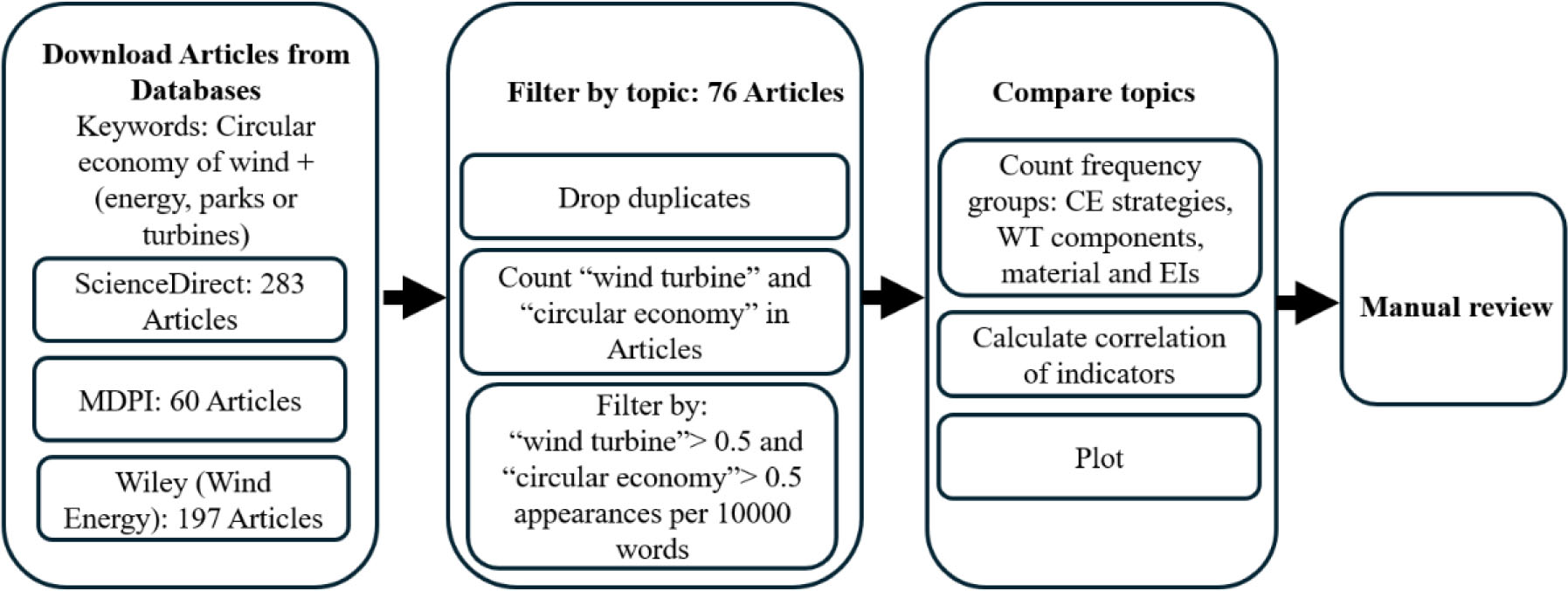
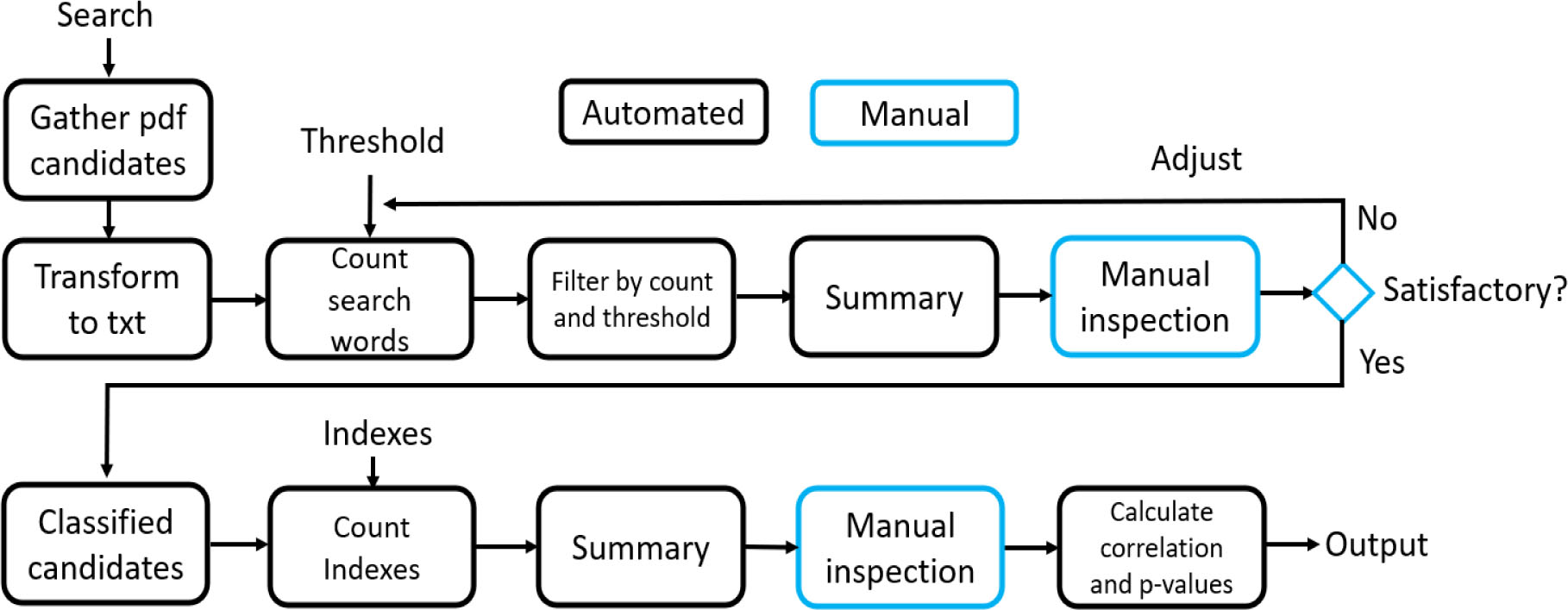
An example of article filtering is the article by Peter Majewski et al., obtained from ScienceDirect – Renewable and Sustainable Energy Reviews [26]. The article contains 8,822 words and 52,537 characters. The term “wind-turbine” appears with a normalized frequency of 23.03 occurrences per 10,000 words, while “circular economy” appears 1.33 times per 10,000 words. As both frequencies exceed the threshold of 0.5, the article is retained for further analysis.
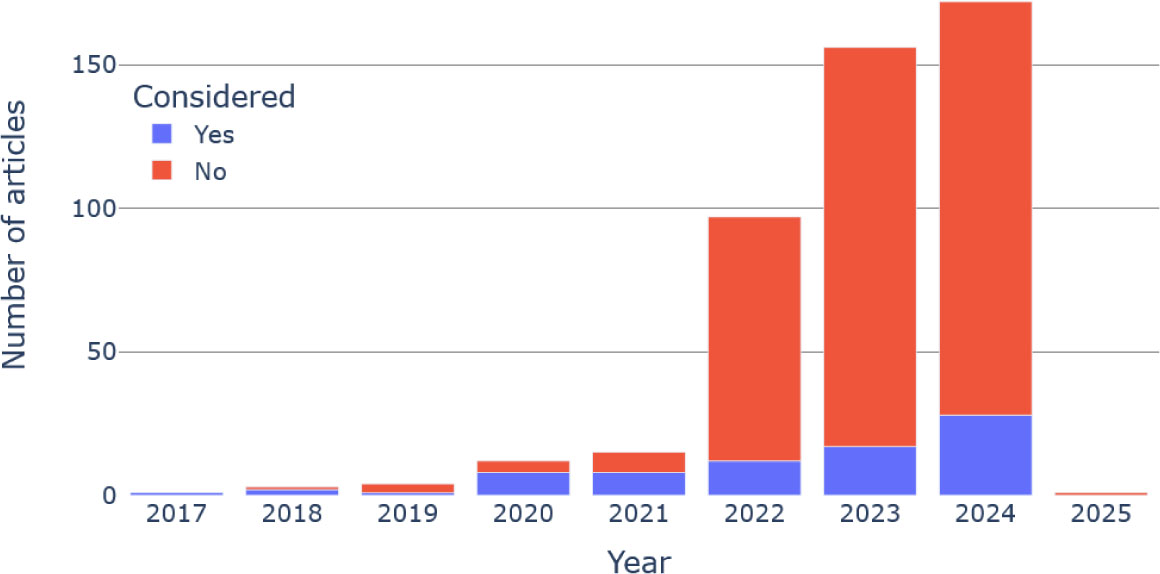
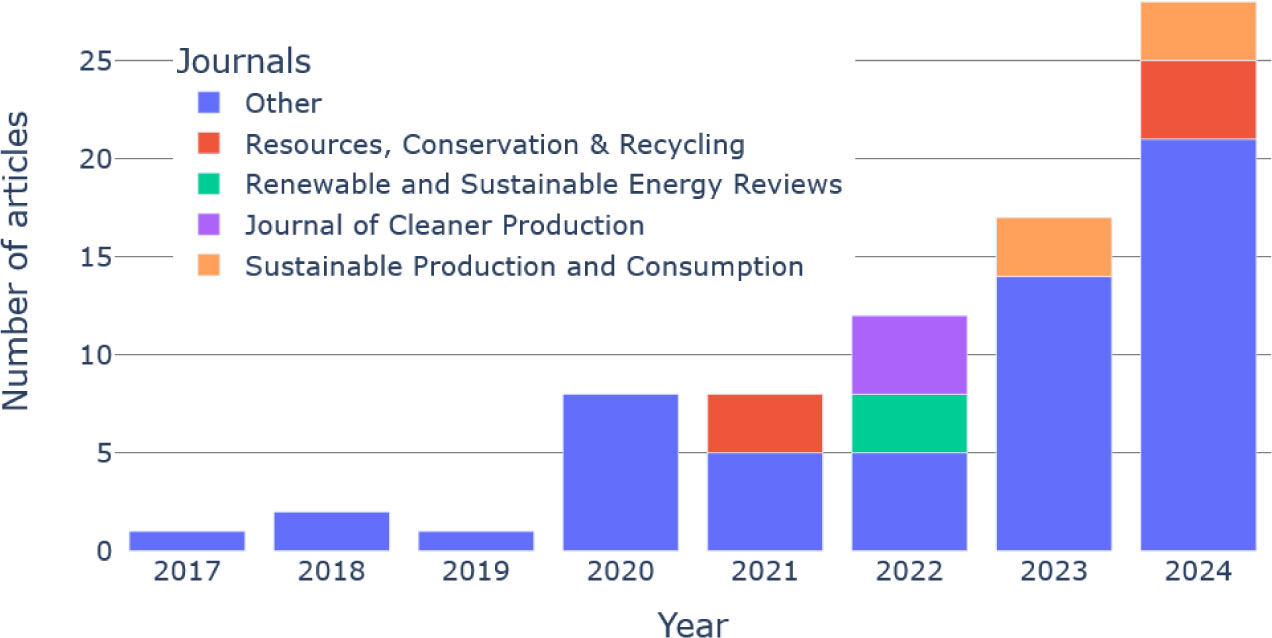
All articles were checked to ensure correct processing by the code. This was done by examining the presence of special characters, used as a proxy for corrupted text, in relation to alphanumeric characters and standard punctuation. These occurred at an average rate of 0.51%, with a maximum of 4%, indicating that the files can be considered readable. Despite applying a low acceptance threshold, only 14% of the initial candidate articles were retained for analysis. The automated filtering process reduced the dataset from the total number of unprocessed candidates to 77 articles. Following this step, one additional duplicate article was manually identified and removed. Proportion of considered articles per year of publication are shown in Figure 3.
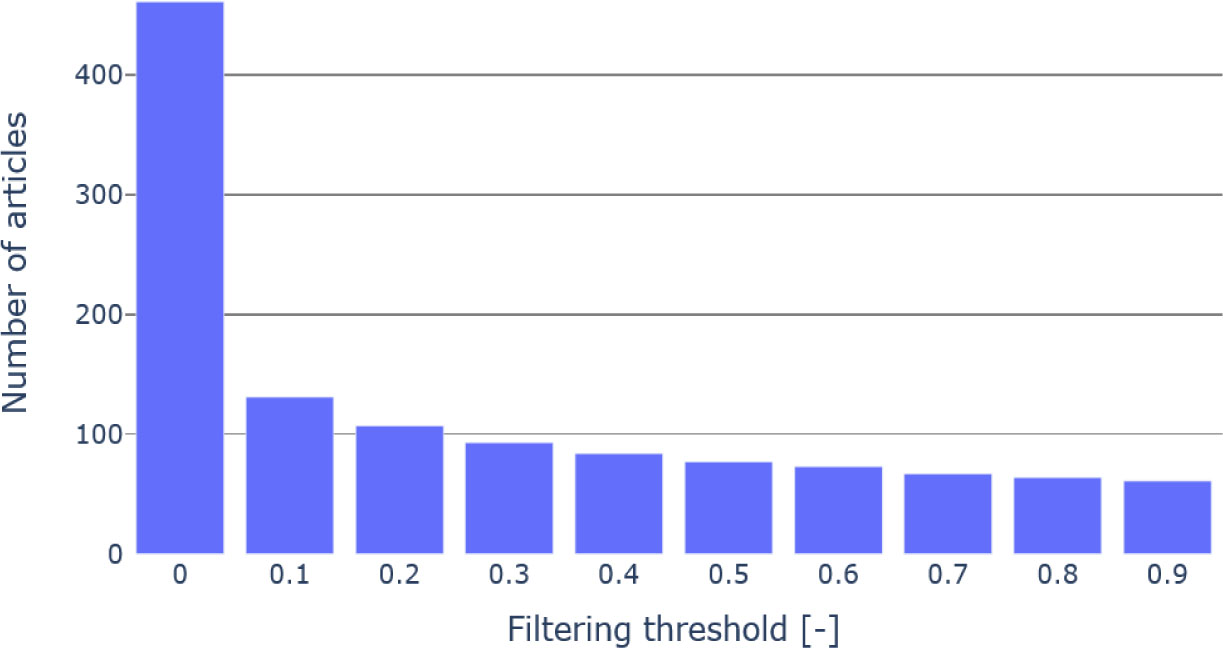
The relationship between the number of retained articles and the filtering threshold was analysed in Figure 4. It was observed that, after applying a minimum threshold of 0.1 occurrences per word, the number of articles rapidly decreases to approximately 130, followed by a more gradual decline to around 60 at a threshold of 1. This trend indicates that the application of a filtering threshold is effective in removing unrelated articles. Furthermore, selecting a threshold around 0.5 represents a fine-tuning step and does not significantly influence the overall results. 35 journals were sources for articles. The 4 most common journals by year are shown in Figure 5. This shows a low concentration of source types diminishing thematical bias.
In addition to the automated keyword-based analysis, a manual review of the selected articles was conducted to support the interpretation of the results and to ensure consistency with the observed research trends. This review focused on identifying the main themes, application areas, and CE strategies discussed in the literature. To ensure that recent developments are reflected, the manual review was complemented by targeted screening of recent publications (2023–2026). These studies were also identified through additional searches using relevant keywords in academic databases, including Scopus, and were used to validate whether the patterns observed in the analysed dataset remain consistent with current research trends.
The analysis considers both frequency and correlation across the defined topic groups. The results include the analysis of sustainability indicators, followed by the correlation between CE strategies and WT components, as well as between CE strategies and WT materials. As environmental impact categories are less quoted than other groups, they are presented separately. Finally, thematic classification of literature is also identified manually.
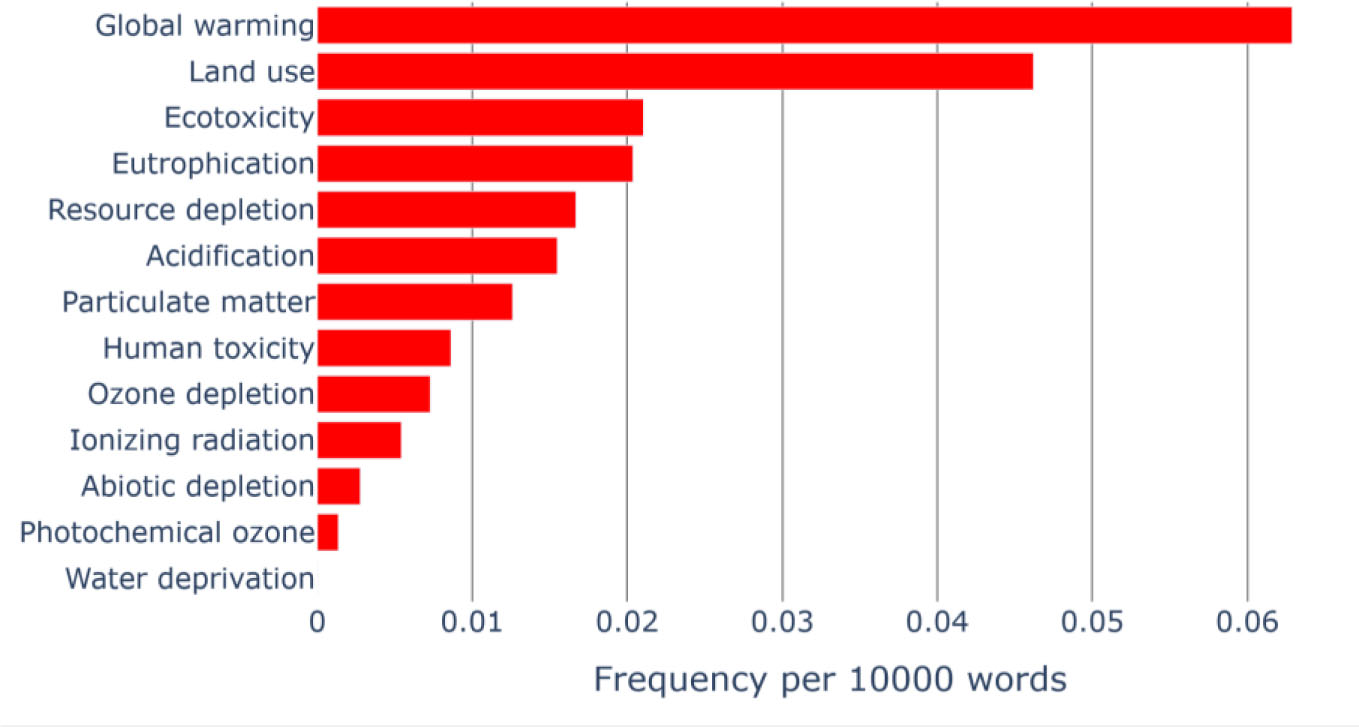
The average environmental impact category frequency is shown in Figure 6. It clearly indicates the most frequent impact categories are global warming and land use, as only these two accounting for 50% of all appearances. Adoption of wind energy is primarily driven by the pressing need to reduce global warming and decarbonize the energy system, which makes ‘global warming’ as most discussed indicator [27].
Land use changes noticeably as a result of the physical footprint of wind energy infrastructure, which includes wind farms, turbines, access roads, and transmission lines [28]. These impacts on habitats, ecosystems, and potential land use conflicts make 'land use' a readily apparent and frequently assessed indicator. The scope of many current sustainability assessments, especially Life Cycle Assessments (LCA), could be restricted to particular impact categories or life cycle stages [28]. This can result in a more comprehensive assessment of the effects of land use and global warming while ignoring other important environmental factors including toxicity, water consumption, resource depletion (apart from fossil fuels), and biodiversity effects. It can be difficult and resource-intensive to obtain accurate and comprehensive data on many different types of environmental indicators during the lifespan of a WT's life cycle [28].
Beyond land use and climate change, quantifying consequences frequently calls for more sophisticated approaches and data that may not always be easily accessible or published. Historically, wind energy assessments have concentrated on the efficiency of generation of electricity and the mitigation of carbon emissions while in operation [9]. This emphasis, although important, might have overshadowed an in-depth examination of other environmental costs related to the sourcing of materials, production, and EoL management.
The comparison between CE strategies and WT components is presented in Figure 7. In the figure, the intensity of the bubble colour represents the frequency of word occurrence, while the intensity of the connecting lines indicates the strength of correlation between terms. The full correlation matrix and corresponding p-values are provided in the Appendix. The results show blade show the highest frequency (8.26) among WT components, followed by foundation (0.45), tower (0.38), generator (0.31), and cable (0.30), while nacelle (0.13) and gearbox (0.14) appear less frequently. The high frequency of blades is significantly correlated (0.16***) with recycling (9.7), indicating an existing predominant focus on blades and recycling, while limited occurrences of other strategies like reuse (2.7), recover (2.7), reduce (1.9) reveal insufficient emphasis on broad CE strategies. These findings are consistent with studies, which continue to highlight blade-related challenges and recycling approaches as the dominant focus of research in WT systems [29].
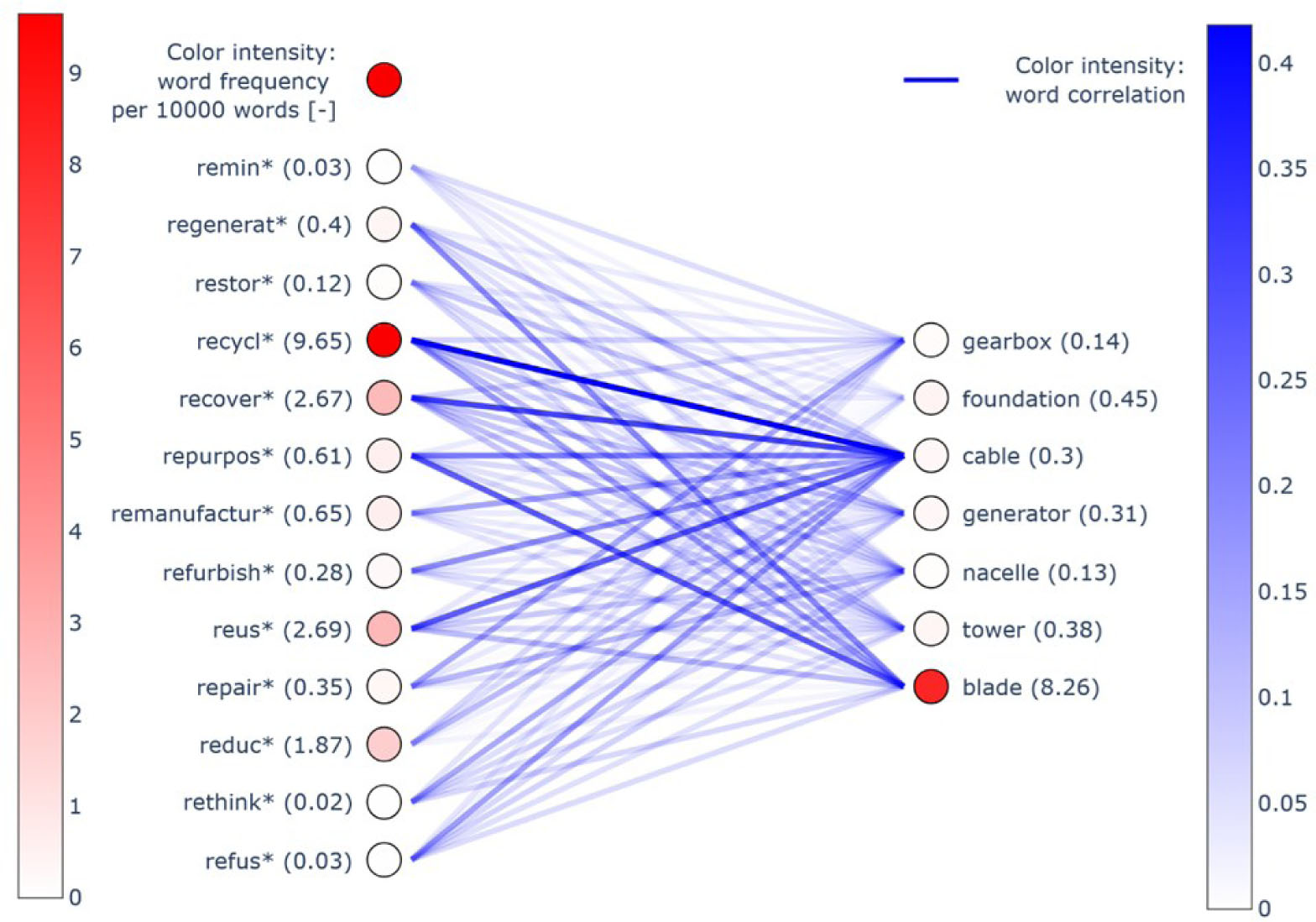
Although recycling and blade the most frequently mentioned, they present a lower correlation (0.16***) than blade with repurposing (0.27***). This may reflect growing interest in alternative EoL approaches. Studies also indicate increasing attention to repurposing strategies as a practical solution for managing EoL WT blades [30]. Other components, including tower, nacelle, generator, foundation, and gearbox, show generally weak or insignificant correlations with most CE strategies. A few moderate correlations are observed, such as repair with gearbox (0.14**) and repair with nacelle (0.12*), but these remain limited compared to blade-related associations.
Frequency and correlation of words in groups WT components and materials is shown in Figure 8. Among materials, composite materials have the highest frequency (4.44), followed by metal (1.34), plastic (1.07), glass fibre (0.89), concrete (0.79), steel (0.73), and carbon fibre (0.61).
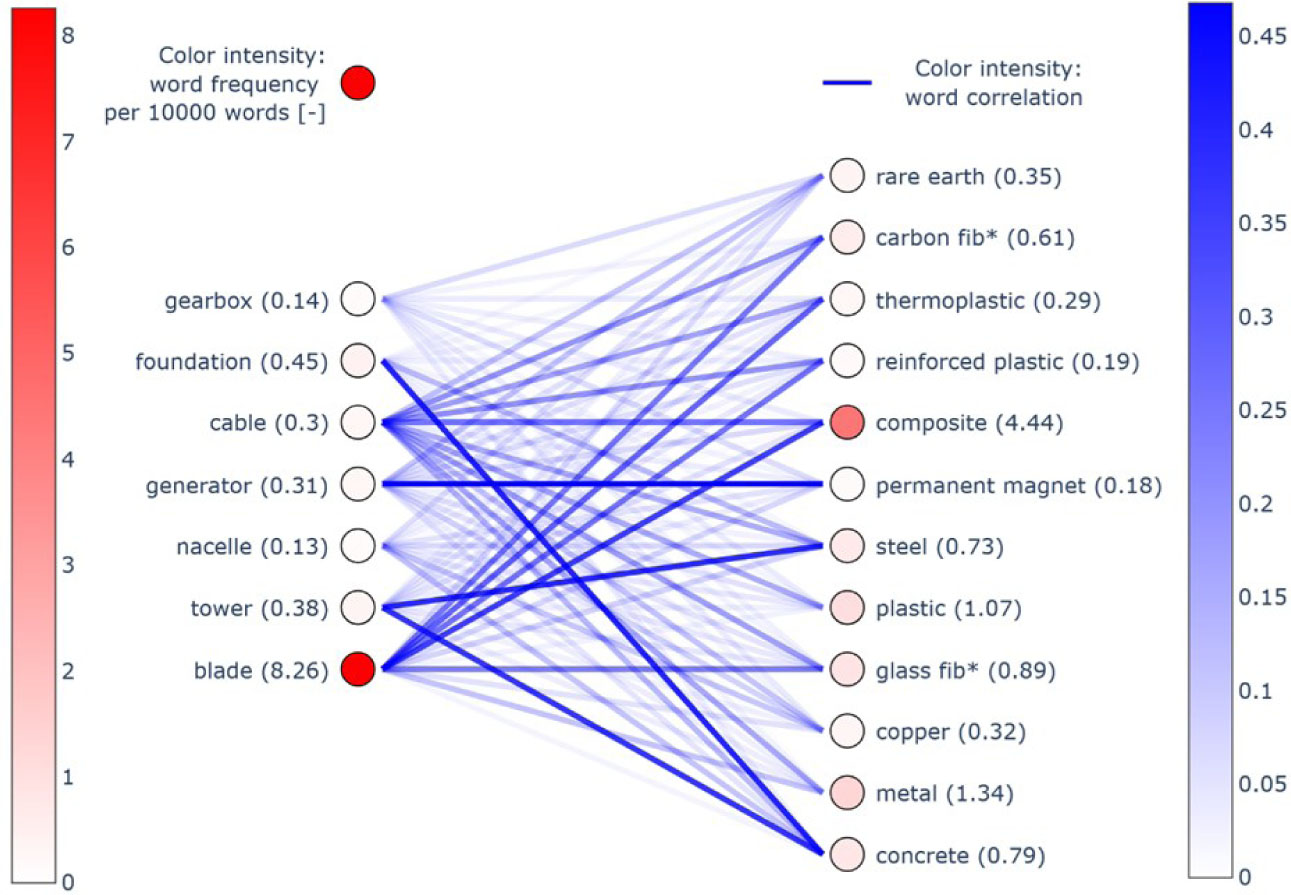
The strongest positive correlations are observed between specific component–material pairs. Blades show strong correlations with composite materials (0.35***), thermoplastics (0.28***), carbon fibre (0.25***), reinforced plastics (0.26***), and glass fibre (0.24***). Structural components also show clear associations, with tower–steel (0.39***) and foundation–concrete (0.40***) representing the highest correlations in these groups.
For electrical components, the strongest relationship is observed between generator and permanent magnets (0.47***). In contrast, components such as nacelle and gearbox show generally weak correlations across most materials. Plastics and polymers are also identified across several components, although their frequency remains lower compared to composites.
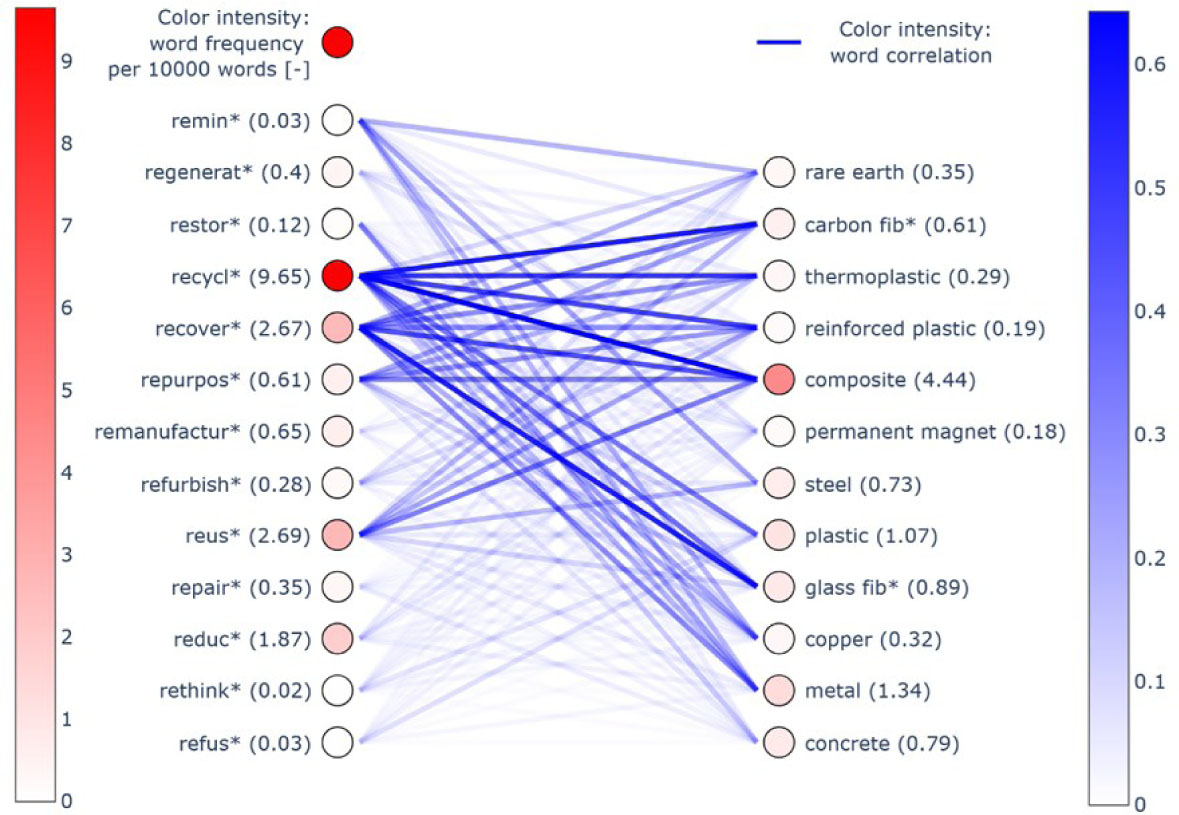
Frequency and correlation of words in groups CE strategies and materials is shown in Figure 9. For CE strategies and materials, recycling presents the highest frequency and a significant correlation to many materials composite (0.64***), thermoplastic (0.51***) and carbon fibre (0.57***), thermoplastics (0.51***), reinforced plastic (0.47***), and glass fibre (0.37***). Additional moderate correlations are observed with plastic (0.33***) and copper (0.22***).
Recovery also shows strong correlations with multiple materials, including glass fibre (0.56***), composite (0.44***), carbon fibre (0.34***), and both thermoplastics and reinforced plastics (0.28***). It is also moderately correlated with metals (0.29***). Reuse and repurposing show moderate correlations with composite-based materials. Reuse is correlated with composite (0.32***), reinforced plastic (0.22***), and steel (0.17***), while repurposing shows correlations with composite (0.32***), reinforced plastic (0.25***), thermoplastics (0.19***), and carbon fibre (0.22***).
Other strategies, including reduce, repair, refurbishment, remanufacturing show limited or negligible correlations across most materials and are not strongly represented in the observed patterns. Among materials, composite-based materials (composite, reinforced plastic, thermoplastics, and carbon fibre) show the highest and most consistent correlations across CE strategies, while other materials display weaker or less frequent associations.
To assess the thematic focus on the most relevant articles, 76 filtered articles were manually classified into environmental, technological, economic, and social themes. Frequency by simultaneous themes is visualized in Figure 10.
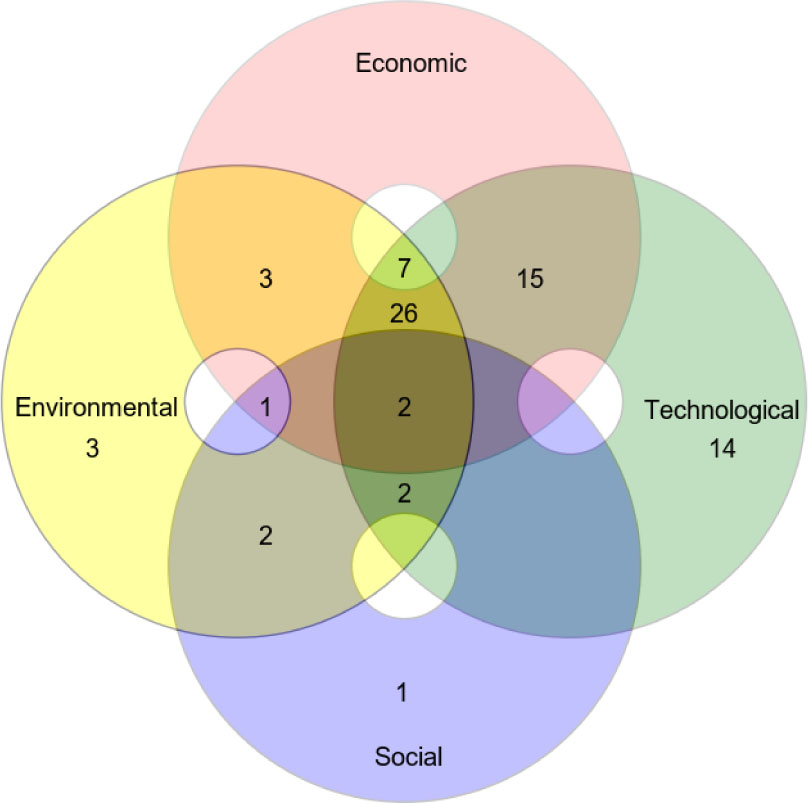
The predominant thematic focus is the techno-economic-environmental approach, comprising 26 articles, followed by the techno-economic theme with 15 articles and the technological theme with 14 articles. Social aspects were the least represented, with only one article focusing exclusively on social themes and four articles exploring social aspects in combination with other themes. Only two articles covered all four themes reflecting a limited exploration of fully integrated perspectives at any level. Although techno-economical-environmental approach is the largest groups, this result highlights a technocentric research bias as 84% of the articles has full or combined technological thematic focus. The literature also highlights the need for a more comprehensive strategy that incorporates environmental, social, and economic factors throughout the life cycle [31].
The results of this study provide a structured overview of how CE concepts are currently addressed within WT research. The following sections discuss these patterns in more detail and examine their implications for advancing CE implementation in WT systems.
The current state of the art for the CE in WT is receiving a lot of attention, but it still faces numerous obstacles as the industry expands and the first generation of turbines nears the end of its operational lifespan [31]. With increasing turbine capacity, the length and mass of WTBs are also increasing. For example, the average blade weight for small WTs (less than 1 MW) is approximately 8.43 tonnes per MW, but the range for medium-sized turbines is 12.37 to 13.41 tonnes per MW. However, The blade mass of large turbines decreases with increasing rated power [27]. EoL WTB waste is expected to rise in the decades to come because of the growing number and scale of WTs being installed worldwide. Resource recovery faces both a difficulty and an opportunity as a result of this growing waste volume. The recycling of WTBs is a key challenge as recycling composites materials is complex compared to other turbine components. Composite materials, particularly Glass Fiber Reinforced Polymer (GFRP) and increasingly Carbon Fiber Reinforced Polymer (CFRP), are the main component of WT blades [32]. Currently mechanical, chemical (solvolysis) and thermal (pyrolysis) recycling technologies are being explored for these composites [33]. However, current recycling technologies for WTBs are still in the early stages with limited commercial applications [27]. In mechanical recycling, the blades are ground or shredded to extract fibres and fillers that can be utilized in lower-value applications [34]. Nevertheless, the resulting products are often low value [27]. Solvents are used in chemical recycling (solvolysis) to recover the fibres by dissolving the polymer matrix [35]. Currently, research is being carried out concerning the manufacturing of CFRP using low-temperature solvolysis [36]. In order to break down the resin and recover the fibres, thermal recycling, also known as pyrolysis, requires heating the composite material without oxygen. To optimize this procedure for sustainable, high-quality fibre recovery, research is still being conducted [9]. In pyrolysis process, microwave intensification is also being investigated [37]. There is ongoing research and development focused on creating 100% recyclable composite WT blades utilizing thermoplastic polymers, with projects such as ZEBRA working toward this objective [13]. In addition, Siemens Gamesa developed a recyclable blade made of thermoplastic epoxy resin [27]. There is also growing interest in repurposing WT blades for new uses outside of energy production, such as playgrounds, urban furniture, and bridge and housing construction [13]. The reduce strategies involves employing lighter, alternative materials, optimizing structures, and constructing turbines and blades with less material [27].
Metals (Steel, Iron, Copper, Aluminium, REEs) are found in various parts of the WT (tower, nacelle, generator, foundation) [16]. Generally, metals are highly recyclable, with established recycling practices and high recovery rates for steel, iron, copper, and aluminium [38]. For example, Vestas, a Danish WT manufacturer, recycles about 85% of its components, including copper, aluminium, steel, and cast iron, using manual metal dismantling machines [27]. However, dissipation during recycling and contamination (e.g., copper in steel) can lead to downcycling [39]. For example, one study found out the current recycling rates for steel, copper, and aluminium are around 44%, 45%, and 60%, respectively [40]. Remanufacturing is a commonly used method for metal recovery and reuse. Higher metal recovery rates from EoL products can offer a beneficial source of raw materials for remanufactured goods, which might reduce concerns about shortages and price fluctuation of some metals [39]. The inefficient collection and processing of metallic EoL products, as well as the inexpensive, readily available supply of some metal reserves, exacerbate the complex issue of improving metal recovery rates [41]. REEs, utilized in permanent magnets of direct-drive generators, have supply risk and low recycling rates [42].
The recovered elements, particularly glass fibres, can be utilized in concrete and cementitious compositions [43]. Moreover, Research is being done on reinforcing 3D printed specimens with recycled fibres from WT waste [44]. Due to material and legislative limitations as well as a lack of sustainable management techniques, currently most of this waste ends up in landfills [45]. Among current EoL management options, landfills are the most common with up to 85% of WTB ending up in landfills [27], followed by incineration (with or without energy recovery) and, few applications of co-processing in a cement kiln [46]. However, there are concerns to the environment and human health when WTBs are landfilled or incinerated [13]. In some places, initiatives are being made to co-process fibre reinforced plastic (FRP) waste in cement kilns so that it can be utilized as an alternative fuel. For instance, Veolia recycles WTBs for use in the cement industry [46].
A key tool for estimating the possible environmental impact of WT systems and technology is LCA. It helps in analysing the waste production and resource consumption during the WT lifecycle. Despite the widespread use of LCA, some research notes that the environmental effects of recycling procedures themselves are not usually fully analysed, which could limit the overall perspective [16]. When LCA is combined with other evaluation techniques, such Data Envelopment Analysis (DEA), it can offer a more comprehensive assessment of the sustainability and efficiency of various EoL scenarios [16]. In order to forecast future waste streams and identify potential for resource recovery, material flow analysis (MFA), is used to monitor the amounts of materials consumed in WTs. For example, MFA studies have been carried out in countries like Germany, Sweden, and the UK to investigate the present and projected amounts of waste from WTs, as well as the building materials like steel, concrete, and composite blades [42]. These studies can also evaluate the possibility of secondary supply through recycling and identify reliance on REEs, such as neodymium used in permanent magnets. Performance-weighted abiotic Resource Depletion (PwRD) is a proposed metric that facilitates direct comparison of various products and indicates activities for a CE by taking into account a product's function (durability and efficiency) to justify its resource usage. Concerns about the supply risk of materials like neodymium, which is essential for some WTs permanent magnets, are also quantified by the PwRD measure, which also suggests appropriate steps to promote a CE. According to a case study that used PwRD to examine neodymium in US WTs, the amount of neodymium needed from a CE aspect may not be justified by the electrical energy generated [47]. However, in countries like the Philippines and Pakistan where per capita electricity consumption is lower, the same amount of neodymium can be acceptable, indicating that demand for the its purpose is a crucial factor in deciding sustainable resource use [48].
The installed wind capacity, policy frameworks, technology advancements, and market conditions are some of the factors that affect the state of the art in applying CE concepts to WTs, which differs by location [7]. The EU promotes the CE, with the wind industry playing a major role in the shift. WindEurope has played a significant role in drawing attention to the issues and promoting fixes to improve the circularity of WTB [49]. Research has focused on projecting the availability of waste materials for WTBs at the regional level in Europe until 2050, making a distinction between onshore and offshore turbines. It indicates that Europe's wind power capacity will reach 450 GW by 2050, and that 325,000 t of blade waste will be produced annually. According to findings, for a few chosen countries, Germany will have the most blade waste material from onshore wind by 2050, while the UK will have the most from offshore wind [50]. Research has been done on the designing of reverse supply networks for WTB CE approaches in Europe. The study take into account the infrastructure and logistics required for recycling, remanufacturing, and reuse throughout the continent [51]. It has been recognized that the rate of wind farm decommissioning in Europe is currently lower than anticipated, indicating that EoL decisions are influenced by factors other than the anticipated lifetime. In the European context, life extension and repowering are important factors that are driven by regulatory and policy factors that aim to decarbonize the energy sector [52]. According to a study on circularity in Germany, reusing parts or repowering has the largest impact on raising the existing low circularity index (CI) of WT [53]. The European wind sector is trying to create circular wind hubs for data and information exchange [7]. Similar to the EU, blade waste generation is a major concern in the US, according to forecasts from the National Renewable Energy Laboratory (NREL) [27]. Material amounts, prices, and EoL possibilities are the subjects of ongoing research [4]. In the US, the average capacity of recently installed WTs is rising, which will affect the amount of blade waste produced in the future [27]. In order to analyse WTB circularity, the LCA and Visualization Framework (CELAVI) has been implemented in several US states, including Texas [54], Iowa, Missouri, Nebraska, and Kansas [55]. This model helps in evaluating environmental effects and visualizing material movements. A Study predicting the environmental effects of WTB waste have also been conducted in Canada [56]. The rapid expansion of WT in China installations have resulted in rising EoL volumes, making efficient waste management and recycling plans necessary. Research is simulating scenarios for waste generation and management [57]. Research shows that China's current strategies for recycling material from WTBs are yet to be effective [58].
There is an inconsistency between the focus of present research and the comprehensive vision of a truly circular system when comparing the developments in the literature on WT and the desired scope of CE methods. Previously mentioned current literature trends indicate a strong emphasis on "recycling" as the main CE method for WT, especially when it comes to tackling the problem of composite blade waste However, the "R-ladder" concept indicates that the ideal scope of CE strategies prioritizes other strategies above the hierarchy before recycling [12]. Therefore, alternative strategies such as reuse and repurposing should be further explored. According to the waste hierarchy, reusing entire turbines or key components is preferable to recycling [59]. This involves repowering older wind farms with newer models, which may result in the reuse of older turbines in secondary markets, typically in another country [52]. However, due to technological constraints (size, power, etc.), not all reusable components could be used in wind farms, and the second-life markets that are currently available only deal with small WTs [7]. However, reuse is applied in different ways across the literature. Conceptual reuse often called repurposing typically refers to non-structural applications of blade materials, such as urban furniture, playgrounds, or architectural elements [60]. In contrast, structural reuse involves the integration of blade sections into load-bearing civil infrastructure, including bridges or building components, where mechanical performance becomes critical [61]. A third category, industrial remanufacturing, focuses on recovering components or materials for reintroduction into industrial processes, although this approach remains limited for composite blade systems [60].
Despite studies examines the structural elements of WT towers, such as fatigue damage, steel and concrete materials, and innovative designs like concrete-filled steel tubular lattice towers, the sources do not go into much depth about EoL management and CE strategies of the tower structures. This covers aspects like dismantle, the possibility of reusing it in different structures or in new WT, and specific recycling processes for the significant quantities of concrete or steel being used. One study briefly mentions the potential reuse of steel components in repowering scenarios but does not elaborate specifically on towers [53]. Another study discusses partial repowering where the existing tower and foundation are reused, extending their lifespan, but this is more about extending the life within a wind farm context rather than reuse in a different application after full decommissioning [38].One way to implement the reduce strategies would be to minimize material use in the first place by using innovative materials and efficient design. Although the use of lighter materials, such as carbon fibre, is noted, design solutions that are especially intended to reduce WT overall material consumption from a CE perspective are not often highlighted in the literature [9]. The reuse strategies could be used to prolong the life of entire turbines or significant parts by repowering, using them in secondary markets, or continued operation [52]. While repowering is covered, recycling seems to receive more attention in the literature than a thorough examination of how to enable the reuse of entire turbines or significant components [62]. Although these topics are discussed in the literature, frequently in relation to lifetime extension, studies that specifically focus on optimizing design and infrastructure for repair and refurbishment from a CE perspective appear to be less common than those that concentrate on recycling. Remanufacturing strategies are able to redeem components to their initial performance requirements so they can be used again. A specific example of a circular business model in remanufacturing is Siemens Gamesa's OXiris service for gearboxes [7]. However, detailed analyses of technical feasibility, economic viability, and integration of remanufacturing into circular supply chains for WT are not as dominant as recycling research.
Although research and innovation initiatives are mainly focused on improving circularity, it is still uncertain if the wind sector is prepared for a full transition to a sustainable CE. To determine how well companies are now incorporating CE activities into their operations, assessments of circularity readiness are being carried out. According to one study, there is still an extended distance from being ready, since the average total circularity readiness level of the wind technology firms under analysis was 49% [7]. On the other hand, little attention has been paid to comprehending the depth and scope of circularity readiness at the level of enterprises and throughout their value chains. Legislation and policy are essential for promoting the CE in the wind industry. The necessity for a unified regulatory framework throughout Europe is highlighted by the limited regulation of for FRP waste and EoL WTB treatment, as well as the misalignment of national and international laws [45]. For the wind power sector, one important policy intervention under consideration is the adoption of extended producer responsibility (EPR) programs. Producer responsibility initiatives are designed to encourage the recycling of WTBs [60]. Although few studies and report indicate that the wind industry is becoming more prepared and technically feasible for circular solutions, the findings of this study shows that this progress is that most of the research is still technocentric, and research still rarely address full-system circularity, or higher-order CE strategies. The literature on circular business models is limited and concentrates on particular tactics from a micro-level point of view, and current assessments frequently concentrate on individual business models and products while ignoring value chain analysis [7]. Additionally, social factors are not given enough consideration, which hinders to evaluate how well holistic CE is being implemented [63], and limits alignment with broader sustainability goals such as responsible consumption and production and community well-being. This study also finds little evidence of systemic adoption or institutional change like standardized disassembly protocols or integrated CE procurement at the regime level, despite the existence of a few niche-level recyclable blade initiatives. This restricts ability of wind industry to scale circularity. Furthermore, the EU Circular Economy Action Plan (2020) highlights a shift toward design-level interventions, EPR, and material circularity across sectors, including renewable energy [64]. However, the findings here demonstrate that wind energy research is still struggling to keep advances with these policy priorities. Design innovation for circularity in components such as nacelles, generators, and foundations is rarely explored in the literature, despite being essential to the direction of EU policy.
The literature emphasizes continually how important it is to incorporate CE concepts into initial conceptual designs of WT. This requires taking into account how turbines and its components will be managed at the EoL expectancy from the beginning and designing for ease of disassembly, repair, reuse, repurposing, remanufacturing, and recycling. Design for circularity, which includes design for recycling and disassembly, is also considered to be crucial for facilitating EoL processing [13]. According to a study, only a few initiatives currently employ this eco-design approach. The primary objective of these initiatives is to replace traditional materials with recyclable or biobased ones [60]. The materials used have a big influence on environmental impact and recyclability [55]. Alternative materials compared to traditional thermoset composites, like thermoplastic resins and bio-based composites, which provide better recyclability, are being investigated in research [60]. Low or rare earth-free magnets are being developed in part to reduce the usage of critical raw materials like neodymium and dysprosium [42]. By using a modular design approach, WT components may be more easily disassembled, repaired, replaced, and upgraded, increasing their lifespan and making remanufacturing or reuse simpler [65]. It is important to select robust materials that can endure the severe environmental conditions of both onshore and offshore wind farms. This includes materials that are resistant to wear, corrosion, and fatigue [66]. For instance, the application of carbon fibre and glass composites offers superior stiffness and light weight, resulting in a longer lifespan [27]. Additionally, investigating substitute materials with greater durability and less of an adverse effect on the environment, such wood for turbine towers, can help prolong lifespan of the infrastructure [66]. Modvion, a Swedish wood firm, is started producing WT towers out of wood [67]. By designing wind farm infrastructure, especially towers and foundations, to support repowering with larger, newer turbines, it is possible to maximize the use of pre-existing materials and minimize the need for new construction [68].
The results of this study are based on keyword frequency and correlation analysis, which should be interpreted with certain limitations. Word frequency does not directly represent research focus but rather serves as a proxy indicator of the prominence of specific topics within the analysed literature. As such, the presence of a term does not necessarily reflect the depth or importance of its discussion in individual studies.
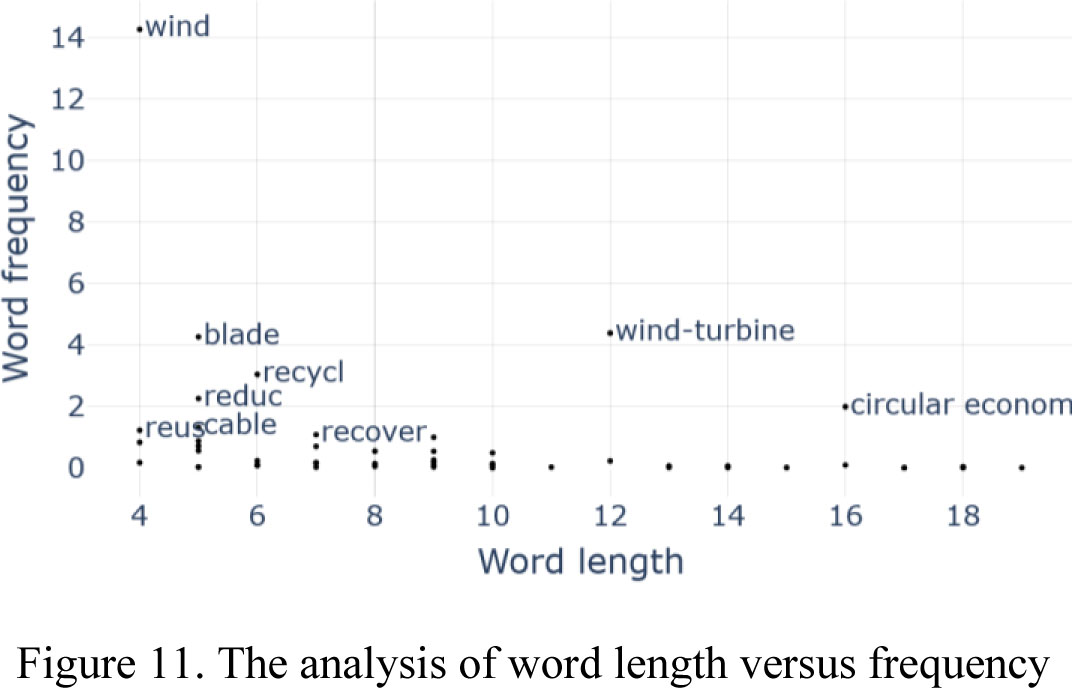
In addition, the use of keyword-based text analysis introduces potential biases related to word structure. Shorter terms may appear more frequently due to their inclusion within longer compound words (e.g., “cycle” in “recycling”), which could lead to inflated frequency counts. However, Figure 11 indicates that this effect is not consistently observed across the dataset. For example, longer terms such as “wind-turbine” and “circular economy” also appear with relatively high frequency, suggesting that word frequency is not solely driven by word length. Furthermore, the correlation analysis identifies statistical associations between terms but does not imply causal relationships. The observed correlations reflect co-occurrence patterns within the literature rather than direct functional or technological linkages.
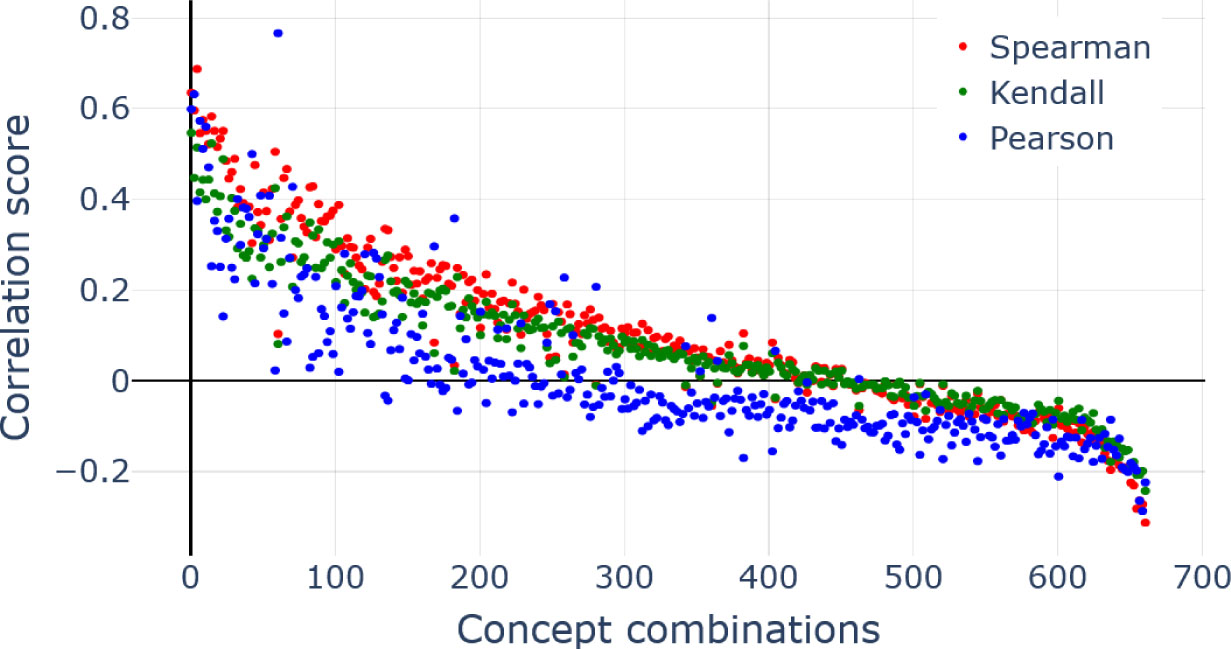
In addition, three correlation measures (Pearson, Spearman, and Kendall) were evaluated to assess the relationships between concept pairs. Although these methods differ in their mathematical formulation, the overall trends observed are consistent across all three approaches, as shown in Figure 12, indicating that the identified relationships are not dependent on a single correlation metric. Pearson correlation is one of the most commonly used measures of similarity in bibliometric and text-based analyses [69]. Although its application has been debated in the methodological literature, particularly regarding its mathematical properties as a similarity measure [70], it has also been shown to provide robust and interpretable results in practice. For example, White [71] demonstrated that Pearson correlation remains a valid approach for mapping relationships between research topics and consistently produces meaningful and interpretable structures. Given its widespread use and suitability for identifying patterns of association, Pearson correlation was considered appropriate for the present analysis. Overall, acknowledging limitations and biases of the automated process, with combined manual process current trends and gaps in literature of CE strategies on WT systems have been identified.
In the future, more effective and economical recycling methods for WTBs CFRP and GFRP are required to enhance sustainability and resource efficiency. This could be achieved by developing practical implementation plans through policy and standardization, effective transportation systems, established recycling supply chains, and economic feasibility studies [27]. In order to achieve 100% WT recyclability, it is necessary to investigate the feasibility of recycling components other than the blades [13]. More research on the possibilities of separating and recycling REEs from WT generators is needed while taking supply chain security and economic feasibility into account. The full resource decoupling and the potential for economic, environmental, and social sustainability of circular business cases and value chains in the wind industry including analysing the trade-offs and dependencies between CBMs and linear models require more investigation [40]. Additionally, continuous monitoring and diagnostics are required in the future to simplify the assessment of WT component reusability and repair needs, allowing companies to quickly and simply assess the value of these initiatives. As the first wave of wind farms nears their EoL, more study should concentrate on the management and decommissioning issues that may arise in European and international contexts. This includes investigating relevant data and lessons learned [52]. More research should be done to examine methods for extending the lifetime, repowering, or decommissioning WTs that are becoming aged [62]. According to one study, offshore wind is seen as a more undeveloped and understudied subject than onshore wind, and the development of circular methods varies by region [72]. This emphasizes the necessity of a more coordinated and integrated effort to promote circularity in the offshore wind industry. Furthermore, It is necessary to develop and implement comprehensive (but practical) sustainability assessment frameworks, instruments, and indicators that take into account the distinctive features of CE for the wind sector [40]. Future work should also focus on the development and integration of social indicators to complement existing techno-economic assessments. This includes evaluating aspects such as local employment generation, public acceptance, and community-level environmental impacts, enabling a more comprehensive assessment of CE implementation in WT systems. Repeating this process in the future and with more article sources would help to obtain a larger sample and thus improve statistical validation.
To bridge identified major gaps, the following calls to action for researchers and policymakers is proposed:
Develop and test design-for-disassembly and reuse protocols for nacelle internals, generators, and electronic components.
Establish EU-wide EPR schemes for WTB and composite waste.
Incorporate broader sustainability metrics (e.g., toxicity, critical raw material dependency, biodiversity impact) into LCA frameworks applied to WT systems.
Establish open-access data platforms for WT lifecycle and EoL tracking.
Support secondary material markets by standardized policies and incentives.
Promote research that integrates social dimensions with economic, technological, and environmental perspectives.
The aim of this study is to systematically analyse the application of CE strategies in wind turbines. A systematic literature search was conducted, in which a total of 540 articles from ScienceDirect, MDPI and the Wind Energy Journal were examined. Using automated text analysis tools, the study identified trends, gaps and correlations in the existing literature, focusing on CE strategies, materials, components and environmental impact indicators relevant to the wind energy sector. The methods used have some limitations and biases, from which the following were identified. Two general sources and one wind specific were considered, with the aim of having a wider research perspective. There may be reading problems with a selected article (coding, special characters), which is considered irrelevant due to the low occurrence of special characters. In addition, neither acronyms nor images are recognized with this search modality. Due to the search method (is the string in the text?), it is possible that words, especially short words or the re-principles, are included as part of a longer word. Although this is possible, only a few examples were found. At the same time, there is always the possibility of bias when selecting keywords. To avoid this, established definitions were used, and other concepts were tried out; if they had a low frequency, they were removed. Additionally, a substantial manual review has been performed to reduce the bias and limitation of the review process. This study has found that global warming and land use currently account for half of the indicators mentioned in environmental impact assessments, while other important aspects like toxicity, water use, and biodiversity are given less consideration in existing studies. Due to methodological and data limitations, assessment tools like LCAs often do not fully capture all environmental impacts. The most often cited CE strategy is recycling, especially for blades due to the challenge associated with composite blade waste. Due to composite materials (GFRP/CFRP), blade recycling is still difficult, which has increased interest in repurposing (such as urban furniture and construction). However, research on repurposing, remanufacturing, and reuse for other WT components (such as nacelle internals, towers, and foundations) is severely lacking. However, research on repurposing, remanufacturing, and reuse for other WT components (such as nacelle internals, towers, and foundations) is severely lacking. While metals (such as copper, aluminium, and steel) are highly recyclable, REEs in permanent magnets have poor recovery rates. Moreover, Carbon fibre recycling and thermoplastic composites are showing promise, but they still face scalability and economic issues. Although concrete and steel from towers and foundations can be recycled, circularity is hindered by logistics and expense. Enhancing material innovation and disassembly design are necessary to increase EoL recoverability. To adhere to the principles of the CE, higher-tier CE techniques (reduce, reuse) should take precedence over recycling. Furthermore, in order to encourage circular WT systems including secondary material markets, standardized policies and incentives need to be created. These results highlight areas for improvement and potential paths for broader adoption including technical, economic, environmental, and social barriers and, consequently, more effective implementation of the CE principles to create wind energy systems that are more sustainable.
- ,
The significance of biomass in a circular economy ,Bioresource Technology , Vol. 300 , 2020, https://doi.org/10.1016/j.biortech.2020.122755 - ,
Wind turbine concepts for domestic wind power generation at low wind quality sites ,Journal of Cleaner Production , Vol. 394 , 2023, https://doi.org/10.1016/j.jclepro.2023.136137 - ,
Wind turbine blade recycling: A review of the recovery and high-value utilization of decommissioned wind turbine blades ,Resources, Conservation and Recycling , Vol. 210 , 2024, https://doi.org/10.1016/j.resconrec.2024.107813 - ,
Wind turbine blade material in the United States: Quantities, costs, and end-of-life options ,Resources, Conservation and Recycling , Vol. 168 , 2021, https://doi.org/10.1016/j.resconrec.2021.105439 - ,
Recovering glass fibers from waste wind turbine blades: Recycling methods, fiber properties, and potential utilization ,Renewable and Sustainable Energy Reviews , Vol. 202 , 2024, https://doi.org/10.1016/j.rser.2024.114690 - ,
Wind turbine vibration management: An integrated analysis of existing solutions, products, and Open-source developments ,Energy Reports , Vol. 11 , :3756-37912024, https://doi.org/10.1016/j.egyr.2024.03.014 - ,
How ready is the wind energy industry for the circular economy? ,Sustainable Production and Consumption , Vol. 43 , :62-762023, https://doi.org/10.1016/j.spc.2023.10.016 - ,
The role of renewable energy transition in achieving carbon neutrality within the SDG framework: challenges, and prospects ,Gondwana Research , Vol. 153 , :236-2522026, https://doi.org/10.1016/j.gr.2025.11.022 - ,
Pursuing the circularity of wind turbine blades: Thermochemical recycling by pyrolysis and recovery of valuable resources ,Journal of Analytical and Applied Pyrolysis , Vol. 181 , 2024, https://doi.org/10.1016/j.jaap.2024.106657 - Towards the Circular Economy Vol. 1: An Economic and Business Rationale for an Accelerated Transition , 2013 (accessed )
- Circular Economy: Measuring Innovation in the Product Chain , 2017Policy Report (accessed )
- ,
Conceptualizing the circular economy: An analysis of 114 definitions ,Resources, Conservation and Recycling , Vol. 127 , :221-2322017, https://doi.org/10.1016/j.resconrec.2017.09.005 - ,
Recycling of wind turbine blades through modern recycling technologies: A road to zero waste ,Renewable Energy Focus , Vol. 44 , :373-3892023, https://doi.org/10.1016/j.ref.2023.02.001 - ,
A bibliometric, social network and clustering analysis for a comprehensive review on end-of-life wind turbines ,Journal of Cleaner Production , Vol. 380 , 2022, https://doi.org/10.1016/j.jclepro.2022.135004 - ,
Regulatory push-pull and technological knowledge dynamics of circular economy innovation ,Technological Forecasting and Social Change , Vol. 196 , 2023, https://doi.org/10.1016/j.techfore.2023.122767 - ,
Integrated LCA and DEA approach for circular economy-driven performance evaluation of wind turbine end-of-life treatment options ,Applied Energy , Vol. 339 , 2023, https://doi.org/10.1016/j.apenergy.2023.120951 - , ScienceDirect.com: Science, Health and Medical Journals, Full Text Articles and Books
- , Journal Finder
- , Wind Energy
- , Wind Energy Circular Economy Papers and Indicators, Zenodo, 2025
- ,
Material Sustainability of Low-Energy Housing Electric Components: A Systematic Literature Review and Outlook ,Sustainability , Vol. 17 (3), 2025, https://doi.org/10.3390/su17030852 - ,
A review of micro level indicators for a circular economy – moving away from the three dimensions of sustainability? ,Journal of Cleaner Production , Vol. 243 , 2020, https://doi.org/10.1016/j.jclepro.2019.118531 - Sustainability of Construction Works – Environmental Product Declarations – Core Rules for the Product Category of Construction Products (in German: Nachhaltigkeit von Bauwerken - Umweltproduktdeklarationen - Grundregeln für die Produktkategorie Bauprodukte) , 2022DIN EN 15804:2022-03
- Recommendations for Life Cycle Impact Assessment in the European Context – Based on Existing Environmental Impact Assessment Models and Factors (International Reference Life Cycle Data System – ILCD Handbook) , 2011EUR 24571 EN
- ,
Selected Environmental Impact Indicators Assessment of Wind Energy in India Using a Life Cycle Assessment ,Energies , Vol. 15 (11), 2022, https://doi.org/10.3390/en15113944 - ,
End-of-life policy considerations for wind turbine blades ,Renewable and Sustainable Energy Reviews , Vol. 164 , 2022, https://doi.org/10.1016/j.rser.2022.112538 - ,
Sustainable transformation of end-of-life wind turbine blades: Advancing clean energy solutions in civil engineering through recycling and upcycling ,Journal of Cleaner Production , Vol. 426 , 2023, https://doi.org/10.1016/j.jclepro.2023.139184 - ,
Sustainability assessment of products - Case study of wind turbine generator types ,Environmental Impact Assessment Review , Vol. 98 , 2023, https://doi.org/10.1016/j.eiar.2022.106943 - ,
Recycling wind turbine blades: A comprehensive review of challenges, solutions, and future directions ,Journal of Building Engineering , Vol. 114 , 2025, https://doi.org/10.1016/j.jobe.2025.114489 - ,
End-of-Life Strategies for Wind Turbines: Blade Recycling, Second-Life Applications, and Circular Economy Integration ,Energies , Vol. 18 (19), 2025, https://doi.org/10.3390/en18195182 - ,
End-of-life wind turbine blades and paths to a circular economy ,Renewable and Sustainable Energy Reviews , Vol. 212 , 2025, https://doi.org/10.1016/j.rser.2025.115418 - ,
Environmental impact and waste recycling technologies for modern wind turbines: An overview ,Waste Manag Res , Vol. 41 (4), :744-7592023, https://doi.org/10.1177/0734242X221135527 - ,
Chemical recycling wind turbine blades for green future ,Renewable and Sustainable Energy Reviews , Vol. 232 , 2026, https://doi.org/10.1016/j.rser.2026.116845 - ,
Energy demand in mechanical recycling of glass fibre reinforced thermoset plastic composites ,Journal of Cleaner Production , Vol. 120 , :198-2062016, https://doi.org/10.1016/j.jclepro.2016.01.070 - ,
State-of-the-art review of product stewardship strategies for large composite wind turbine blades ,Resources, Conservation & Recycling Advances , Vol. 15 , 2022, https://doi.org/10.1016/j.rcradv.2022.200109 - ,
Application of Low-Temperature Solvolysis for Processing of Reinforced Carbon Plastics ,Russian Journal of Applied Chemistry , Vol. 93 (6), :845-8532020, https://doi.org/10.1134/S1070427220060117 - ,
Advances in the circularity of end-of-life fibre-reinforced polymers by microwave intensification ,Chemical Engineering and Processing - Process Intensification , Vol. 178 , 2022, https://doi.org/10.1016/j.cep.2022.109015 - ,
Forecasting End-of-Life Wind Turbine Material Flows in Australia under Various Wind Energy Deployment Scenarios ,Energies , Vol. 17 (4), 2024, https://doi.org/10.3390/en17040914 - ,
Progress towards a circular economy in materials to decarbonize electricity and mobility ,Renewable and Sustainable Energy Reviews , Vol. 137 , 2021, https://doi.org/10.1016/j.rser.2020.110604 - ,
Circular economy business models and technology management strategies in the wind industry: Sustainability potential, industrial challenges and opportunities ,Renewable and Sustainable Energy Reviews , Vol. 163 , 2022, https://doi.org/10.1016/j.rser.2022.112523 - ,
Metals recycling: economic and environmental implications ,Resources, Conservation and Recycling , Vol. 21 (3), :145-1731997, https://doi.org/10.1016/S0921-3449(97)00033-5 - ,
Material Requirements, Circularity Potential and Embodied Emissions Associated with Wind Energy ,Sustainable Production and Consumption , Vol. 40 , :471-4872023, https://doi.org/10.1016/j.spc.2023.07.012 - ,
A thermodynamic perspective on wind turbine glass fiber waste as a supplementary cementitious material ,CEMENT , Vol. 9 , 2022, https://doi.org/10.1016/j.cement.2022.100039 - ,
Experimental and analytical investigation of 3D printed specimens reinforced by different forms of recyclates from wind turbine waste ,Polymer Composites , Vol. 42 (9), :4533-45482021, https://doi.org/10.1002/pc.26166 - ,
State-of-the-art circular economy practices for end-of-life wind turbine blades for use in the construction industry ,Sustainable Production and Consumption , Vol. 47 , :17-362024, https://doi.org/10.1016/j.spc.2024.03.018 - ,
A Comparative Life Cycle Assessment between landfilling and Co-Processing of waste from decommissioned Irish wind turbine blades ,Journal of Cleaner Production , Vol. 277 , 2020, https://doi.org/10.1016/j.jclepro.2020.123321 - ,
A circular economy metric to determine sustainable resource use illustrated with neodymium for wind turbines ,Journal of Cleaner Production , Vol. 376 , 2022, https://doi.org/10.1016/j.jclepro.2022.134305 - ,
On the Definition, Assessment, and Enhancement of Circular Economy across Various Industrial Sectors: A Literature Review and Recent Findings ,Sustainability , Vol. 15 (23), 2023, https://doi.org/10.3390/su152316532 - Accelerating Wind Turbine Blade Circularity , 2020 (accessed )
- ,
Offshore and onshore wind turbine blade waste material forecast at a regional level in Europe until 2050 ,Waste Management , Vol. 106 , :120-1312020, https://doi.org/10.1016/j.wasman.2020.03.018 - ,
Reverse Supply Network Design for Circular Economy Pathways of Wind Turbine Blades in Europe ,International Journal of Production Research , Vol. 60 (6), :1795-18142022, https://doi.org/10.1080/00207543.2020.1870016 - ,
When the turbines stop: Unveiling the factors shaping end-of-life decisions of ageing wind infrastructure in Italy ,Energy Research & Social Science , Vol. 113 , 2024, https://doi.org/10.1016/j.erss.2024.103536 - ,
Assessing the circularity of onshore wind turbines: Using material flow analysis for improving end-of-life resource management ,Resources, Conservation and Recycling , Vol. 204 , 2024, https://doi.org/10.1016/j.resconrec.2024.107468 - ,
The Circular Economy Lifecycle Assessment and Visualization Framework: A Case Study of Wind Blade Circularity in Texas ,Frontiers in Sustainability , Vol. 2 , 2021, https://doi.org/10.3389/frsus.2021.671979 - ,
The inclusion of uncertainty in circularity transition modeling: A case study on wind turbine blade end-of-life management ,Sustainable Energy Technologies and Assessments , Vol. 60 , 2023, https://doi.org/10.1016/j.seta.2023.103569 - ,
Wind turbine blade wastes and the environmental impacts in Canada ,Waste Management , Vol. 133 , :59-702021, https://doi.org/10.1016/j.wasman.2021.07.032 - ,
Modeling waste generation and end-of-life management of wind power development in Guangdong, China until 2050 ,Resources, Conservation and Recycling , Vol. 169 , 2021, https://doi.org/10.1016/j.resconrec.2021.105533 - ,
Solutions for recycling emerging wind turbine blade waste in China are not yet effective ,Communications Earth & Environment , Vol. 4 (1), :1-142023, https://doi.org/10.1038/s43247-023-01104-w - ,
Highlighting the need to embed circular economy in low carbon infrastructure decommissioning: The case of offshore wind ,Sustainable Production and Consumption , Vol. 24 , :266-2802020, https://doi.org/10.1016/j.spc.2020.07.012 - ,
The complex end-of-life of wind turbine blades: A review of the European context ,Renewable and Sustainable Energy Reviews , Vol. 155 , 2022, https://doi.org/10.1016/j.rser.2021.111847 - ,
Structural reuse of wind turbine blades through segmentation ,Composites Part C: Open Access , Vol. 5 , 2021, https://doi.org/10.1016/j.jcomc.2021.100137 - ,
Lifetime Extension, Repowering or Decommissioning? Decision Support for Operators of Ageing Wind Turbines ,Journal of Physics: Conference Series , Vol. 1222 (1), 2019, https://doi.org/10.1088/1742-6596/1222/1/012033 - ,
A conceptual merging of circular economy, degrowth and conviviality design approaches applied to renewable energy technology ,Journal of Cleaner Production , Vol. 319 , 2021, https://doi.org/10.1016/j.jclepro.2021.128549 - A New Circular Economy Action Plan for a Cleaner and More Competitive Europe , 2020COM(2020) 98 final (accessed )
- ,
A circular economy roadmap for solar photovoltaics ,Solar Energy , Vol. 276 , 2024, https://doi.org/10.1016/j.solener.2024.112580 - ,
Probabilistic model for fatigue damage estimation of wind turbines with hidden markov model and neural network ,Ocean Engineering , Vol. 310 , 2024, https://doi.org/10.1016/j.oceaneng.2024.118663 - ,
Resource renewal in heavy business networks: the case of Modvion starting up in the Swedish wind energy context ,Journal of Business & Industrial Marketing , Vol. 38 (3), :507-5192022, https://doi.org/10.1108/JBIM-01-2021-0012 - ,
Sailing through end-of-life challenges: A comprehensive review for offshore wind ,Renewable and Sustainable Energy Reviews , Vol. 199 , 2024, https://doi.org/10.1016/j.rser.2024.114486 - ,
Bibliometric Methods in Management and Organization ,Organizational Research Methods , Vol. 18 (3), :429-4722015, https://doi.org/10.1177/1094428114562629 - ,
Requirements for a cocitation similarity measure, with special reference to Pearson’s correlation coefficient ,Journal of the American Society for Information Science and Technology , Vol. 54 (6), :550-5602003, https://doi.org/10.1002/asi.10242 - ,
Author cocitation analysis and Pearson’s r ,Journal of the American Society for Information Science and Technology , Vol. 54 (13), :1250-12592003, https://doi.org/10.1002/asi.10325 - ,
Addressing heterogeneity in the development of circular economy strategies in the offshore wind industry: A review ,Heliyon , Vol. 10 (21), 2024, https://doi.org/10.1016/j.heliyon.2024.e39577